

Why Do Speakers Have A Hole In The Back?
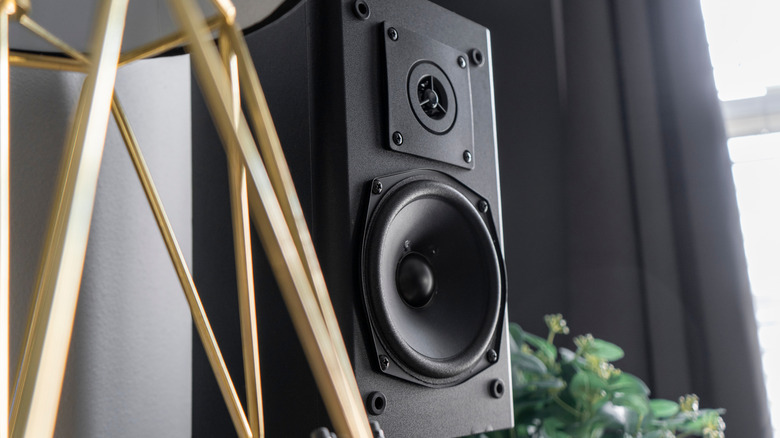
Browse through a list of speakers, and you'll quickly notice that many models — from large, bulky towers to sleek and modern bookshelf speakers – have holes in the back. Though sealed speaker cabinets exist, variants with that opening seem to be much more prevalent. Why is that so? Why do speakers have a hole in the back?
In short, these holes are referred to as ports. Think of them as tuned openings that allow air to move in and out of the cabinet as the woofer operates, reinforcing low frequencies and helping your speakers get that rich low end. Technically, a ported speaker box is tuned to a specific resonant frequency where a similarly sized closed cabinet's low-end response would taper off. By introducing a port, the speaker gets a wider frequency response than what the woofer would generally be able to produce on its own if the cabinet were fully sealed.
Although the port's position will affect the sound (especially how it plays with the air in your room), in most cases, a ported design makes the speaker efficient and reduces distortion at higher volumes. If you compare it to a sealed speaker, you'll see that a closed design may provide a tighter low-end response, but it also requires a more powerful amp. This doesn't mean that ported speakers are inherently better, just that they provide a punchier sound at similar power in smaller packages, so to speak.
Are ported speakers better?
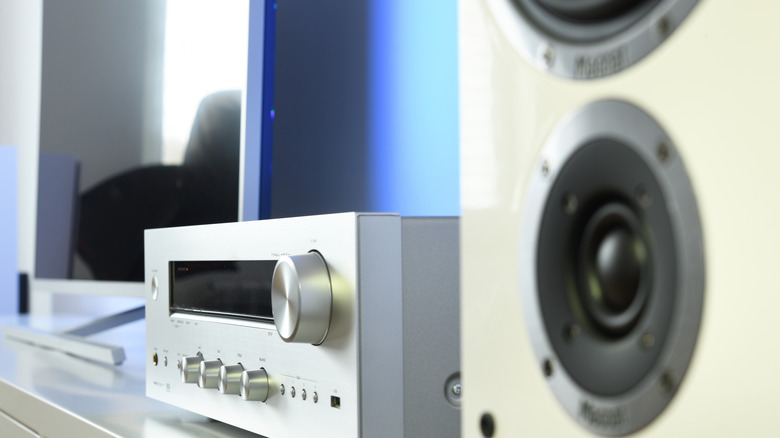
Speaker ports may sound like typical audiophile woo-woo at first glance, but it's actually pure physics. Each time the woofer pushes out, air is expelled from the port, and once it moves into its original position, the port draws the air back in. That's the gist of it: The speaker will gain much more oomph with a lot less amp power and relatively underpowered drivers. And while many wonder why speakers have a hole specifically in the back, front-ported speakers also exist. Acoustic ports are a great feature, but they can introduce excess noise at high volumes. In most instances, this is not an issue as the extra noise blends in with the bass. However, for the best sound, speakers with back ports should have at least two feet of clearance from the back wall.
So, are ported speakers the be-all and end-all of the speaker world? It's really a matter of personal preference. There is no shortage of audiophiles swearing sealed speakers deliver a more "realistic" bass sound. Whether they are right or not, generally, ported speakers are just more consumer-friendly. That said, choosing the right amp size can be tricky on its own, as there are many variables to consider, including room size. A similar level of variability also extends to the ports vs. no ports question. For instance, speakers with ports can give the sound more "body" at a reasonable power. Sealed speakers are kind of the opposite. If you plan on listening to genres that don't rely heavily on the bass, a sealed pair may end up sounding more musical to your ears, especially if you're listening in a smaller room. So ultimately, it's different strokes for different folks, just like most other audio-related matters.