

Flock Cameras Are Tracking More Than License Plates: Here's Where All That Data Goes
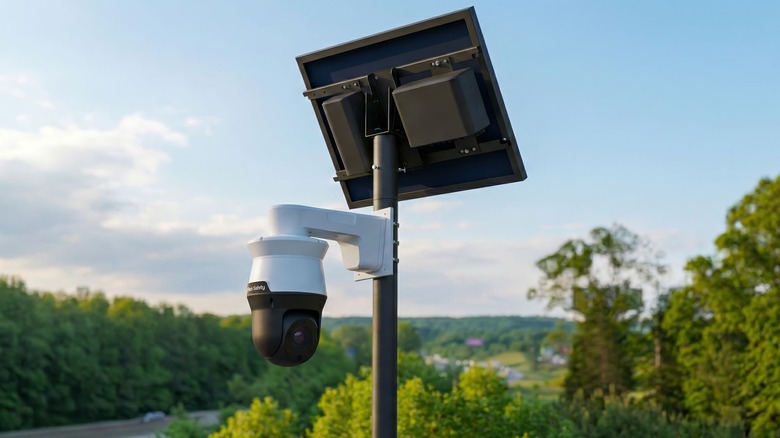
Deployed across more than 12,000 communities, Flock Safety's automated license plate readers (ALPR) are a key player in America's ever-growing public security and surveillance network. The AI-enabled camera provider has rapidly expanded its products, functionalities, and customer base, creating a vast network of video cameras, audio detection devices, drones, and mobile security trailers. This expanded offering is powered by AI algorithms that process far more than drivers' license plates, recording vehicle profiles, pedestrians, and "critical sounds" such as gunfire. Given the breadth of this intelligence, it's no surprise that Flock Safety has pivoted toward a big data model, offering interconnected, searchable systems. But aside from its undeniable safety benefits, some critics increasingly see it as a national, AI-driven mass surveillance network.
The controversy crescendoed following a Super Bowl ad with smart doorbell company Ring, in which the two companies touted its technologies as a vast neighborhood watch network for tracking down lost dogs. The partnership, which Ring promptly canceled, spoke to wider concerns regarding ALPR's growing prevalence, as citizens tore Flock cameras from their posts. Worries deepened after reports that federal authorities used Flock cameras to execute the Trump administration's deportation program, causing several cities to revoke their contracts with the company.
Flock has been more candid about the data its cameras collect than its competitors, instituting privacy guardrails and audit policies to increase accountability. Despite this transparency, however, nationwide law enforcement has abused their partnerships with the Atlanta company – a trend which many worry will only worsen as ALPRs become more ubiquitous. To date, Flock markets to both public and private partners, including law enforcement agencies, schools, private businesses, prisons, residential communities, parks, and places of worship. All told, Flock Safety controls a vast, ever-expanding surveillance empire that extends far beyond ALPRs and is quickly ingratiating itself within the country's public security ecosystem.
Flock's tracking goes way beyond license plates
Since its founding in 2017, Flock has steadily expanded beyond basic license plate reader technologies. Its ALPR cameras, for instance, use AI to create "vehicle signatures," cataloguing the make, body type, color, damage, and other distinguishing features of cars, buses, trucks, and even bicycles. Using "vehicle fingerprint technology," the firm's profiles are incredibly granular, including information such as if a car sports aftermarket wheels and whether it has a roof rack.
Flock markets its cameras as offering "more than recorded video." In addition to capturing vehicle information, Flock's cameras and ALPRs also capture drivers and pedestrians. Increasingly, the company has marketed "people detection" software to both law enforcement and private customers. Flock stresses that its cameras' "ALPR system does not recognize faces or identify people," denying that such systems deploy facial recognition software or record biometric data.
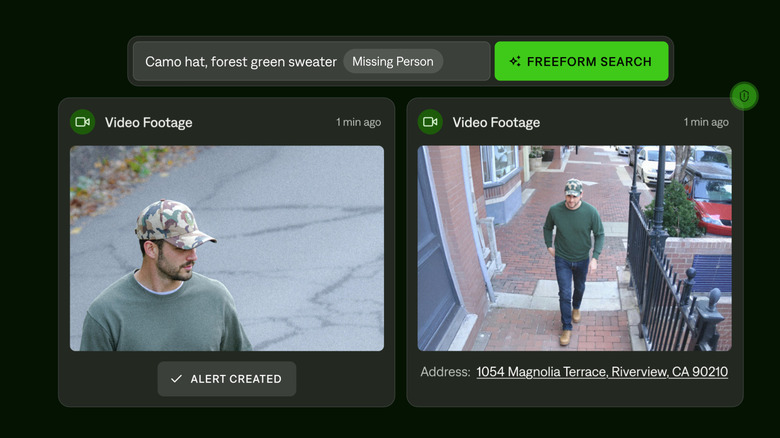
The company also advertises that customers can search through footage using "vague" identifiers and "natural language", such as "man in blue shirt and cowboy hat," to find suspects and missing persons. However, as with claims that ALPRs do not track people, but just their vehicles, Flock's claims that systems that locate missing persons and criminal suspects via their clothing and vehicle movements "cannot" be used to "track people or vehicles over time" could raise some eyebrows.
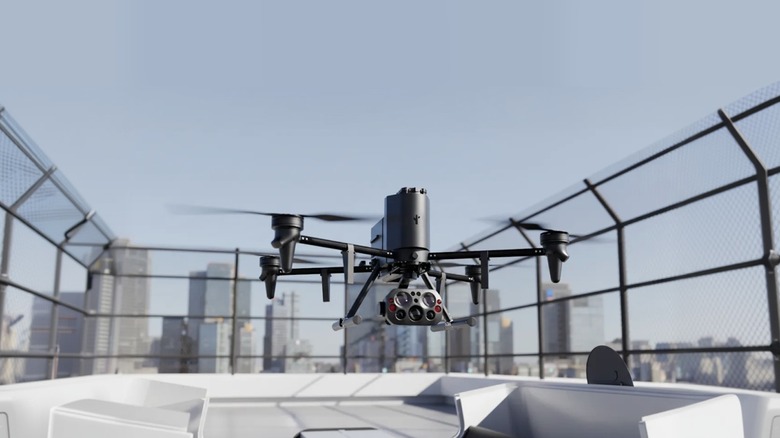
Flock Safety has steadily expanded its offerings beyond traditional cameras and LPRs through its Drone as First Responder (DFR) program. Flock's Alpha drone system is an AI-enabled intelligence tool that automates drone missions and provides livestreamed visual information. Powered by Flock's Aerodome software, users can "remotely deploy docked drones to geo-coordinates" of alerts, ranging from 911 calls to LPR hits.
Flock Safety is all ears
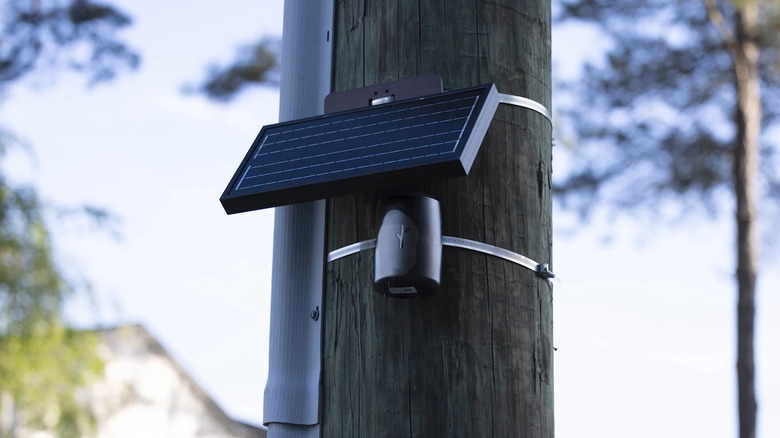
Flock Safety's products extend beyond visual intelligence and now offer auditory intelligence devices. Framed largely as gunfire detection solutions, Flock Safety's sound recognition software detects "critical sounds" that enable customers to "hear what others miss" with typical video surveillance systems. Dubbed "Raven," Flock touts its audio system as listening for "distress" signals, a somewhat vague term which could apply to a range of auditory information. However, in one advertisement, Flock Safety posted a picture that stated Raven triggered an alert for "screaming," suggesting that Raven is attuned to process human voices (via EFF), which the company has since amended to just say "distress." Flock advertises Raven as deploying an "expanding sound library" that is "continually trained to recognize new sounds."
As the Electronic Frontier Foundation (EFF) noted in an October 2025 report on Raven, many of the technical questions surrounding Flock's audio detection systems remain unclear. Flock's advertising is adamant that its audio detection systems are not eavesdropping tools. According to Flock Safety, Raven is "event-triggered," meaning it only generates alerts for sounds Flock defines as community disruption, including gunshots, drag races, and fireworks.
Flock also advertises the system as a car accident response tool, in which Raven alerts authorities when it detects a car accident's unique sound signatures. When an event occurs, the device records a three-second clip to be used as evidence. To prevent eavesdropping, Flock claims its gunshot detection devices hold no more than 50 seconds of audio at a time. However, this can be potentially violate some state privacy laws.
How law enforcement uses the data gathered by Flock Safety
Flock's meteoric rise has transformed it into a 'big data' company. Operating in 49 U.S. states, Flock Safety's greatest value proposition is its ability to enable customers to find and analyze data with AI-powered solutions and intuitive dashboards. For example, Flock's search tool, Flock Freeform, enables users to search through their national network for both vehicles and pedestrian matches. Flock's marketing materials tout how agencies can "turn partial details into leads," using vague descriptions like "woman with red handbag" to find missing persons or suspects.
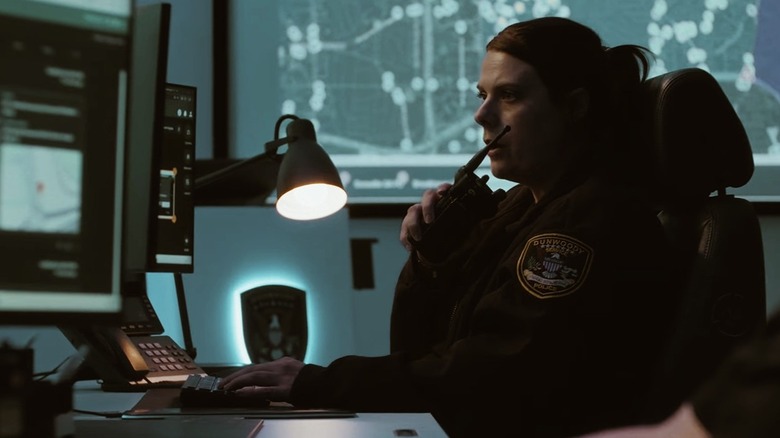
Flock also offers software solutions that allow law enforcement to harness its data when responding to an event. Flock911, for instance, serves as an all-in-one emergency response coordination tool, pairing 911 call audio, geolocation, and transcripts with data across Flock's aforementioned LPR, video, and audio feeds. Another product, FlockOS, meanwhile, takes this process a step further. Functioning as a "real-time crime center platform," it pools all of Flock's sensory data into a single dashboard. As one police major attested on Flock's website, using FlockOS, "we watched the vehicles enter through LPR, tracked them across the city, and our teams were in place before the suspects even got out of their cars."
Flock's data solutions go beyond mere sensor aggregation. Flock Nova – the company's flagship investigative platform — "provides the data context behind each event," by pooling the ancillary information surrounding a flock data search. For instance, a police department responding to a 911 call would use Flock Nova to aggregate information from their departments records management systems (RMS), computer-aided dispatch (CAD), License Plate Readers (LPR), jail systems, public records, open-source intelligence (OSINT), and other relevant datasets. In total, Flock's data solutions have positioned the company to serve as the connective tissue between law enforcement agencies' vast datasets.
Abusing Flock's cameras
To Flock's credit, the company has been upfront about the risks of unchecked surveillance, instituting several safeguards against abuses. For instance, Flock records every search in auditable logs. Customers can also set search filters that "prevent" searches that are "prohibited by law or by agency policy," and they are set automatically in states that abide by certain laws. Users must also record the "public-safety reason" of inquiries. Optional transparency portals further increase transparency.
Despite these guardrails, Flock's customers have a history of abuse. According to an ongoing Institute of Justice report, police officers nationwide have used the ALPR tool to stalk women, coworkers, and acquaintances. Only a small fraction of these cases were outed by Flock's internal auditing safeguards. Officers have also used Flock to racially profile constituents, with some even using racial slurs and descriptions in searches (via EFF).
For what it's worth, Flock has since banned racially-charged searches. However, some argue that ALPR cameras inherently exacerbate preexisting racial biases. Researchers at Christopher Newport University found that Flock camera locations in Hampton Roads, Virginia, were "deeply and systematically racialized and economically stratified." Meanwhile, activists in Oak Park, Illinois, claim that 84% of local Flock-related traffic stops targeted Black drivers. The organization also claims that 40% of stops were "mistakes" – a common problem with ALPRs.
Such criticisms aren't unique to Flock, as an Associated Press investigation found that the country's police officers systemically abused law enforcement databases. However, Institute of Justice attorney Michael Soyfer argues that Flock's "fundamental problem" is that it "place(s) private information about people's movements over time in the hands of every officer" without "a warrant requirement." As it stands, too many of Flock's safeguards depend on customers policing themselves. Search labels are only effective deterrents if you can guarantee user honesty, while search records are only as effective as those auditing them.
The big picture
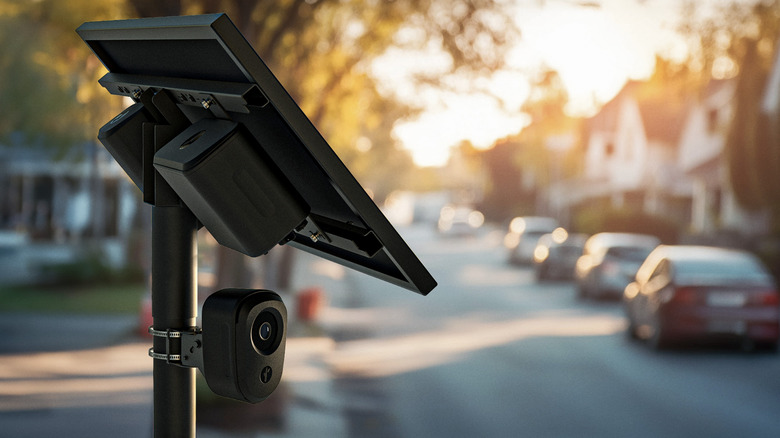
Given this history of abuse, warnings of mass surveillance are not without merit. Already, communities are seeing their ALPR cameras used by local, federal, and out-of-state agencies for politically-charged enforcement actions. According to the Electronic Frontier Foundation, law enforcement agencies have already executed hundreds of Flock searches targeting protestors and activist groups. In Texas, Sheriff deputies used the false pretense of a missing persons investigation to track a woman suspected of having an abortion (via EFF).
The President's brutal deportation regime has further enflamed critics' authoritarian concerns. In May 2025, for instance, an investigation by 404 Media found that local law enforcement had already conducted over 4,000 searches on behalf of federal authorities. In response to such criticism, CEO Garrett Langley clarified that Flock paused its pilot programs with federal law enforcement agencies. Moreover, it is up to customers to determine their data-sharing settings. However, federal and out-of-state authorities continue to access Flock ALPR data in states like California, Massachusetts, Illinois, Virginia, and Washington, where state laws prohibit ALPR data sharing. Some instances saw ALPR data accessed despite customers explicitly banning their data from Flock's national lookup database.
Critics argue that Flock's attempts to stem abuses miss the point. Although Flock has professed its desire to limit mass surveillance, its business model depends on establishing an ever-widening dragnet. Furthermore, critics warn that the biggest danger of such surveillance systems isn't their immediate uses, but rather that they establish an infrastructure capable of orchestrating widespread abuse. Ultimately, it may just be that such concerns are ineradicable from the technology itself. As the $7.5 billion company entrenches itself within schools, businesses, churches, and neighborhoods, it's critical to question whether the professed safety gains are worth the privacy sacrifices such systems ask of constituents.