

Which Devices Are Compatible With Wi-Fi 7 In 2026?

Wi-Fi 7 is the latest and fastest version of Wi-Fi and is available on various gadgets on the market. Although the first routers supporting it began appearing on the market in 2023, this new generation of Wi-Fi officially launched for consumers in early 2024 when the Wi-Fi Alliance introduced the Wi-Fi Certified 7 program. This program ensures interoperability between brands and that certified devices support the mandatory Wi-Fi 7 features. However, despite more than two years since the Wi-Fi Certified 7 program's debut, the availability of Wi-Fi 7-compatible devices remains limited.
This isn't completely surprising for a new Wi-Fi generation, particularly one that is overkill for most household customers and is in relative infancy. The limited availability means you can't simply assume that most of the modern gadgets support it. For example, pretty much any device introduced before January 2024, other than select routers and a few other gadgets, doesn't support Wi-Fi 7. This means that if you are planning to buy a new Wi-Fi router and are considering an upgrade to a Wi-Fi 7 router, it makes sense to determine whether you own or plan to acquire any Wi-Fi 7-compatible devices. To verify, check the device specifications supplied by the manufacturer. Wi-Fi 7 typically appears as Wi-Fi 7, Wi-Fi 802.11 be, or Wi-Fi 802.11 a/b/g/n/ac/ax/be in the documentation. If you don't see the Wi-Fi specifications, your best bet is to contact the manufacturer.
Smartphones makers first to adopt Wi-Fi 7
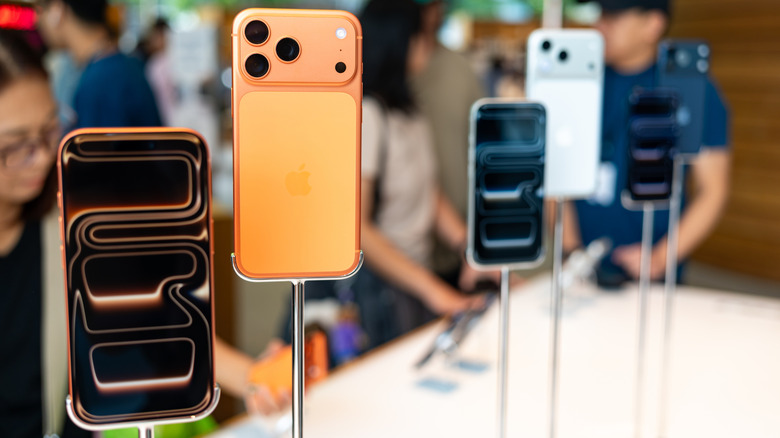
Smartphone makers were among the first to jump on the Wi-Fi 7 bandwagon. Chinese brand Xiaomi announced its 13 Pro smartphone in December 2022 with Wi-Fi 7 support. This was even before TP-Link Archer BE900, considered the first commercially available Wi-Fi 7 router, reached store shelves. Others followed soon, and other smartphone brands have completely embraced Wi-Fi 7. For instance, all Apple iPhone 16 and 17 series models, excluding the iPhone 16e and 17e, come with Wi-Fi 7. Similarly, Samsung's Galaxy S25 and S26 lineups, excluding the FE models, support Wi-Fi 7. The last three generations of the flagship Google Pixel and OnePlus phones also support the latest Wi-Fi standards.
The same is true for flagship tablets. Apple, Samsung, and OnePlus have added Wi-Fi 7 to their high-end and flagship tablets. Desktop and laptop brands haven't been too far behind, and the latest Wi-Fi is increasingly available on high-end models, including those running on Intel Core Ultra (Series 1 & 2), AMD Ryzen 9000/AI, and Qualcomm Snapdragon X Elite/Plus (Gen 1 & 2) chips. In other gadgets, select gaming consoles, including Sony's PlayStation 5 Pro, MSI Claw 8 AI+, AYN Thor, and AYN Odin 3, have also moved to the latest Wi-Fi generation.
However, beyond select phones, tablets, computers, and gaming consoles, the industry at large still uses the older wireless standards on its devices. For example, smart TVs, smartwatches and wearables, and streaming media players continue to use Wi-Fi 6E or older generations. The same goes for wireless security cameras, various smart home devices, and wireless printers.
Why adoption has been limited
Although Wi-Fi 7 is incredibly fast and powerful, its adoption has been limited to high-end gadgets for various reasons. For example, 6 GHz spectrum licensing remains an issue in many parts of the world. While the U.S. has opened the 6 GHz wireless band for unlicensed use, that's not the case in parts of Europe, Asia, and Latin America. Without this band, such regions can't fully benefit from several Wi-Fi 7 features that rely on it. Average home internet speeds are still around 300 Mbps, and Wi-Fi 7 hardware, built for multi-gig speeds, is overkill for them. So, makes little sense for the vast majority of customers to upgrade to Wi-Fi 7 hardware.
Moreover, essential smart home gadgets, reliable wireless printers, and other devices don't require the bandwidth of Wi-Fi 7 as they typically transmit a few kilobytes of data. As a result, it makes sense for the manufacturers to stick to older, cheaper Wi-Fi hardware. Higher patent licensing costs could be another reason behind the drag on Wi-Fi 7 adoption. Manufacturers have to pay licensing fees for Standard Essential Patents (SEPs) to companies like Huawei, Intel, and Qualcomm, and it may not be financially viable to integrate Wi-Fi 7 into their more affordable devices.
The bottom line is that Wi-Fi 7 could remain limited to high-end hardware in the immediate future, particularly in a world where the AI boom is already increasing component prices. However, as component costs drop and home internet speeds increase, we should see it cropping up in more affordable hardware.