

This Open-Source App Lets You Use Your Whoop Band Without A Subscription Fee
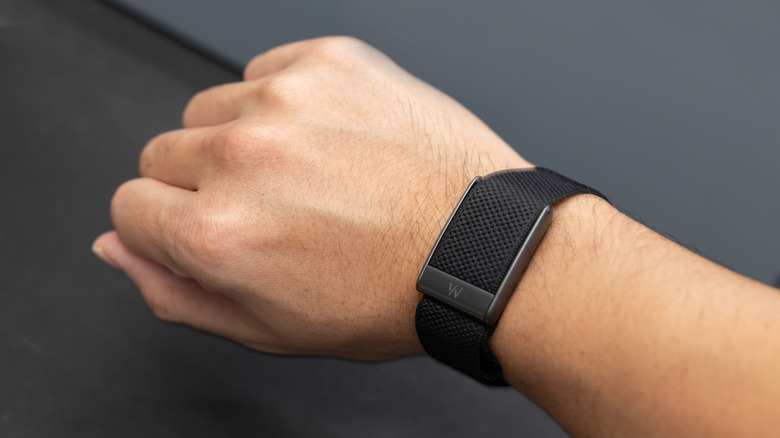
Sick of paying steep, ongoing subscription fees to use your fitness tracker? An app called Noop aims to rectify that, at least in the case of the Whoop Band (or you could skip the Whoop entirely for one of these Whoop alternatives).
For the uninitiated, Whoop is a fitness band that's gaining a lot of recent traction, largely due to its novel approach to health monitoring (and for being one of the best wearables for sleep tracking). Stepping into a space dominated by Apple, Oura, and Fitbit, Whoop stands out by being screenless, providing complex, cross-referenced analysis, and being purely subscription based with (technically) no purchase fee for the hardware.
That said, you don't exactly get a Whoop band for free and then pay for a subscription independently. You pay an upfront fee that covers the subscription for a certain period of time, and while there is a free trial for the middle subscription tier, if you cancel before the trial ends, you have to return the band. When the trial ends, you're automatically billed for 12 months.
While Noop can't let you circumvent the initial fee, what it does do is eliminate any recurring charges, while still providing nearly all of the same functionality Whoop itself does, and some it doesn't. Here's how it works.
How Noop works
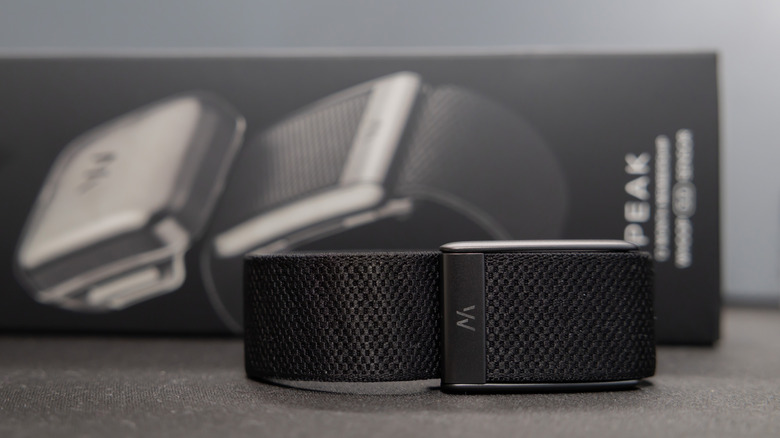
Noop is offline and anonymous, an anonymity that extends to both its users and its developer (even tipping for the app is done exclusively via crypto). No account is required, and all of your data is stored locally in an SQLite database — your personal information never touches the internet. Noop works on macOS, Android, and iOS, though in furtherance of that anonymity, it doesn't live on the Google Play Store or Apple's App Store.
It immediately begins collecting data the same way the proprietary Whoop app does. Your heart rate shows up right away, and Noop grabs data about your recovery state, sleep quality, and strain over the first few days. You can also import existing data if you've used the band beforehand.
When it's got enough data, it'll start delivering the same kind of analysis Whoop does, like how recovered your body is and if you're ready for another strenuous workout, or how much sleep you should be getting versus how much you're actually managing. It even does stuff the default Whoop app doesn't, letting you lock your Mac by double tapping the strap, or detecting when you take the band off.
The developer argues that Noop is completely legal because, among other reasons, it contains no Whoop code, firmware, or assets, and doesn't circumvent DRM. However, it is made by reverse engineering Whoop hardware, which can be legally tricky if it's found to circumvent technical protection measures or violate Whoop's terms of service.
Similar OEM-free services exist for other fitness products

Noop isn't the only app looking to bypass pricey subscriptions on fitness tracking devices. Oura Ring has its own counterpart, an app called Cracked Oura. It also stores all your data in a local SQLite database and, like Noop, builds graphs, charts, and analysis to display in easily digestible formats in the app. Cracked Oura can even lean on local AI models to analyze your data, and it's completely free to download and use.
In fact, Noop isn't even the only app looking to bypass some of the Whoop band fees. A project called Goose is in the early stages of development that would also allow Whoop users to view their data without paying Whoop an ongoing fee. There's also a similar option specifically for Whoop 4.0 bands called Wearable.
Gadgetbridge is another philosophically similar project for Xiaomi, Amazfit, Pebble, and Fitbit devices. It lets you use your wearables without having to download or install proprietary apps built by the manufacturers, and eliminates the need to store your data online in the cloud.