

Why Do Some Smartphones Have Multiple Camera Lenses?
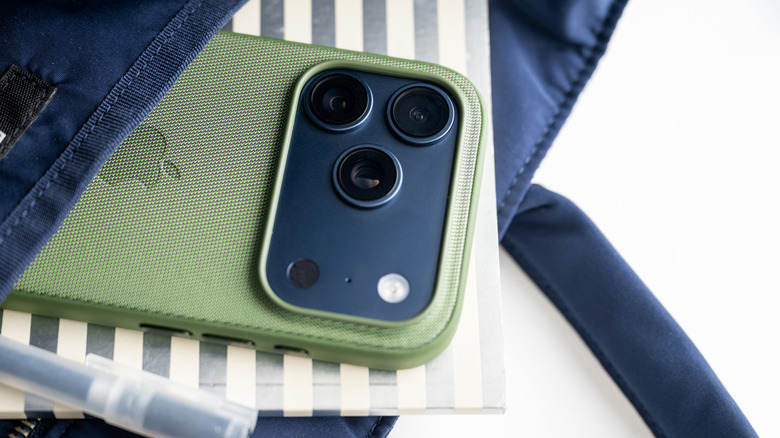
Modern smartphones are often packed with camera lenses, referred to as a camera cluster (or bump). This is why the camera on your phone isn't flat: the lens needs space between the sensor. The more lenses, the more space needed. But why in the world do we need multiple lenses in our smartphones to begin with? Well, that's simple. Each lens performs a specific job, such as a main (wide) lens, an ultrawide lens, a telephoto lens, and/or a macro lens. Macro is handy for close-up shots, and telephoto helps capture objects from a distance while taking more of the landscape. You'll use the main lens for other kinds of shots, like portraits. Through software, these photos can be further polished or even combined to create shots through computational photography.
Essentially, smartphones offer a selection of cameras and lenses to give you, the user, the choice of how to take your photos. Your main lens will likely take in the most light for standard use. This is known as aperture, and it's measured on F-stops. The lower the F-stop, the more light your lens lets in, so make sure to check which aperture each lens in your camera phone offers. Generally, ultrawide lenses offer a slightly higher aperture as less light is taken in to afford a much higher depth of field, so you can shoot large landscapes. As for macro, many manufacturers use the ultrawide to capture macro shots as it can also focus on subjects from a short distance. Camera bumps exist to give us options so our phones can handle any shooting situation.
Match your smartphone cameras to what you shoot

One of the main features to consider when purchasing a smartphone is the type of camera lenses it offers. Typically, smartphones offer three lenses in the back, though some camera clusters that once offered a dedicated macro lens have switched to a zoomed ultrawide for a similar effect. You can see this on devices from players like OnePlus, which uniquely uses a monochrome lens in its cluster. Competitors like Samsung and Google also pack an ultrawide that can zoom for macro instead of a dedicated macro lens, ensuring to offer a choice for the best budget and expensive phones for photographers, no matter your brand or shooting preference.
A smartphone's camera quality is seen as a major selling point, and rightfully so, given that 91% of phone users regularly use their smartphones for pictures. Cameras are a very commonly used feature. For comparison, only 80% of smartphone users actually use their phones to make calls. So, not only are the cameras built into our phones a normalized feature these days, but they are more important than these gadgets original use. How good these cameras are can easily make or break a phone; that's simply how important the tech is.
So, if you ever wondered why just about every smartphone has a silly-looking camera cluster on the back, there's a very good reason for it. Consumers absolutely demand killer cameras in their smartphones, which is why Google, Apple, and Samsung have all been battling neck and neck for over a decade to offer the very best and most popular smartphone cameras to the public.