

9 Ways Video Games Accidentally Changed The World

The history of video games is a fascinating one. Arguably the first video game ever was "Spacewar!," created by a group of MIT students for the PDP-1. It wasn't just for fun, they needed an application that would show off the full power of the new computer they had, and so this multiplayer space combat simulator was created almost as a side effect of this goal. Oddly enough, this coincidence is a running theme when it comes to video game technology.
Behind the scenes, video games have been directly or indirectly influencing all of human civilization. Even if you've never played a video game in your life and don't think about them at all, you've almost certainly had your life changed by them in ways both positive and negative. We've put together just some of the surprising things that are important today but probably wouldn't be the same — or exist at all — without video games in the first place. When you scratch below the surface, it's clear that video game technology has affected various parts of our lives in more ways than you might realize. In that regard, video games might be one of the most important inventions of all time.
Gaming GPUs accidentally created the AI revolution

In the early days of computer graphics, the CPU did all the work of drawing images on your screen. This works fine for basic video games, but CPUs aren't great at calculating millions of pixels in real time. This is why a type of co-processor known as a "graphics accelerator" became essential for complex graphics. Over time, these cards took over more work from the CPU, and there came a point where a graphics card was effectively a separate specialized computer. Today, this is what we call a graphics processing unit, or GPU, and NVIDIA claims that its GeForce 256 card was the first true GPU in the world.
The difference this made couldn't be more obvious. Games in the transitional phase, like "Quake," offered a software mode where the CPU still did all the graphics rendering, and a hardware-accelerated mode where a GPU took over 3D rendering duties. Software-rendered games looked like a slow and muddy mess in comparison.
For decades companies like NVIDIA pushed GPUs to become more flexible. It turns out that this is exactly the sort of processor design that makes running complex AI neural nets feasible. This means modern artificial intelligence solutions, like ChatGPT, would literally not be possible without gamers opening their wallets for better GPUs over the decades. NVIDIA's hardware, which started out as a way for people to play games, is now so strategically important that its AI graphics cards are banned in China.
Online multiplayer games normalized the modern web

Many aspects of the modern web that we've come to think of as normal, really became familiar and mainstream thanks to online multiplayer. Having a persistent online identity, making friends online, chatting using your voice, virtual economies, and a persistent always-online community that kept going even when you weren't there was in video games long before social media. Gamers effectively invented much of the online culture today, and the non-gamers who live in that culture don't even know it.
It's actually surprising how quickly these games had built momentum, since the web really only started to take off in the mid-90s. Games like "Ultima Online," "EverQuest," and of course the life-destroying behemoth "World of Warcraft" rapidly rose to prominence in the '90s and 2000s. For the people who played these games and started putting in the hours, the obsession could rise to the level of addiction. Things got so bad that you'd often read of stories like a couple who landed in jail due to their World of Warcraft addiction. This all seemed very strange back then, but today no one bats an eye when people doom scroll for hours or destroy their mental health arguing with complete strangers on social media. For better or worse, these games played a role in making permanent online connection a normal part of society, even if the developers never intended for anything so grand.
Video games helped invent the creator economy
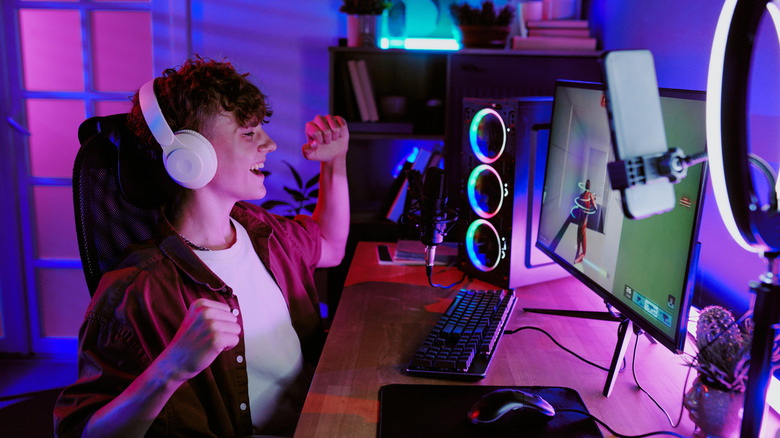
Video games started out as a silly pastime, but today the eSports market is predicted to be worth over $55 billion by 2035, up from its staggering $9.94 billion valuation in 2026. In 2014, we called Twitch "the streaming platform that's knocking off TV stations" — right around the time Amazon purchased the company for about a billion dollars. Now the platform is on its way to a $50 billion valuation, and TV stations wished it had streaming viewership numbers.
It turns out that a lot of people like to watch other people play video games competitively, but it's not just eSports. Streamers who play games badly can be just as successful, since they use their personalities as a form of entertainment. There's a whole generation of people who became millionaires thanks to game streaming. These gamers are effectively the inadvertant pioneers of the creator economy.
There are now as many genres of streaming videos as there are things that a person can do in front of a camera. Gaming creators normalized entirely new forms of digital labor. Now, everyone is trying to establish a personal brand, to gather a niche audience, and to turn any hobby or interest they have into an online revenue stream.
Games changed how movies and TV are made

Much of modern Hollywood now runs on video game technology. The most famous example is probably "The Mandalorian," which uses a massive LED wall that can display real-time images. It allows actors and real objects to be filmed against a real background, rather than using a green screen with background replacement later. This has plenty of advantages, not least of which that it saves you from painstaking chroma key work, and that all of the lighting on your actors and objects is automatically correct.
But the LED wall itself is only part of the solution. Where do those graphics come from? In the case of "The Mandalorian" it's none other than "Unreal Engine," which is the technology behind "Fortnite." This series of game engines has shaped video games for decades, and thanks to much faster and more powerful GPUs, the latest Unreal Engine technology can render photorealistic graphics in real time.
This means you can hook up your game engine to the LED wall, track the cameras in 3D space, and animate the image on the LED screen, creating a totally convincing final image on screen where your actor really looks like he's strolling on another planet. In this way, video game technology has accidentally invented a whole new approach to filmmaking, and it is helping combine live action and computer-generated images in a revolutionary way.
The military borrows heavily from gaming
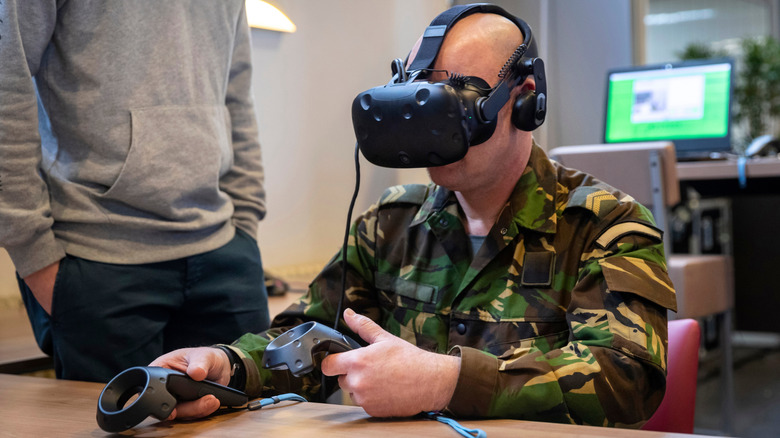
Even before there were computers, militaries across the world have looked for ways to safely train soldiers. For example, the Link Trainer was a World War II flight simulator, arguably the first proper flight simulator, and there certainly wasn't any computer hardware in that. When computer games started to become more sophisticated, militaries took notice.
One interesting example is "Marine Doom," which is a mod for the original 1993 "Doom" game created by the U.S. Marine Corps. Using the game's multiplayer mode, and with a completely custom map, a team of four marines could practice squad movement and commands. The game might not be terribly realistic by modern standards, but it was a cost-effective way to teach squad communication without spending millions of dollars in fuel, ammunition, and other logistics for wargaming. "Doom" wouldn't be the last game to be adapted for military use. For example, "Virtual Battlespace" uses game technology from developer Bohemia Interactive.
It's not just about sims and training either. Some U.S. Navy submarines use Xbox controllers, and gamer skills transfer well in the age of drone warfare, too — a soldier's skill with a controller might matter as much as rifle marksmanship one day. Perhaps it's no coincidence that the founder of Anduril (who makes killer AI drones) is the same person who founded Oculus and started the modern VR revival, which is another gaming technology used by the military.
Games pushed computers into millions of homes
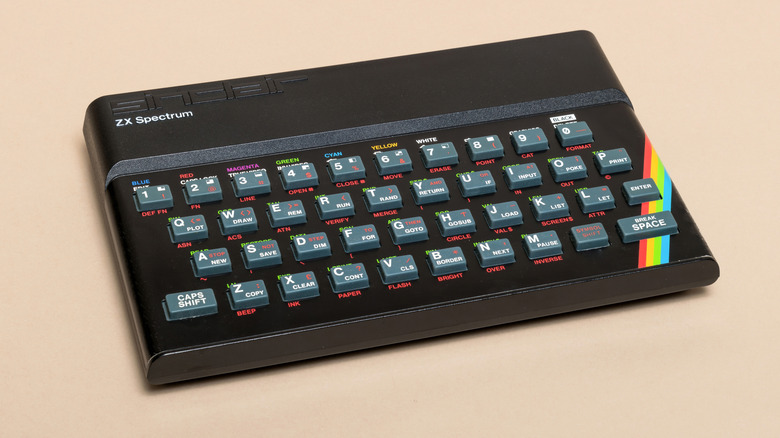
People may have initially brought computers into their homes for reasons like education or work, but once a computer is in a home, then someone's going to write video games for it. During the '70s and '80s so-called "microcomputers" took the world by storm. While you might not have convinced your parents to buy you an NES in the '80s, getting a ZX Spectrum or a Commodore 64 for "homework" was a much easier sell.
Likewise, the IBM PC was a game-changing invention that kicked off the PC gaming revolution, and, eventually, video games themselves acted as a motivator for people to upgrade their hardware. After all, there's only so much computer power you need to write a letter or do a budget in a spreadsheet. A video game like "Doom" (which had a bigger install base than Windows) was a reason to upgrade from your old 80286 PC to an 80486. "Quake", a later game by the same developer, was a good reason to get an Intel Pentium CPU, since a Pentium 100 was the recommended requirement.
Because each of these games required more advanced computing, people paid for the upgrades, and once they had more powerful computers, their productivity software could do more. And so, the cycle repeats. Entertainment is the incentive, but all software benefits.
Mobile gaming transformed the smartphone industry

Games have existed on phones for a long time. There's a whole generation of people who chased high scores playing "Snake" on their Nokia phones, and during the feature phone era there were quite a few decent Java games too, like the amazing "Doom RPG." But it wasn't until the arrival of smartphones that the mobile video game floodgates truly opened.
It might be hard to remember, but the iPhone didn't launch with an App Store, which meant game developers couldn't even put games on that device at first even if they wanted to. No one had any idea of the market potential. Today, Apple's App Store generated over $50 billion in 2025 in gamnig revenue alone, and Android wasn't far behind with the Google Play Store bringing in $30 billion during the same period.
Gaming is so important to smartphone hardware that with every new generation, the device's CPU and GPU processing power is shown off in terms of the latest games that can be played. Apple is actively courting game developers to make software for its phones and tablets, with even current-generation console games like "Resident Evil 8" making the leap to iPhone. Just like desktop PCs, you can at least partly thank video games for the rapid progress in smartphone performance and features.
Games proved digital goods can have real economic value
When it comes to how much an item is worth, that all depends on how much someone is willing to pay for it. For a long time, people have questioned valuation on virtual goods, but it soon became apparent that people could indeed value virtual items. In "World of Warcraft" people made real-world money "farming" gold in the game to sell to players, and while this was against the terms of service and could get you banned, a black market sprung up anyway. Later games would embrace these virtual economies and ensured the game developer got its cut.
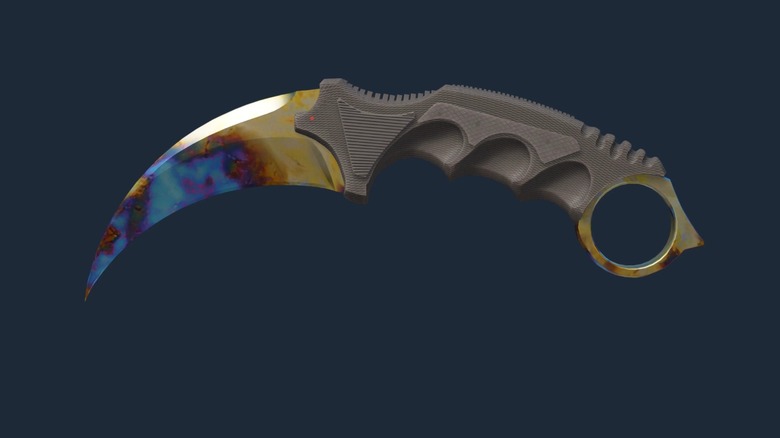
In games like "Counter-Strike" rare in-game cosmetic items — such as knife and gun skins — can go for hundreds, thousands, or in one case even over a million dollars. The virtual "CS:GO" knife pictured above is worth almost $1,700. At one point, the "Counter-Strike 2" skin market was valued at $6 billion, before a game update in 2025 made it lose $3 billion in value. It's this behavior that showed big business we were ready to pay for movies, books, download-only games, and ridiculous pictures of apes (remember NFTs?) despite there being literally no physical substance to the product. One could argue that games may have even laid the groundwork for virtual cryptocurrency, too. After all, if it weren't for gamers spending real money on virtual products, would anyone even have thought of mining virtual "gold" like Bitcoin?
Gaming changed education forever

Almost from the beginning, there were video games with educational value. Sometimes it was intentional, such as the case with "edutainment" games. They might focus on teaching math or spelling, and they were marketed as educational to parents. Who can forget one of the most iconic examples of edutainment, the "Magic School Bus" series of games?
But more traditional games have also been used for their educational value. "Minecraft" might be the most famous example, where students can learn teamwork and creative problem solving. Gamification and game-based learning are important parts of modern education, and with the advent of VR and mixed-reality technology the possibilities are expanding even further.
Incidentally, "gamification" is the application of game elements and game design concepts to non-game contexts. It differs from edutainment in the sense that edutainment is an entertainment product designed to have educational value. In contrast, gamification takes a purely educational product (such as a college course) and makes it more engaging through gaming. It's a way to take the building blocks that make games so compelling and use them to make learning better, easier, or more fun. Gamification is a hot area of development at every level of education, and the study of games (ludology) is closely linked to learning behavior. Apps like Duolingo and Kahn Academy are prime examples of how learning can be gamified, and when done right the results can be extraordinary.