

How Do Fiber Optic Cables Actually Work?
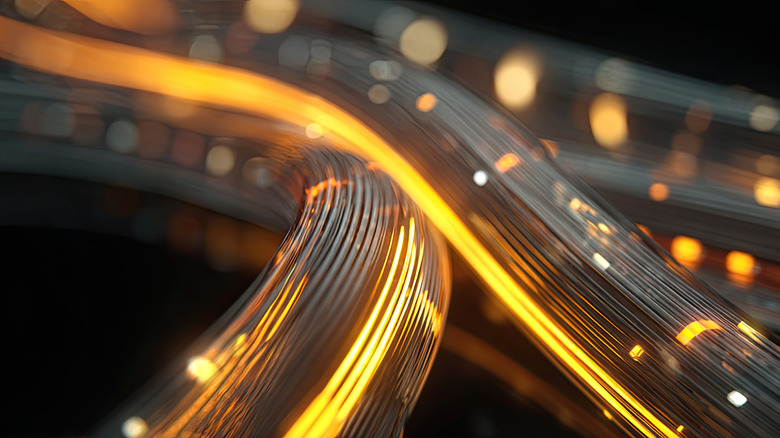
Fiber optic cables, the ingenious cables that we rely on to provide the internet, are incredibly powerful when it comes to carrying data across long distances. Made of either thin strands of glass or plastic fibers, fiber optic cables work by having light shot down one end, and then having it bounce along the cable via the cladding outside. This is called "total internal reflection," hinging on the light not being absorbed by said cladding, allowing the data to travel even further. Once it reaches the destination, it's then on the optical receiver to decode it.
The optical receiver takes the light shot down the cables and translates it back to how it started: as electrical signals. Your computer, phone, or TV is then sent these signals across your internet network, which translates them into the information the end device can read. Data loss can still occur, especially over long distances.
Fiber optic cables aren't just the latest upgrade path from your internet service provider either. Surprisingly, they have been around since the '50s. They became prominent later down the line once companies like AT&T began laying fiber optic for infrastructure in the '80s. Believe it or not, those cables are occasionally bitten by sharks.
Fiber optic cables are the backbone of modern society
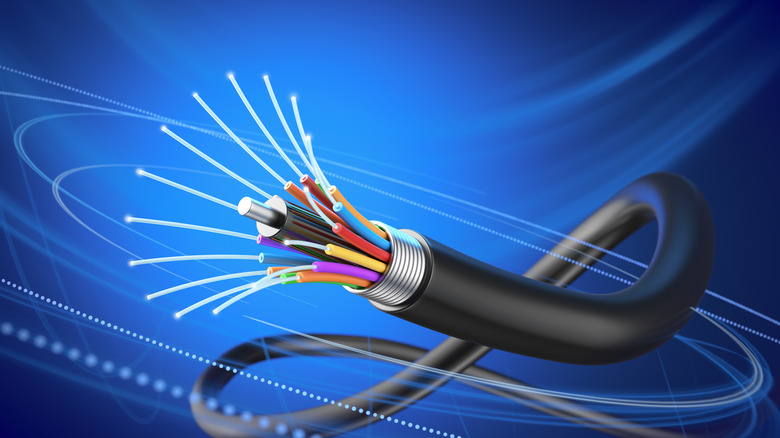
Fiber optic cables haven't changed dramatically over the years since their introduction. Density and alterations to cladding to reduce data loss have been developed, but the core concept behind the technology hasn't changed all that much. One new iteration on the tech includes "hollow" cables, capable of transmitting more data per glass strand. By implementing hollow fibers, researchers have found light travels 50% faster, which reduces latency and boosts speeds.
Various tech bodies have worked to push fiber optic to its limit. Currently, the world record is set at 1.02 petabits per second. This was done by scientists in Japan, who were looking into future advances that could be brought to long-distance communications.
Fiber optic has been promised as hardline solution for rural areas across America. While Starlink — which some claim is better than home internet — is providing wireless satellite internet, its speeds pale in comparison to a full fiber stack pumping internet into a location. Unfortunately, despite the billions given to telecom companies, not a lot of work has been done to ensure that every citizen is given the best connection possible.