

What Is The One-Watt Rule For Standby Electricity?
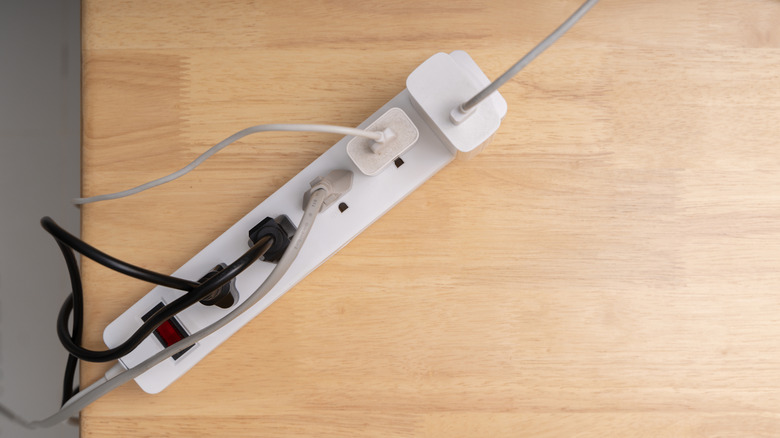
Electronics, especially smart and connected devices, tend to consume electricity even when powered off, usually because they're in a standby mode. To stop them from drawing energy, you need to unplug them completely from an outlet. This goes for pretty much everything that draws power in some way, including unused USB chargers (which really do waste energy), as well as smart plugs that use electricity when powered off.
But it's not just chargers and power devices, like plugs, it also applies to TVs, appliances, game consoles, computers, home theater equipment, and even some lamps and fixtures. That's why the International Energy Agency moved to standardize the one-watt initiative from 2010 on. It is a global energy saving program that spurred a variety of rules and regulations in areas like the U.K. and Australia, which put a cap on the amount of power devices can draw when in standby.
The original initiative, actually proposed way back in 1998, set a goal for all appliances to use no more than one watt starting in 2010, which would reduce to half that in 2013. Similar rules were applied to TVs, DVD players, and power adapters. It also encouraged legislation in the early aughts, like George W. Bush's Executive Order on Energy Efficient Standby Power Devices. Over time, and since then, many new regulations have been introduced to address the rise in power consumption in modern and smart devices.
What the one-watt initiative means for consumers
The U.S. Department of Energy estimates standby power accounts for 5% to 10% of residential energy use, costing the average household over $100 per year. But if manufacturers are following the guidelines, the one-watt initiative should mean modern electronics use power more efficiently with newer technologies optimizing consumption when powered off or in standby. In other words, when you leave gadgets plugged in, for whatever reason, they shouldn't be drawing an inordinate amount of electricity. At least, that's the idea in theory.
The guidelines on standby power-draw limits are good for energy efficiency and resource optimization but may also create challenges for device makers. Smart devices with advanced features, notably voice assistants and always-on technologies, require more power to sustain them. Network-connected devices also need more power to remain online, pushing the boundaries of total consumption. Even when designers and engineers aim to optimize devices, they can still end up consuming a lot.
How to reduce power usage in your home

Ignoring the rising costs happening over time, utilities included, other factors can cause price increases out of your control — AI might make your power bill go up even if you don't use it, for example. The amount of power you use during peak or high-usage periods, fuel costs, weather conditions, and even changing state or federal regulations can all have an impact on your power bill. For your own sake, you'll want to manage power usage, opting for low-power devices wherever possible.
You can actually save money on your power bill by unplugging certain gadgets at night. A better idea is to do a little more research before buying new devices and gadgets. While it doesn't necessarily apply to a TV or appliance you'd install in your home, Federal agencies are required to purchase energy-efficient products that meet the low-power guidelines. You can use that to your advantage. The easiest way to tell if a product qualifies is whether or not its Energy Star-certified. That could help you choose or potentially install devices in your own home that minimize power consumption, allowing you to lower your carbon and energy footprint. If you are using solar power to offset costs or trying to manage total household consumption, low-power solutions are always a must.