

Snap Beats Apple To The Punch With Its Own High-Priced AR Glasses
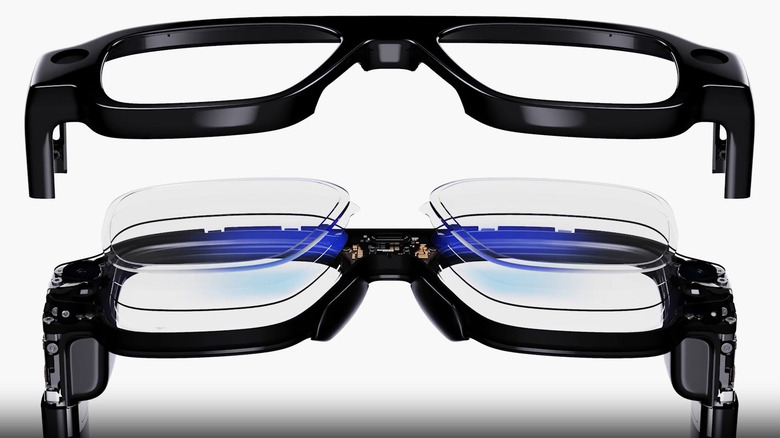
Snap Inc., the corporation behind Snapchat, announced a new pair of AR glasses today, joining Google in an attempt to rival Meta's Ray-Bans and Apple's forthcoming AI smartglasses. Dubbed SPECS, the glasses will retail for $2,195, and you can preorder a pair now for a refundable $200 deposit, with expected delivery in the fall in the U.S., UK, and France.
Snap's official announcement starts with an interesting tone. The company writes, "For more than a decade, we've been building toward a future where computers can understand the world the way we do, not just through text and taps, but through sight, sound, movement, and context." On its face, that sounds more like the pitch for an AI platform than AR glasses.
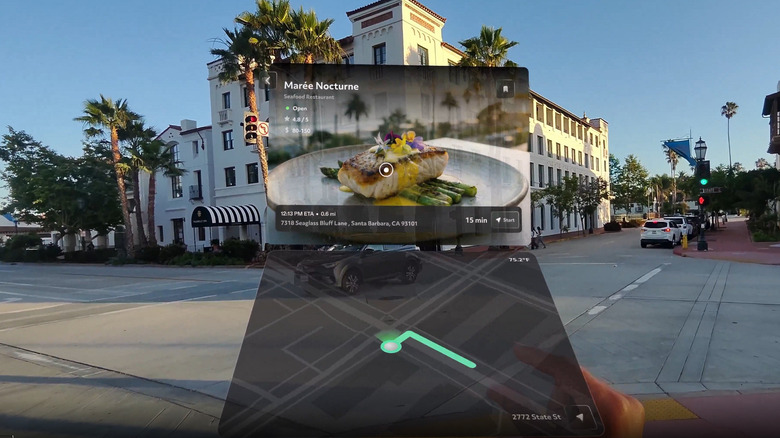
The press release goes on to more boilerplate language about how AR glasses can help you connect with people while still having access to all the info you normally rely on your phone for, without the "phubbing" (phone snubbing) of staring down at your phone screen. It also dives into some of the headline features available on SPECS, like seeing directions floating in front of you as you walk, or reading a putting green during a round of golf. There's a brief nod to privacy concerns as well, assuring potential consumers that an indicator light will flash to show the glasses are recording video, an important announcement given Meta's recent controversies in that department.
What SPECS can do for you
Snap emphasizes that SPECS are made to be as unobtrusive as possible: they're lightweight, with the smaller 47 mm model clocking in at 132 grams and the larger, 52 mm model at 136 grams. They also don't require any additional hardware not built directly into the glasses, which feature a pair of Snapdragon mobile processors to drive what Snap calls Lenses, the software integrations that enable most of the glasses' functionality.
The press release takes a very savvy approach by providing a raft of real examples of what SPECS can do. There's the expected, table stakes functionality you see in other smartglasses or AR glasses like XReal, stuff like recording video, projecting a massive virtual viewing screen to watch videos or movies, or creating virtual whiteboards to brainstorm or take notes.
The really interesting applications step somewhat outside the typical AR box. The press release mentions using a Lens called Vector Fields to make invisible forces visible. It allows users to visualize magnetic fields, for instance, or see how wind moves around an airplane wing. There's also a video of a car with the hood open, with an AR prompt showing a SPECS user where to refill the coolant.
How SPECS stack up to the competition

Apple is currently deep into development of its own lightweight AR glasses. Codenamed N50, they're rumored to include many of the features built into Meta's Ray-Bans, like snapping photos or taking calls, but will also lean more heavily into AR and AI. They're intended to pair with new AirPods and an AI pin roughly the size of an AirTag with a built-in mic and camera; together, the trinity of devices will combine to feed Apple's Intelligence platform information about the user and their environment and output contextually useful data and feedback.
The SPECS and N50s represent the next generation of tech built on the back of Meta's successful Ray-Ban collab. While those glasses let you access Meta AI and record videos, they weren't proper AR glasses, lacking a heads-up display that projected floating images onto the environment.
That's all changing in the next generation of Meta smartglasses, however. Dubbed Orion, they're designed from the ground up with AI and AR in mind, and have been in the works for a decade. However, there's no official release date or launch information available, though reports indicate a trimmed down consumer version of the $10,000 prototype that's been shipping to developers may be available in 2027.