

Apple Says Price Hikes Are Unavoidable, And It Could Impact The iPhone Ultra
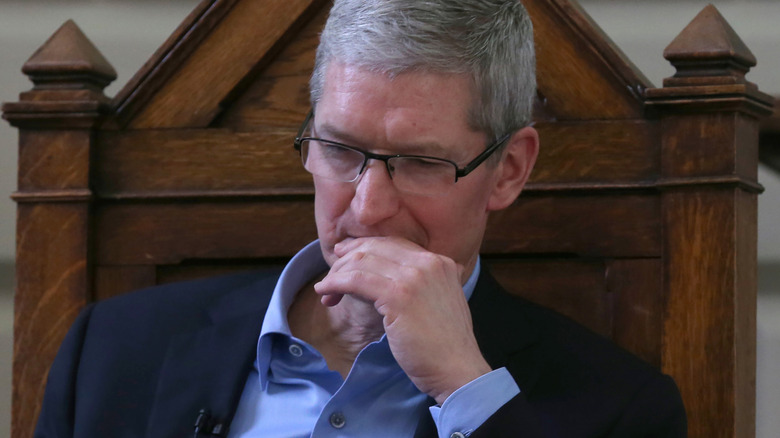
In an interview with the Wall Street Journal, Apple CEO Tim Cook said that rising memory prices will force Apple to pass along those costs to consumers. In other words, Apple's already pricey products are poised to get a tad more expensive in the coming months.
Apple typically tries to protect consumers from upticks in component costs by finding other ways to lower manufacturing costs. The industry-wide memory shortage, however, is a unique scenario that ultimately forced Apple's hand. "We're doing our best to mitigate the huge increases that are being passed to us, and we've been trying to shield our customers from the increases," Cook said, "but the situation has become unsustainable."
The reason behind rising memory costs is directly related to the AI boom. Companies like OpenAI need thousands of GPUs that require specialized memory. And because AI companies are willing to pay a lot of money, and at times make upfront cash payments, manufacturers are naturally prioritizing this type of memory over the type of memory chips one finds in consumer-grade products like laptops and smartphones. This impacts the resources that can be used for traditional memory chip production, which, in turn, lowers supply and drives prices up.
Notably, the WSJ articulates that Apple's price increases might be substantial. According to research from a tech firm cited by the Journal, Apple would have to increase the cost of an iPhone by $270 in order to maintain its current profit margins. That's clearly a huge jump, especially given that Apple has more or less kept iPhone pricing steady in recent years.
The timing for Apple is far from ideal
There's never a good time to raise prices, but this particular timing arguably puts Apple in a little bit of a conundrum. This fall, Apple will reportedly take the wraps off of its highly anticipated foldable iPhone, a device that some believe may be called the iPhone Ultra. And though nothing is set in stone just yet, credible reports have relayed that the entry-level version of the device may be priced at $1,999. And when one factors in additional storage tiers, a 2 TB iPhone Ultra might be on the verge of reaching $3,000.
Suffice it to say, the iPhone Ultra is a premium device and will be priced accordingly. If Apple, however, is forced to price it even higher due to soaring memory costs, the device may simply be too expensive for many potential buyers. The last thing Apple wants to do is release one of its most highly anticipated products only to see sales stagnate due to sticker shock. Apple already experienced this phenomenon when it released the ridiculously expensive Apple Vision Pro, which had a starting price of $3,500.
As it stands now, Cook didn't disclose any details about the timing of Apple's price increases. He also didn't specify which products might see price increases. But given how prevalent the memory shortage is, it might be tough for Apple to leave its traditional iPhone pricing scheme untouched. Speaking to how unique of a situation this is, Cook told the Journal, "This is a hundred-year flood," adding that he's "never seen anything like it in any area in over 40 years."