

Why Don't TV Manufacturers Use AMOLED Screens?
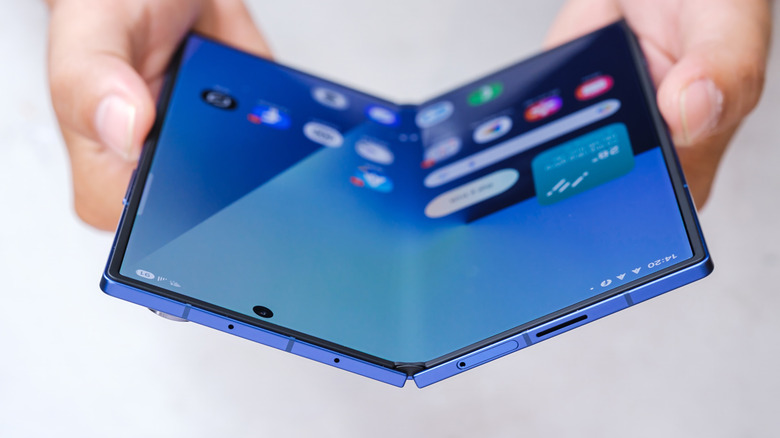
Manufacturers of screen-based devices like smartphones, monitors, and TVs are always experimenting with the next big stride in fidelity and quality. Smartphones, those made by Samsung in particular, have seen the advent of AMOLED (Active Matrix Organic Light Emitting Diodes) screens, an improvement over the current standard of OLED screens that offers a pretty impressive degree of picture quality. Since this kind of screen is so attractive, it's understandable to consider using it to make a TV, but unfortunately, this technology isn't economically feasible to utilize on such a large scale.
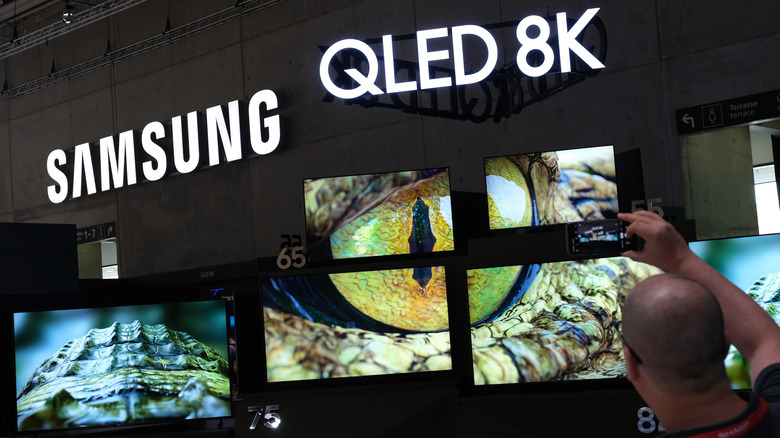
AMOLED screens do boast excellent picture quality and lower power consumption, but the particular makeup that goes into them only really works on the comparatively smaller screens of a smartphone. Attempting to blow one up into a TV, and especially a massive 4K display like you'd see in a living room these days, would simply be too expensive to build. And given how all OLED offshoots have an inherent vulnerability to burn-in, it wouldn't last very long either. An overly expensive TV with a shorter shelf life than other models has "bad idea" written all over it. This is why manufacturers leave AMOLED exclusively for smartphones and use other display technologies for their TVs, such as QLED, which are better optimized for such purposes.
AMOLED screens are too expensive to make larger
AMOLED is an offshoot of standard OLED displays. The basic idea is the same: the display is made up of a massive quantity of microscopic LED lights, allowing it to carefully fine-tune the colors of every pixel on screen. The difference is that, thanks to the active matrix component, an AMOLED display's LEDs can light up faster and brighter than usual, which gives it a much higher refresh rate, as opposed to the passive matrix in a PMOLED display. An AMOLED screen is also thinner, lighter, and more flexible than a regular OLED display, making it perfect for building into a small device like a smartphone.
Unfortunately, it's very expensive to manufacture. Using it to make a small smartphone screen is really the only way a manufacturer could turn a profit unless the manufacturer slapped it with a prohibitively expensive price tag. Additionally, AMOLED displays share the same weakness as regular OLED screens when blown up to TV size: burn-in due to degradation of the organic components.
Instead, manufacturers refine their other existing technologies to reach comparable degrees of picture quality in a more affordable package. For example, Samsung, despite being one of the go-to manufacturers for AMOLED smartphone screens, chooses instead to focus on its QLED technology for its TVs, which have several differences from OLED displays. The Quantum Dots in QLED displays can produce comparable fidelity to AMOLED screens, but on a larger scale and for longer lifespans, making them better-suited to a heavily-used screen like a TV.