

RedMagic 11S Pro Review: A Mobile Gaming Champion
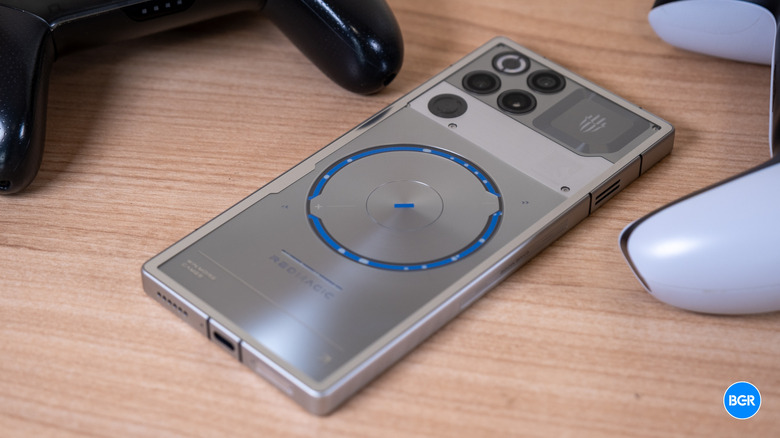
RedMagic has been producing some of the best dedicated gaming phones on the market for years — devices that are willing to sacrifice in some areas, but boast superior performance in exchange. The RedMagic 11S Pro is a gaming phone that doesn't really pretend to be anything else. It's an "S" refresh of the RedMagic 11 Pro, which in this case means it keeps the same chassis, the same 6.85-inch screen, the same 7,500 mAh battery, and the same cameras.
What's new is mostly under the hood — a higher-binned "Leading" version of Qualcomm's Snapdragon 8 Elite Gen 5 and a tweaked liquid cooling system designed to keep that chip running flat-out for longer. The 11S Pro starts at around $849. The question isn't just whether this is a fast phone — it is. It's whether a binned chip and a better cooling engine are worth paying more for and whether a device this single-minded can work as your only phone. I've been using it for a while now to find out.
Design
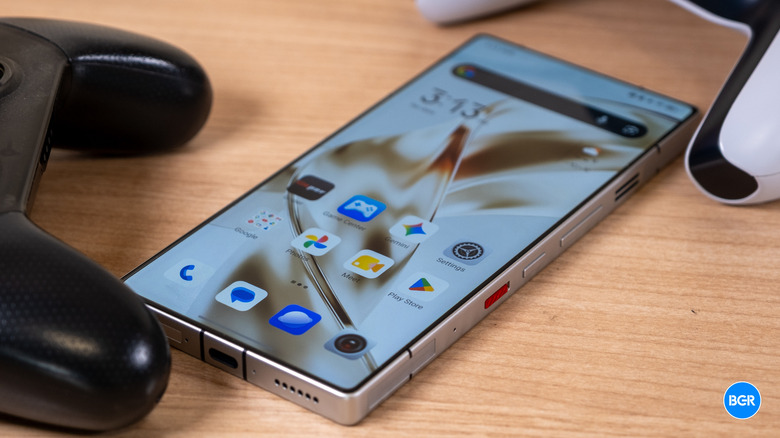
The RedMagic 11S Pro is designed for performance, including using a literal fan for cooling. The trade-off, of course, is in the form factor. At 163.8 x 76.5 x 8.9 mm and 230 g, the RedMagic 11S Pro is a big, heavy slab. The frame is aluminum, while the front and back are Gorilla Glass. The phone feels reasonably solid in the hand, which is partly down to the materials and partly down to everything RedMagic has crammed inside.
One thing you might not expect from a phone with a literal fan inside is proper water resistance, but the 11S Pro carries an IPX8 rating, so it'll survive a dip in up to 1.5 meters of water for 30 minutes. Sealing a chassis with moving parts and air vents to that standard brings the phone a lot closer to mainstream flagships in day-to-day durability than gaming phones once provided.
The design leans hard into the gamer aesthetic, and depending on your region, you can get a semi-transparent back that shows off the internal cooling fan. I have mixed feelings about this look — it's a little cheesy, but I'm perhaps not the target buyer anyway. There are vents along the frame that feed the fan, and those vents end up doubling as tactile cues that help you orient the phone in landscape without looking.
The signature RedMagic feature is still here, and that's the pair of capacitive shoulder triggers on the right edge. They're very responsive, and you can map them to on-screen controls through the software, which is handy. They also now officially support portrait-mode gaming, which is handy for games where you don't want to cover the screen with your thumbs.
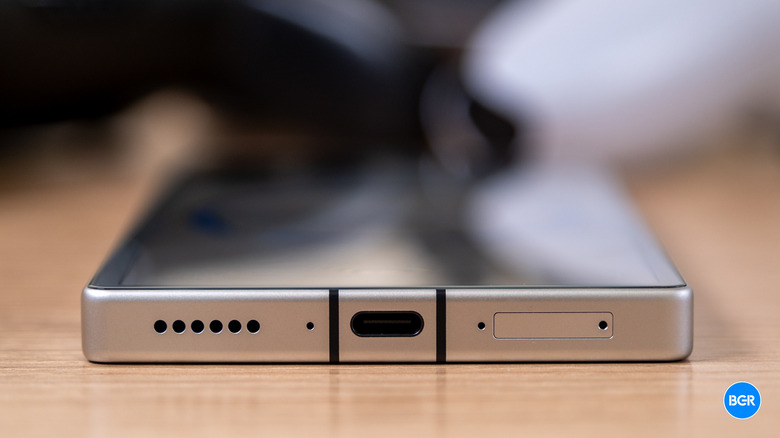
Beyond that, there's a 3.5 mm headphone jack on the top edge along with a red switch to enable and disable Game Mode. Elsewhere, the 11S Pro keeps the front screen of the phone completely uninterrupted thanks to an under-display selfie camera, which is great for immersion when you're gaming or watching something.
Display
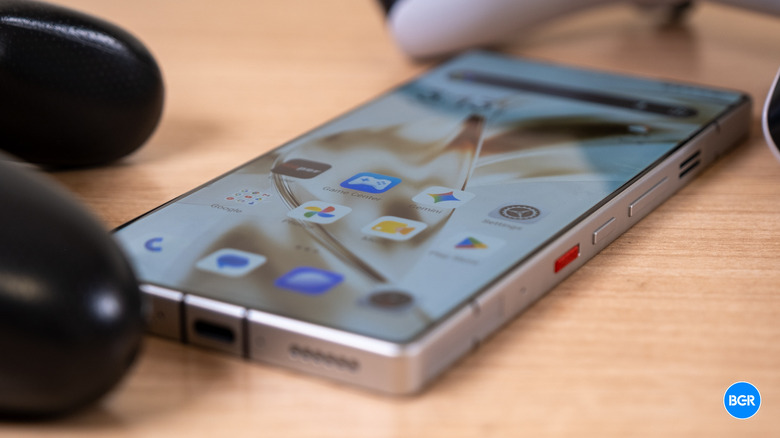
On the front of the 11S Pro is a 6.85-inch flat AMOLED panel with a 1216 x 2688 resolution, which works out to a sharp 431 pixels per inch. It runs at up to 144 Hz, and it pairs that with what RedMagic says is a 3,000 Hz touch sampling rate. It's not an LTPO panel, so the display won't range all the way down to 1 Hz to save on battery. For gaming that's a non-issue, since you'll be locking it high anyway, but it does mean the screen isn't quite as efficient at idle as the best LTPO displays.
I found the screen to be plenty bright. RedMagic quotes a peak of 1,800 nits, but in my testing, the panel pushed well past that — I measured a peak of almost 2,300 nits in HDR at a small window, and more importantly, it held roughly 2,200 nits without dropping over a long stretch. That sustained brightness is the part that actually counts when you're outdoors or gaming for a while.
Manual brightness in everyday use tops out lower, so it's not quite as eye-searing in direct sun as the brightest flagships, but it's perfectly usable. Colors are punchy and vibrant out of the box, and you can dial in a more accurate profile in the settings if you'd rather. It's not the single most advanced display panel out there, but it's bright enough, colorful, and responsive.
Performance
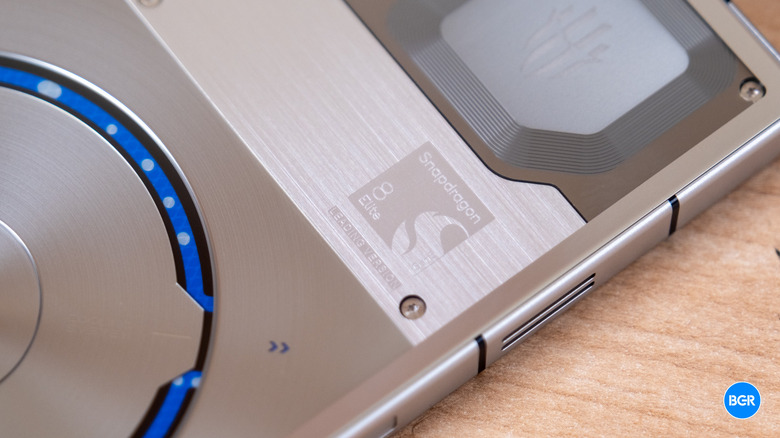
Powering the 11S Pro is the "Leading" version of Qualcomm's Snapdragon 8 Elite Gen 5, which is a higher-clocked, higher-binned variant of the standard chip. It's paired with either 12 GB or 16 GB of RAM and 256 GB or 512 GB of storage. My review unit had 16 GB. Day to day, the phone is overkill, but that's obviously kind of the point — apps open nice and quick, multitasking never stutters, and it easily handled everything I could throw at it.
The benchmark numbers back that up. It scored 3,815 single-core and 12,148 multi-core in Geekbench 6, and in 3DMark, it pushed past 14,000 in the Solar Bay ray-tracing run and into the low 8,000s on the Wild Life Extreme test. Those numbers are about as high as you'll see on any phone in 2026.
But raw peak numbers aren't really the point of a gaming phone — everyone's flagship is fast for the first few minutes. What sets the 11S Pro apart is how long it maintains that performance. Between the internal fan and the upgraded liquid cooling system, it barely lost any output across a 20-loop graphics stress test, where many passively cooled flagships shed a big chunk of their performance as they heat up. The tradeoff is the fan, which is audible when it spins up. Unless you're wearing headphones, you'll hear it, and it's a little louder than I'd like.
On the connectivity side, the phone offers Wi-Fi 7, 5G, and Bluetooth, though there's no eSIM support, which is an odd thing to leave out in 2026. For the target buyer, none of that gets in the way of what this phone is built to do.
Battery and charging
The 11S Pro packs a 7,500 mAh battery, which will keep the phone running far longer than the majority of alternatives. I had no trouble getting through a full day of heavy use with plenty to spare, and lighter use will let you stretch one charge to two days without much effort. In a video playback test, it ran well beyond a full day on a charge, outlasting the vast majority of flagships I've put through the same test. It did drain a little more quickly during gaming, but that's to be expected and likely due to the fact that the fan, of course, uses power to run.
Charging is quick, too. You get 80W wired charging, and it'll take the phone from empty to full in a bit under an hour, with the fan kicking in to keep heat down during the charge. Perhaps more interesting is the fact that the 11S Pro also does 80W wireless charging plus reverse wireless charging. Wireless charging at that speed is rare, and it's the kind of feature most rivals don't offer at all.
Camera
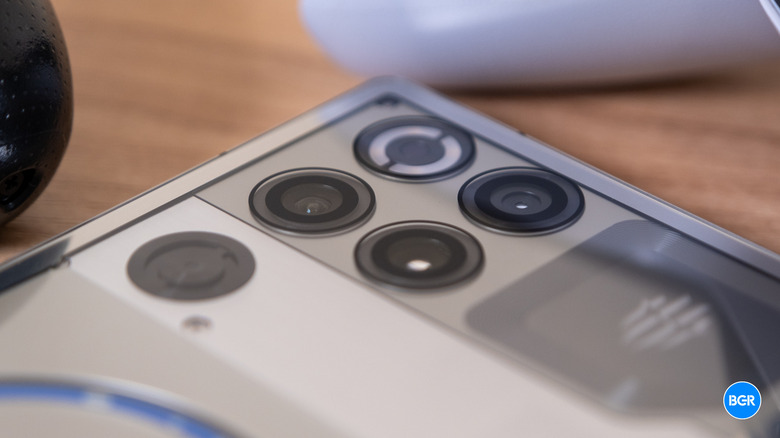
The biggest compromise on the 11S Pro, as with many gaming phones, is the camera. On the back is a 50-megapixel main camera along with a 50-megapixel ultrawide. There's also a minor auxiliary lens that doesn't add much in practice. There's no telephoto at all.
In good light, the main camera is solid. Detail is sharp, fine textures hold up well, and RedMagic leans toward a punchy, saturated look that most people will like straight out of the camera. Where it falls a little short is dynamic range, which is only okay — it doesn't pull back highlights or hold onto shadow detail the way the best phones in this price range do.
Low light is where the main camera struggles. Images get noisy and soft, fine detail smears away, and bright areas tend to blow out. It's usable for a quick snap, but it's not something I'd want to rely on after dark.
The ultrawide is the weaker of the two rear cameras. It's fine in good light, but edge sharpness drops off noticeably, dynamic range is weaker than the main sensor, and low-light shots fall apart fairly quickly. The color tuning also doesn't quite match the main camera, so switching between the two isn't perfectly seamless.
Because there's no dedicated zoom lens, every bit of reach here is a digital crop from the main sensor. It holds together reasonably well up to around 5x or 6x, which covers most everyday situations. Push it to the 10x maximum, though, and the image turns into a bit of a mess.
The 16-megapixel under-display selfie camera is the price you pay for that clean, uninterrupted screen. Under-display cameras still haven't come very far, and this one produces soft, slightly washed-out stills. It's fine for video calls and not much beyond that.
Add it all up, and the camera system is the clearest sign that this is a gaming phone first. It's the same setup as the RedMagic 11 Pro, and if photography matters to you, it's the area where the gap between a gaming phone and a standard flagship is most apparent.
Software
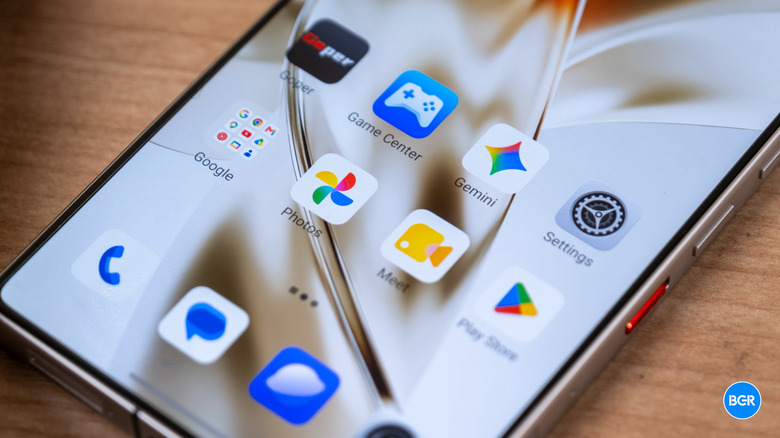
The 11S Pro runs RedMagic OS 11.5 on top of Android 16. The headline software feature is Game Space, and it's genuinely deep — you can set per-game CPU and GPU profiles, control the fan manually, map the shoulder triggers, overlay frame rate and temperature counters, drop crosshairs into shooters, and even run built-in PC emulation. There's also screen-expansion support over USB so you can drive an external display. It's more than most people will ever use, even most mobile gamers, but it's there if you want it.
As a daily driver, though, RedMagic OS can be a little rough. The interface still suffers from awkward English translations in places, questionable design decisions, and aggressive notification handling — and there's a fair amount of bloat out of the box. It's responsive and easy enough to get around, but it's nowhere near as clean or coherent as what you'd find on Google's Pixel 10.
You do get the usual Android AI features baked in through Gemini, like Circle to Search and translation tools, without too much extra piled on top by RedMagic. On software support, RedMagic's commitment trails the big players — the company says the 11S Pro will only get two years of operating system updates and 3-5 years of security updates, depending on the region. That's worth weighing if you plan to keep the phone for years, since Samsung and Google both promise longer support windows.
Conclusions
The RedMagic 11S Pro is a solid phone for the right buyer. For sustained gaming and thermal performance, it's close to unbeatable right now, and it backs that up with great battery life, fast 80W wired and wireless charging, loud speakers, and a clean, uninterrupted screen that's brighter than its spec sheet lets on. The flip side is that it's held back by a middling camera and software that still feels lacking as an everyday companion, and at this year's higher price, those compromises are a little harder to wave away than they used to be.
The competition
The most direct rival is the Asus ROG Phone 9 Pro. The RedMagic wins on raw thermal endurance and value, but Asus offers a more flexible camera setup with a real telephoto lens, a cleaner and more polished OS, and a proper ecosystem of gaming accessories. It's the better pick if you want a gaming phone that's also pleasant to use as a daily driver. Against conventional flagships like the Google Pixel 10 Pro or Samsung Galaxy S26 series, the 11S Pro does perform better, but it's dramatically inferior when it comes to the camera and software.
Should I buy the RedMagic 11S Pro?
Yes, if you value gaming performance above all else.