

Here's Why Tempered Glass Screen Protectors Are Always Better Than Plastic
We may receive a commission on purchases made from links.
While some say there's no need for screen protectors anymore, they do provide an extra level of defense for your device and greater peace of mind, especially for the accident-prone among us. A good protector also shields your screen from smudges that come about from everyday use, as well as scratches that can lead to more serious cracks. That keeps your smartphone, tablet, handheld gaming device, or whatever else you want to protect in good condition, especially if you replace your screen protector when it's time. But when it comes to screen protectors, you have a choice between two main types: tempered glass and plastic.
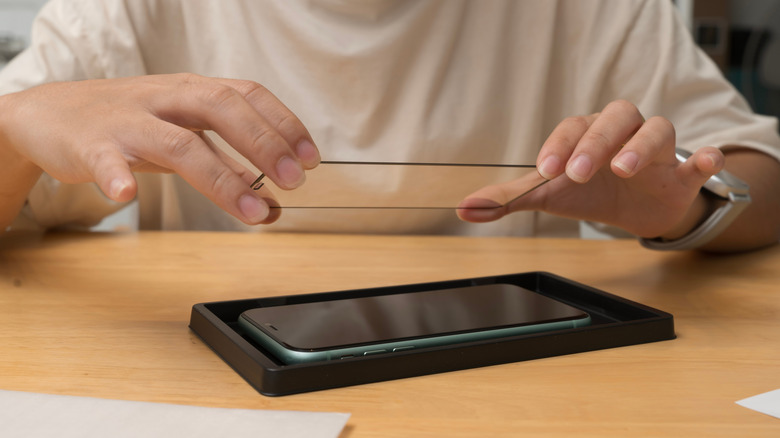
While plastic screen protectors are lighter and generally cheaper, outside of those positives, they pale in comparison to tempered glass ones. Tempered glass is made through a process of extreme heat and rapid cooling, resulting in a material that's significantly stronger than regular glass. That makes for better quality screen protectors that are more likely to keep your device safe if it falls. On the other hand, while plastic can protect your screen from scratches and smudges, it doesn't offer much else in terms of benefits. Tempered glass screen protectors also tend to be far easier to apply than those plastic ones we've all struggled to make line up with our phone screens.
Plastic screen protectors are hard to recommend
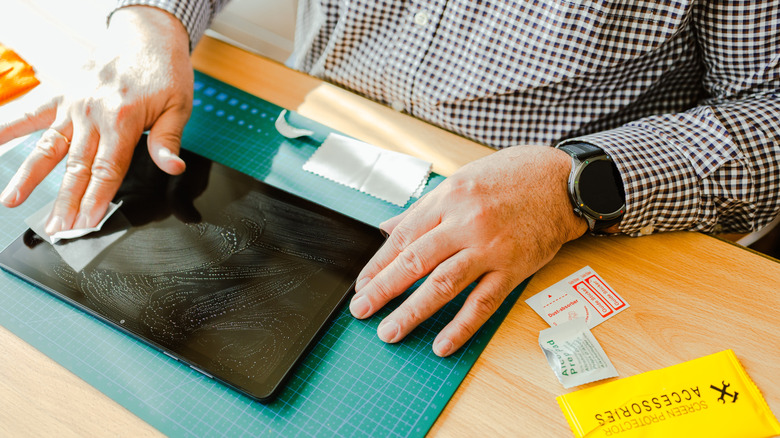
The only real advantage to plastic screen protectors is price. However, while there are expensive screen protectors that claim to save phones, you can also get a good tempered glass screen protector at a more affordable price. A two-pack of Spigen tempered glass screen protectors for most iPhone models costs $19.99 on Amazon, about $10 each. But while plastic ones are cheaper — Amazon seller JDHDL offers a three-pack for $13.99, which works out to $4.66 per screen protector — it's not so much of a difference that price should be the final deciding factor over quality.
Additionally, the extra cost of tempered glass screen protectors evens out when you consider that they typically last longer and maintain their quality until it's time to replace them. Plastic screen protectors become less clear and lose their adhesiveness over time. That means more frequent replacements, which (as previously mentioned) can be a frustrating process.
It's worth mentioning that tempered glass screen protectors can crack and shatter after a while, but that is sort of their purpose. They take the brunt of falls and bumps, saving your phone some wear and tear. Replacing a worn or broken screen protector is far less of a headache than dealing with damage to your device's actual screen, something that's a greater risk if you're using plastic. Overall, tempered glass makes for more durable screen protectors that stay clear until it's time for a replacement, which is why they're always a better choice than those cheap plastic ones.