

This Breakthrough Study Brings Us One Step Closer To The Holy Grail Of 3D Printing
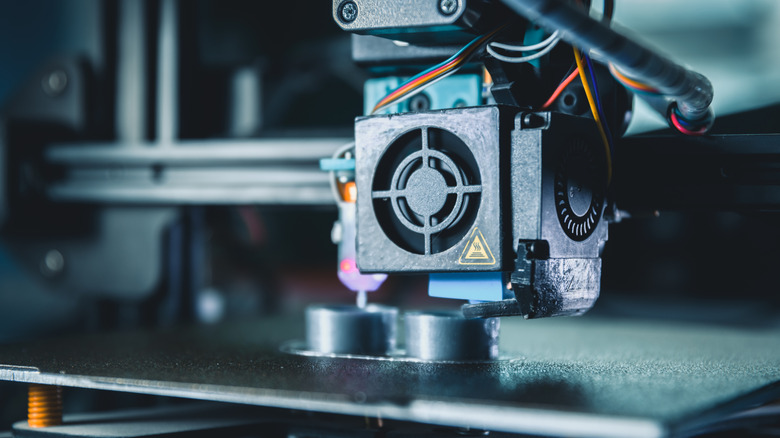
Thanks to how the technology operates, 3D printing requires ingenuity from the planning stages on. With most printer types, extruders work layer by layer from the bottom up which means a layer over open space needs special support . No support means melting, sagging, or breaking parts before the rest of the model can be completed. This is one of several 3D printing rules every DIYer should know, and always prepare for. While useful, the extra support pieces take extra time to remove later, with residue or scars left behind. It also requires extra filament, so a big print can end up wasting a lot of it. But a new breakthrough study from researchers at the University of Twente proposes a unique path-planning strategy for creating support-free horizontal overhangs.
Described as a "wave-propagation-based strategy" or wave overhangs, the method affords prints with "continuous paths that naturally navigate complex geometry through a diffraction-like behavior" allowing them to overcome usual complications and constraints like sagging. They can also be printed at a 90 degree overhang angle with no supports. Usually, angles over 45 degrees need them.
The paper, published in Additive Manufacturing Letters, is available now for anyone interested in reading. Moreover, you can try the method with your own prints. It's already deployable in forks of PrusaSlicer and OrcaSlicer per the co-author – WaveOverhangs is an example.
How does it work and what's required?
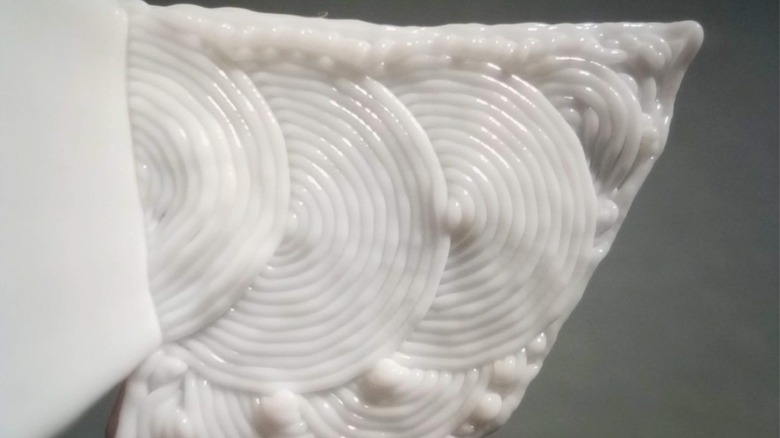
Going by the paper, and the methods the researchers described, the wave-propagation strategy can be used on standard 3-axis FDM printers. It works with shapes or overhangs that use "arbitrary geometry," and doesn't require the creation, planning, or printing of support like structures or lattices. Instead, it relies on the physical phenomenon of wave-propagation from the Huygens principle, where all points of a wave front are new sources of wavelets. In printing, that looks like printing paths recursively traced as wavefronts, curved rings that ripple outward on the same plane creating a better supported edge in open air.
Imagine looking on from the top-down and throwing a pebble into a pond, and watching the ripples or waves move outward one after another yet fully connected. That's the same idea here. For rectangular or squared-off shapes and edges, the wave pattern continues until the layer is filled as needed.
You don't need anything special in regards to materials or the type of printer. You can do it right now with the right equipment. It's all about using the right slicer toolset that can accommodate the wave designs. If you're thinking about buying a printer to try this all out, there are a few things you should know first, but research on techniques like this are lowering the barrier to entry for complex prints. The wave method has suddenly opened the door to many more prints that would have required more material, more time, and more aftercare. Another trick that allows printing twice as fast called lightning infill, could have similar results for many projects.