

5 Disadvantages Of Wired Earbuds You Should Know About
You may well have switched to wireless earbuds years ago, but when out and about, you might've noticed an increasing number of people with the wired type. Indeed, thanks in part to celebrities and social media, old-school wired earbuds are back in style.
Wired earbuds certainly have their advantages, with more bang for your buck when it comes to audio quality, and no worries about them suddenly running out of juice when you need them most. Gamers also appreciate the lag-free experience that wired earbuds provide when engrossed in the latest titles.
However, wired earbuds also come with a number of disadvantages, especially around convenience and durability. That doesn't necessarily make them a bad option for listening to your favorite music and podcasts, but it can mean that the tradeoffs become harder to ignore in everyday use. Here are the main disadvantages of wired earbuds that you should know about.
Knotted wires
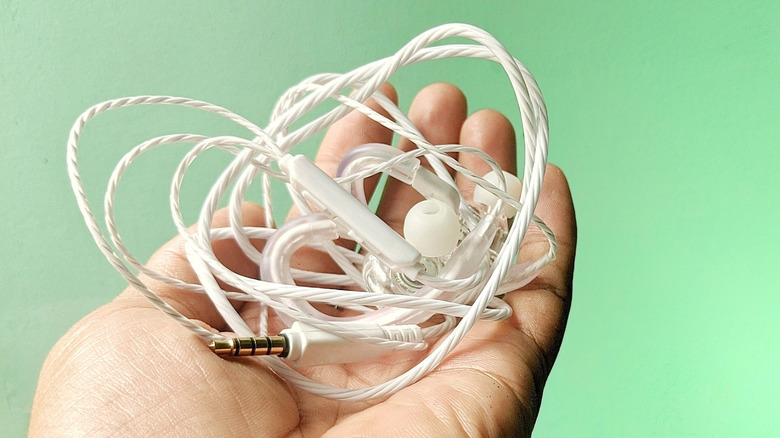
Perhaps the number one annoyance with wired earbuds is dealing with knotted wires. Of course, careful users are more likely to dutifully tie up their earbud wires each time they finish using them, ensuring a straightforward plug-and-play experience the next time the earbuds are needed.
But let's face it, many folks aren't like that, and simply stuff them into a bag or pocket at the end of a listening session. This can result in a mildly stressful experience when you go to use them again, with the wires somehow having become a twisted mess that takes several minutes to untangle.
In the grand scheme of things, dealing with tangled earbud wires is a fairly small price to pay. But in that moment, when you're desperate to relax to your favorite tunes or catch up on a particular podcast, those wasted moments can be frustrating, to say the least.
Limited mobility
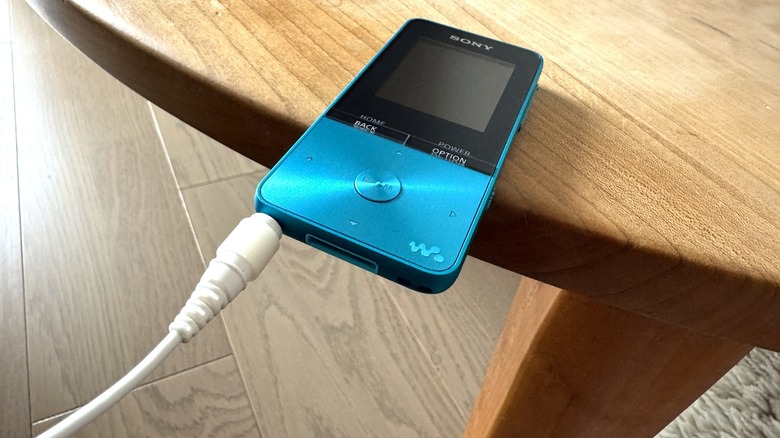
Wireless earbuds allow you to wander away from the device that's playing your content while keeping the audio connection, but that convenience is lost with the old-school alternative. Indeed, it can be easy to forget that you're using wired earbuds and then walk away, dragging your phone or other portable device off a table, or worse, tugging the wire and potentially damaging it.
Using wired earbuds means always having to stay close to the connected device, with the safest solution being to make sure it's always in a pocket or your hand. You have to always be mindful of where your device is, a reality that can make wired earbuds feel restrictive.
Whether you consider this a nuisance depends on the level of convenience that you expect from your earbuds. For some it's not a big problem, while others may prefer the greater freedom that wireless earbuds offer.
Durability
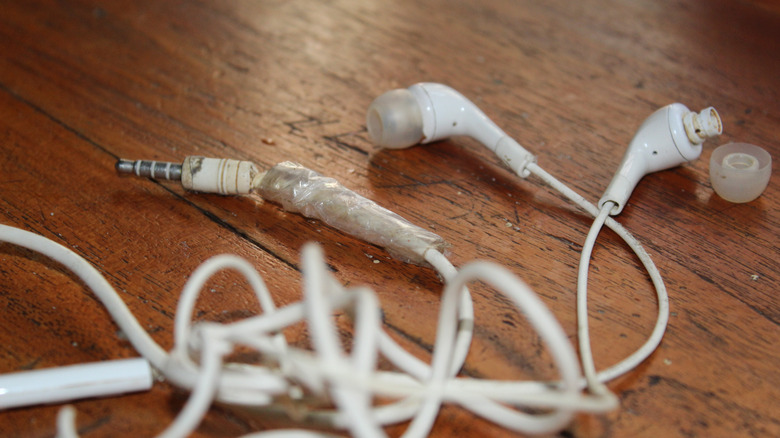
A key concern regarding wired earbuds is durability, or their capacity to deal with continued use without falling apart. Vulnerable areas include the point where the wire connects to the device, or where the wires link to the earbuds, with constant bending, pulling, and twisting eventually hindering the wire's ability to carry audio to your ears.
The problems can start even when there's no visible sign of damage, with the audio in at least one ear beginning to crackle or drop out entirely. Repairing them is often too costly or simply not practical. Treating wired earbuds with care is important, and should serve to extend their longevity.
Over time, however, their condition is bound to deteriorate, leaving you with no choice but to fork out for a new pair that'll go on to suffer the same stresses. Wired earbuds may initially feel like a cost-effective choice, but buying multiple pairs can add up eventually.
Compatibility
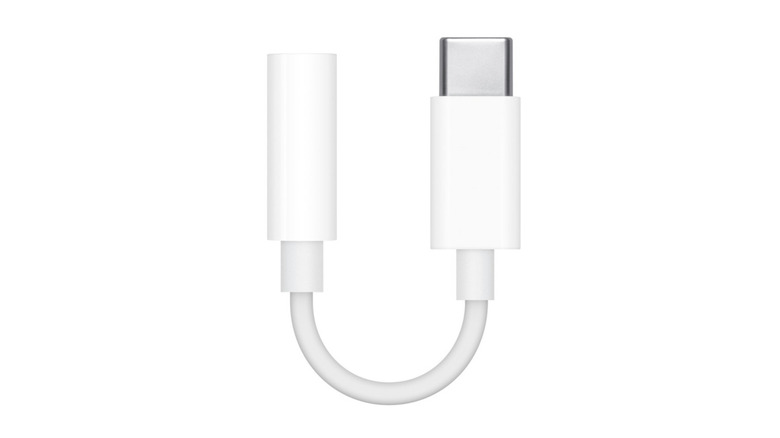
Device compatibility is another issue that needs to be considered when buying a pair of wired earbuds. Apple, for example, did away with the 3.5mm earphone jack on its handsets in 2016 with the launch of the iPhone 7.
This left fans of wired earbuds having to fork out for an adapter so they could plug them into the iPhone's Lightning port, or purchase a pair that came with a Lightning connector. And then, in 2023, the iPhone changed from Lightning to USB-C ports, forcing many people to purchase yet another adapter if they wanted to use their existing wired earbuds on the new handset.
A downside with such an adapter is that it can look a little clunky, and places another component between the earbuds and the device. Another drawback is that you're introducing another part that you might misplace, forget to carry with you, or simply break.
Snagging
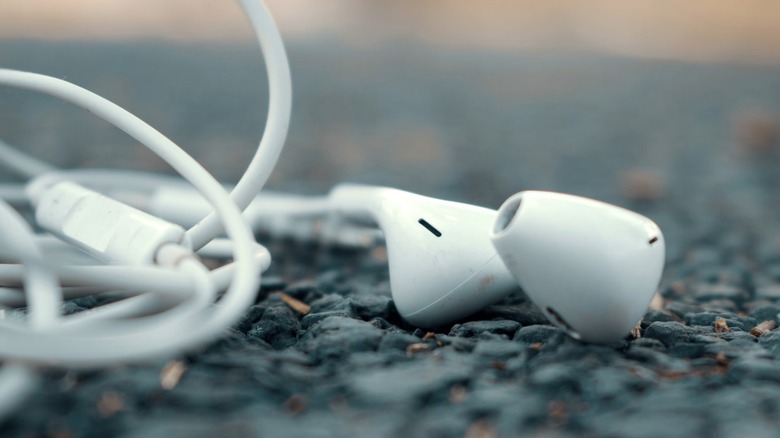
Anyone who's ever used wired earbuds will be familiar with the surprise — and downright annoyance — of snagging one of the wires on something like a door handle or other protruding object. This often results in at least one of the earbuds popping out of your ear and the wires flying everywhere.
Such a mishap can actually be quite jarring, especially if you're lost in one of your favorite podcasts or enjoying a relaxing song. And if you're out and about and the earbuds get snagged and drop to the ground, then it could be the end of your listening session until you're able to give them a proper cleaning.
Falling asleep while wearing wired earbuds can also end in a mess, with the wires tangling around your neck and at least one of the earbuds slipping out of your ear. When it comes to snoozing, wired earbuds are clearly an inferior choice compared to the specially designed earbuds for sleeping, made by the likes of Soundcore, Ozlo, and QuietOn.