

3 Powerful Gaming Systems You Can Buy For Less Than A Steam Machine
Recently, Valve revealed its Steam Machine pricing and June 25, 2026 release date. On the official Steam hardware page, the company outlined its strict reservation process within the FAQ section, so those lucky enough to be selected can buy one when it becomes available. Furthermore, the launch pricing might be more expensive than you've budgeted, as Valve unveiled that a 512GB model will cost $1,049 and the 2TB model will run you $1,349, and this is without the controller. If you want to bundle one in, it'll cost around $1,128 and $1,428, respectively.
Between the 512GB and 2TB Steam Machines, the tech specs of the RAM, GPU, and underlying CPU remain the same — it's a matter of choosing your internal storage (it can be expanded). In other words, no matter which Steam Machine you purchase, it'll still use an AMD Zen 4 (6 cores/12 threads) clocked up to 4.8 GHz for the CPU, an AMD RDNA 3 with 8GB GDDR6 VRAM (supports 1080p and 1440p upscaling to 4K via FSR) for the GPU, and will have 16GB DDR5 memory for its RAM.
While the technical specs aren't anything crazy compared to high-end gaming PCs and powerful consoles, it's being marketed as a flexible PC and gaming console that can fit nicely in your living room. While acquiring one of Valve's Steam Machines requires a lottery or waiting period, you might be curious to see how this premium device holds up against some of the most popular gaming systems available today.
Sony PlayStation 5
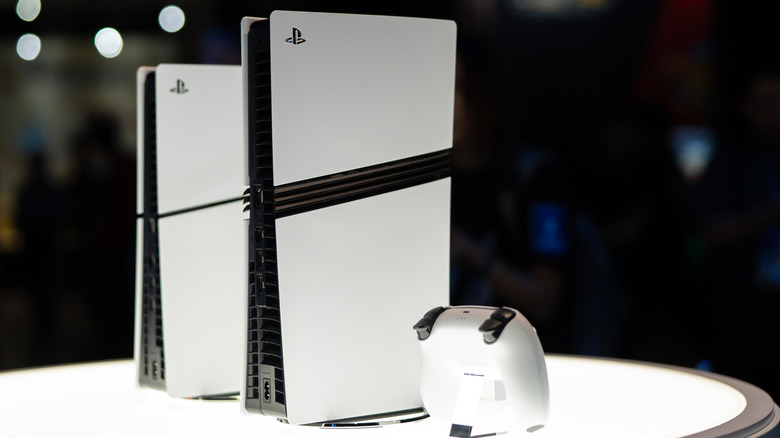
When you think about an impressive console that's a little expensive, but also widely available on the market, you likely think of the Sony PlayStation 5. It has a diverse game library, an incredible ergonomic controller for both models, and great performance. The downside is that it isn't marketed as a computer and does have some non-consumer-friendly features — for example, if you want to play a non-free-to-play game online, Sony requires users to pay for a PlayStation Plus membership (unlike Steam). But when it comes to the actual cost of the hardware and what you get for the price, the PS5 and all its iterations topple the Steam Machine in every way.
Right now, you can pick up a base PS5 slim disc model for $650 and the digital edition for $600. Sony also offers a more expensive, more powerful digital-only model, the PlayStation 5 Pro, for $900. The high-end Pro model includes a 2TB internal SSD (all models support SSD expansion, but require a specific M.2 SSD with a heatsink, which can be expensive), an (8 cores/16 threads) AMD Zen 2 for its CPU, AMD Radeon with RDNA graphics engine for its GPU, and 16GB GDDR6/2GB DDR5 for its memory and RAM.
Notably, getting a PS5 console means having to dip into Sony's ecosystem. While Sony did bring some of its console exclusives to Steam, the company decided to dial it back, keeping games like "Ghost of Yōtei," the sequel to "Ghost of Tsushima," and the 2024 sleeper hit "Astro Bot" off the Steam library. If you're already hooked by what's in Sony's gaming library and don't have a mature Steam account, the PlayStation 5 suddenly becomes a much more enticing buy than the Steam Machine.
Nintendo Switch 2
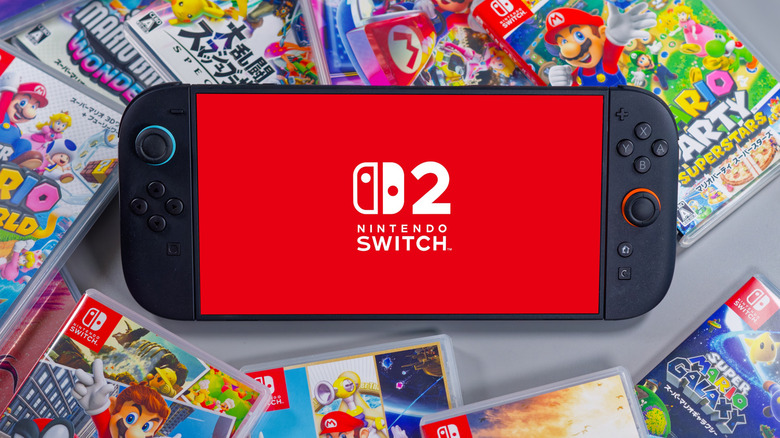
Comparing the Steam Machine's prowess to the Nintendo Switch 2 is interesting, as on the surface it seems like a total mismatch. But of course, the Switch 2 (256GB) is less than half the price of a Steam Machine, and can currently be bought for $450 (it'll be $500 after September 1, 2026). The Switch 2 comes with a choose-your-own bundle featuring full game downloads of "Mario Kart World," "Donkey Kong Bananza," or "Pokémon Pokopia." So you're already getting some new game options, unlike the Steam Machine, which depends on your existing Steam library.
In terms of hardware, the Steam Machine wins in most respects, though in some spots, the Nintendo Switch 2 is comparable. For example, both the Switch 2 and the Steam Machine offer expandable storage options; however, the Switch 2 uses Express microSD. In terms of actual specs, it isn't as easy to do a 1:1 comparison, since the Switch 2 can vary widely in performance depending on whether you're playing docked or undocked — although Nintendo uses Nvidia architecture for its GPU and processor.
One disadvantage of paying for a Switch 2 is the limited selection of games — most people who are fans of Nintendo IPs have already hopped onboard with a few consoles and portable systems in their lifetimes. If you aren't one, you might not love what the family-friendly system offers — like Mario, Yoshi, Pokémon, and Zelda — and most multi-platform ports don't perform as well as their Xbox Series X and PlayStation 5 counterparts. Nintendo's IPs are great if you're a fan — but if not, there's little reason to get one.
Microsoft Xbox Series X
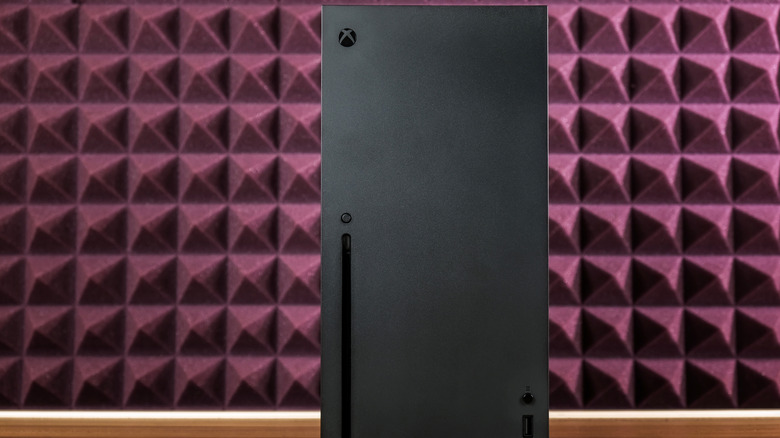
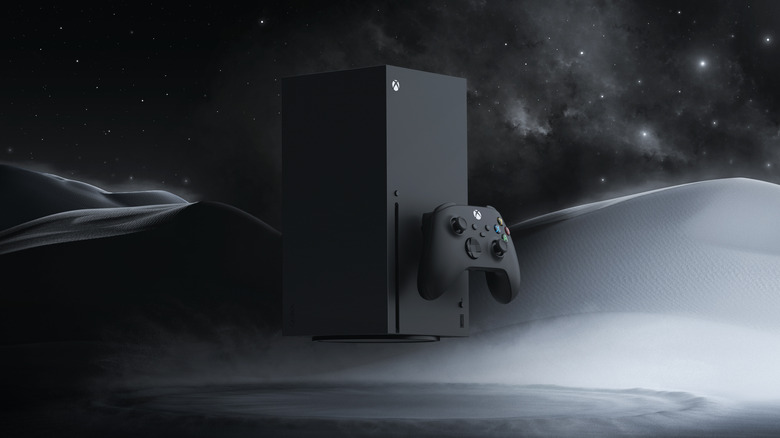
When discussing powerful systems that deserve recognition for their technical capabilities, Microsoft's Xbox Series X should come to mind. While Microsoft's upcoming Project Helix seems to be at the center of most discussions, its Xbox Series X is already readily available at a fraction of the Steam Machine's launch price — you can acquire an Xbox Series X at $600 for the white 1TB digital edition, $650 for the 1TB disc and digital model, and $800 for the 2TB disc and digital Black Galaxy special model. All support 120 FPS and true 4K gaming.
For a more technical breakdown (using the Black Galaxy special edition as a baseline), the CPU has custom (8 cores/16 threads) Zen 2 CPU, while the GPU uses a custom RDNA 2 GPU. The memory is 16GB of GDDR6, supported by a 320-bit-wide bus. On specs alone, the CPU and GPU outperform the Steam Machine in sheer speed and resolution, which isn't a surprise, since the Xbox Series X is Microsoft's best console in terms of hardware — you get what you pay for on hardware, but software is a completely different story.
The downside to buying the Xbox Series X is that Microsoft did not keep all of its famed console exclusives in-house (like Sony, this will soon change), and the Xbox Game Pass subscription service doesn't need to be accessed from the system; as long as you can use a web browser or get the app, you can play those games. The question then becomes, is the Xbox Series X console still worth buying over other options?