

Over-Ear Vs. On-Ear Headphones: Which One Is Best For You?
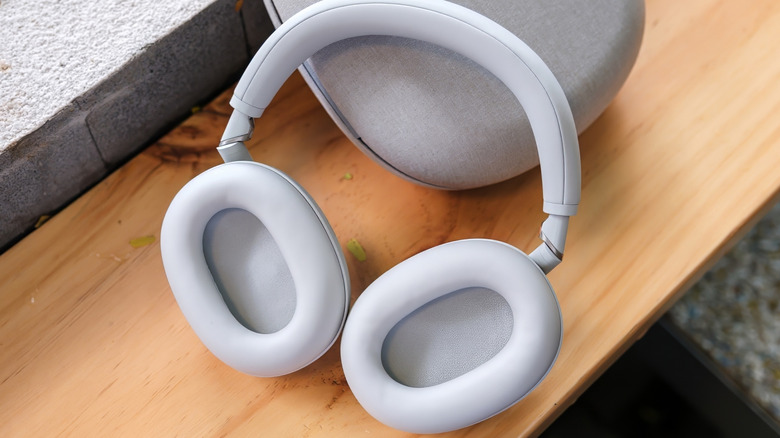
We're living in an age where even the tiniest smart speakers can deliver impressive sound, but it's still hard to beat the audio immersion and precision you'll experience with a great pair of headphones, be it wireless or wired. Hundreds of manufacturers are behind the never-ending myriad of cans that hit the market year after year. But before you start digging into the pros and cons of multiple brands, it pays to know the difference between over-ear and on-ear headphones. These are the two main designs you'll come across, and figuring out which is best for you will boil down to personal preference.
Generally speaking, over-ear headphones are the biggest type of headphones you'll find. Featuring large ear cups that cover your entire outer ear (hence the name), over-ears are often able to accommodate larger drivers, which often results in a more immersive soundstage and bolder bass. Over-ears also form a seal around your ears — referred to as passive noise isolation — and are frequently combined with a battery-powered, active noise-canceling (ANC) system to cancel out unwanted sounds like engine drone, HVAC hum, and chatty coworkers.
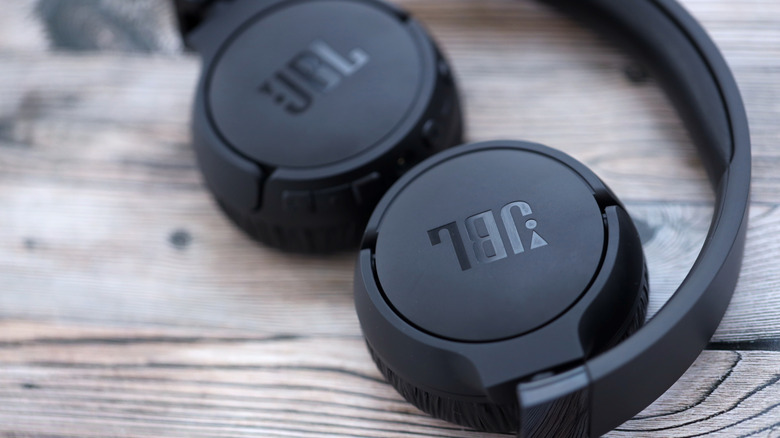
On-ear headphones are the lighter counterpart to over-ears. Designed to sit on top of your ears, on-ears tend to use smaller, flatter ear cups, with much of the clamping force being relegated to the headband. On-ears usually can't achieve the kind of passive isolation that over-ears are known for, but they're often more lightweight and easy to travel with.
Choose over-ears for sound quality, and go with on-ears for portability
When it comes to available real estate, over-ear headphones have a lot more room to work with than on-ears. Not only are over-ear drivers bigger, but they can also be angled toward your inner ear more effectively. This makes over-ears superior when it comes to overall sound quality, particularly if you're working with a closed-back pair that uses ANC. Over-ears may use leather, velour, or fabric for ear cups and headband coverings, which is part of the reason why they're not ideal for outdoor use. They're also not great at the gym, and even wearing them at home for too long can make your ears sweat.
If portability and a lighter fit are what you're prioritizing, on-ear headphones are the better option. These cans typically feature smaller ear cups and less heavy builds, making them easier to wear for longer listening sessions. And because there's less clamping force applied to your ears, on-ears don't generate the kind of seal that over-ears do; thus, you'll often be treated to more ambient sound from your environment. Unfortunately, that also comes at the cost of more audio leakage, so we recommend testing your on-ears at home before taking them to work.
Over-ear and on-ear headphones aren't the only two headphone designs; in-ear headphones (like the AirPods Pro 3) are arguably just as popular as over-ear products, and there are still plenty of companies that put out plain old earbuds, which sit right outside your ear canal.