

Automated Drones Could Protect Sydney Beach Swimmers In An Unexpected Way
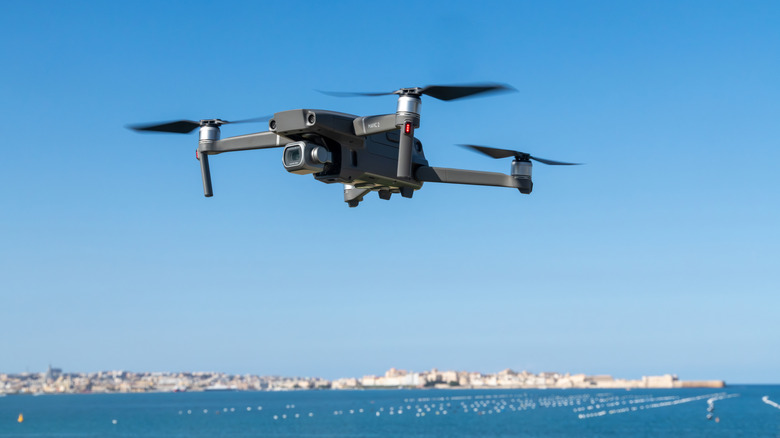
The buzzing of a drone overhead might spoil the beachside atmosphere, but it could also save lives. As part of its shark mitigation strategy, the government of New South Wales is considering the implementation of automated drones at Sydney beaches by the time summer arrives in the southern hemisphere this year. According to Professor Culum Brown of Macquarie University (via the Sydney Morning Herald), these AI drones would help prevent shark attacks by using on-board sensors combined with AI to locate and track the sharks. Once a shark is detected, the drone could alert the base so that speakers on the beach could send out a warning, and then the drone would follow the shark from above and warn nearby swimmers through the use of flashing lights and noises.
Of course, the use of both piloted and autonomous drones is a polarizing topic at beaches throughout the world. In particular, surfing communities have voiced displeasure with the noisiness and obtrusiveness of drones. The best gadgets for beach trips are ones that don't disturb the activities of other visitors. But if automated drones succeed at protecting lives and government budgets in New South Wales, then they might start to become a more common sight at beaches across the globe.
Why drone-mounted shark warning systems could become common
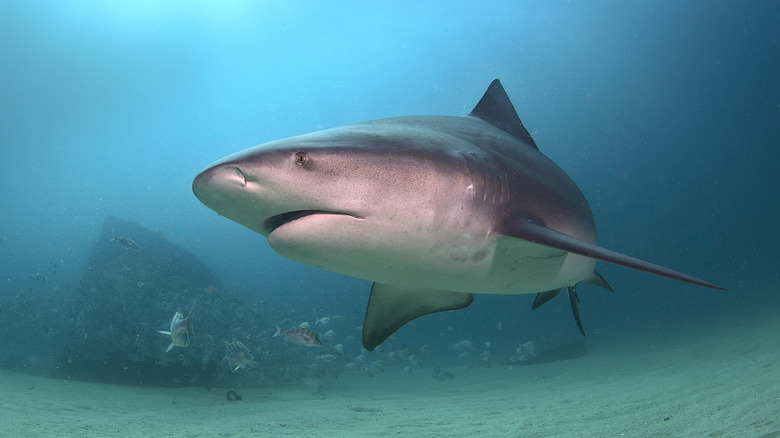
Modern technology makes it relatively easy to monitor threats through the use of drones. For comparison, Russia is turning cheap attack drones into recon tools using common tech. Similarly, the shark warning system described by Professor Brown could be implemented using existing technology and artificial intelligence. Brown went so far as to say that even the most basic form of AI is capable of generating a warning based on the size of the shark, suggesting that a modicum of training would empower the AI to identify up to 40 different fish species from drone footage.
Surf Life Saving NSW is a non-profit organization that has already run autonomous shark surveillance drones from its head office in Belrose, NSW. The company's chief executive, Steven Pearce, said (via the Sydney Morning Herald) that Surf Life Saving NSW is the global leader in shark-spotting flights. Couple that with the NSW government's yearly budget of $30 million earmarked for preventing shark attacks, and it's clear that this is a real problem that needs to be addressed.
However, the United States was the country with the highest number of unprovoked shark attacks in 2025. With 25 unprovoked bites nationwide, and 11 of those occurring in Florida alone, there's a case to be made that AI drones could make a difference at certain U.S. shorelines. There are a lot of places you can't legally fly a drone in the United States, but that notably doesn't apply to many beaches.