

Why Smartwatches Don't Use USB-C Ports (Even Though It's Faster)
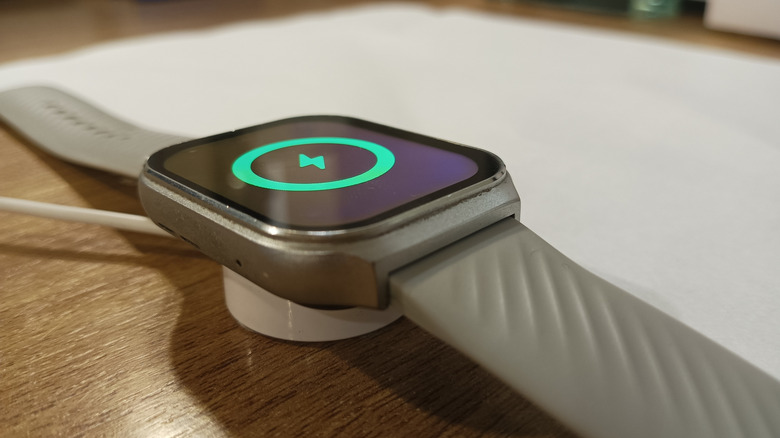
While the iPhone has changed from Apple's own Lightning connector to USB-C ports, standardizing smartphone charging cables to comply with European Union law, the same has not happened for smartwatches. Each company has its own cable that attaches to the device using magnets or pogo pin connectors, meaning you can't charge, say, an Apple Watch with a Samsung Galaxy Watch charger. Even more frustrating is that some brands don't even use the same charger for different models of their own devices, with Fitbit being the worst offender.
Theoretically, the best way to solve this mismatch problem would be to move everyone over to USB-C, as it's efficient and already used for devices ranging from the iPad to the Nintendo Switch 2. However, it's not that simple. For one, adding USB-C ports to smartwatches would negate their waterproofing, impacting the best wearables for swimmers. A port would also take up space on a device that already needs to make the most of its small form factor. Smartwatches and fitness trackers, especially the slim ones, simply don't have room for a USB-C port.
Another reason why smartwatch chargers vary is because these devices come in a range of shapes and sizes. Compare that to smartphones, which, despite all the different brands and models, are pretty similar. Because of how much smartwatches vary, it's understandable why each manufacturer uses their own charging tech, even outside of a desire to sell you their special cords. However, establishing a standard smartwatch charger would be better for both consumers and the environment.
Standardizing smartwatch charging would be a worthwhile challenge
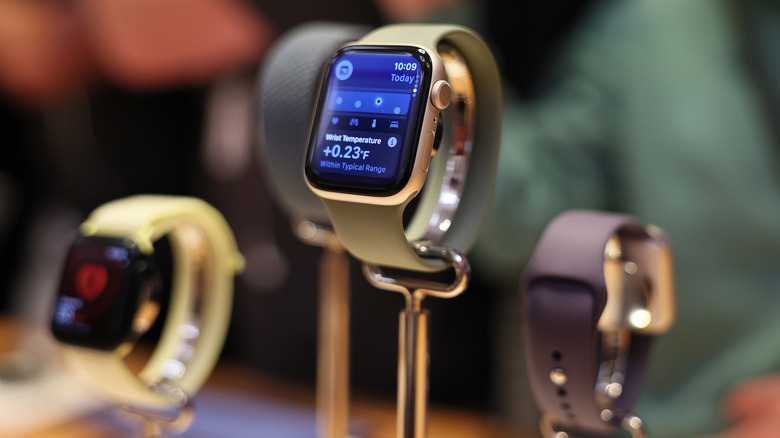
Each smartwatch maker having its own proprietary charger means your old one may not be compatible with a new device, and it almost certainly won't work if you're switching from one brand to another. That contributes to e-waste, which is rarely disposed of or recycled properly, resulting in pollution and waste of recoverable natural resources.
Unfortunately, universalizing smartwatch chargers wouldn't be simple. Since USB-C ports aren't a viable option (for reasons discussed above), there's no clear standard to adopt as there was with smartphones. Wireless chargers are a potential solution, but they can be slow and finicky, requiring the device to be placed just right to work properly. Advancements like the Qi2 standard are a great step forward, but that would still require smartwatch makers to incorporate wireless charging into their devices, which not all are willing to do for design and utility reasons.
Experts say forcing a universal charger through legislation, as was done with smartphones, would be unwise at this point. As International Data Corporation (IDC) research manager Jitesh Ubrani told Android Central, "Regulating a charging standard today would stifle innovation that would likely hurt consumers and governments even more than having multiple chargers." Companies would have to design their wearables around a charger, likely impacting form factor and features. But, while there isn't a clear solution to the problem of smartwatch chargers, establishing a standard that's fast, reliable, and accessible, just like USB-C, would solve multiple problems while improving the overall customer experience.