

Your Google Gemini Data Is Being Used For A Lot More Than Just Sending You Ads
In the ever-continuing saga of consumer data being harvested and put to use in ways people might not have intended, AI technologies present a unique source of that information. Chats and conversations you have with them, questions you ask, information you share, it's all being ingested. Google, for example, is using your regular search data to train AI. Platforms like ChatGPT regularly scoop up user data, as well. Moreover, a Stanford study found six U.S. companies with AI services that not only train systems with collected data, but also retain the information indefinitely.
The study suggests that when you use something like Google Gemini, all the information it's learning and storing is feeding into something more, likely well beyond personalized ads. In Google's words, it uses the data to provide and maintain services, develop new ones, personalize them, communicate with customers, measure performance, and protect Google, users, and the public. If the targeted advertising seems the most alarming, that's because it certainly feels like your phone, or someone on the other side, is listening.
However, they're so accurate because of the troves of private information companies have collected about you. The data comes from a combination of companies and data brokers, companies that profit from the aggregation, disclosure, and sale of personal information. It's collected through the digital services you use, like AI tools or virtual assistants, with Google Gemini being a prime example. And as Google explains, all of it is being used for much more than targeted ads.
Google says Gemini data isn't used for ads or training, but that may not be true
Google says your Gemini app chats "are not being used to show you ads," and maintains that it doesn't train AI with your data. It's always healthy to approach these claims with a degree of skepticism. Not because the companies involved may be outright lying to you, though they certainly do at times, but because the reality is not black and white. Google's claims specifically are only half true.
This simple claim can be brought into question by merely looking at the myriad of ways in which Google uses your data, and that's before considering its publicly announced plans to bring advertisements to Gemini (via Adweek). Looking at the facts, Google's AI models can be trained on Gemini inputs and outputs, which might include email snippets or context, Google Workspace files, and other Google products data. Gemini app chats might not be used in this way, but other data is, including emails you feed through the service.
When it comes to serving ads, Google explicitly says that when you interact with a voice assistant, it "may use the text of those interactions to inform your interests for ad personalization." Albeit, it's talking about Google Assistant, not Gemini directly. But say for a moment that Google's claims are true, and that it's 100%, unequivocally not using any of the data collected by these services to train AI, deliver targeted ads, or do anything shady. The sheer amount of data collected from Gemini alone is concerning, especially with it now taking over Android phones and mobile devices by default.
What information is Gemini collecting?
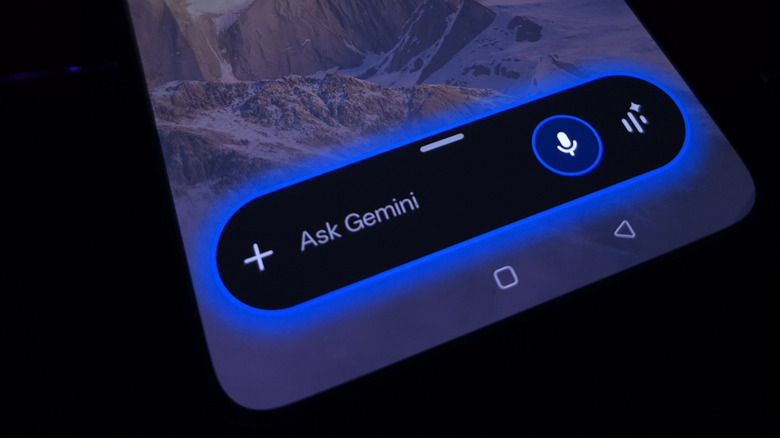
Google explains what Gemini collects in full detail: Using Gemini apps stores information about content the tool generates, details about steps or tasks it takes in order to complete actions for you or respond, information from your apps, browsers, and devices, supplemental information, location information, and subscription information. There's also the information "you provide" to Gemini, like what you say to it, what you share, transcripts and recordings of interactions, including video, audio, screens you share, and much, much more. It's an uncomfortable truth about using Google Gemini, but there are some huge privacy trade-offs.
Google also says in the section about how it uses all that data that human reviewers may preview some of that information. It even advises against entering confidential information or anything sensitive that "you wouldn't want a reviewer to see" or anything you wouldn't want "Google to use to improve [its] services, including machine-learning technologies." It's also unclear how long some of the data it collects is retained. Google does share timelines, but it varies depending on what the data is and how it's used.
Chats are stored for up to 72 hours, while app data can be stored for up to 18 months. You can choose to auto-delete Gemini app activity at various intervals or manually delete Gemini app chats "anytime," but Google says some data is retained "for longer when necessary" or, in select cases, until you delete your Google Account. Outside of Gemini, you can also review or delete data from the basic (classic) version of Google Assistant, as well.