

Why Did Apple Stop Making Leather iPhone Cases?
We may receive a commission on purchases made from links.
If you're dropping a chunk of your hard-earned cash on an iPhone, there's a good chance you'll be looking for a case to go with it. iPhone cases come in a huge range of designs, some focused on protection, some on style, and others on practical features such as card holders and kickstands. Indeed, when it comes to cases, iPhone owners are spoiled for choice.
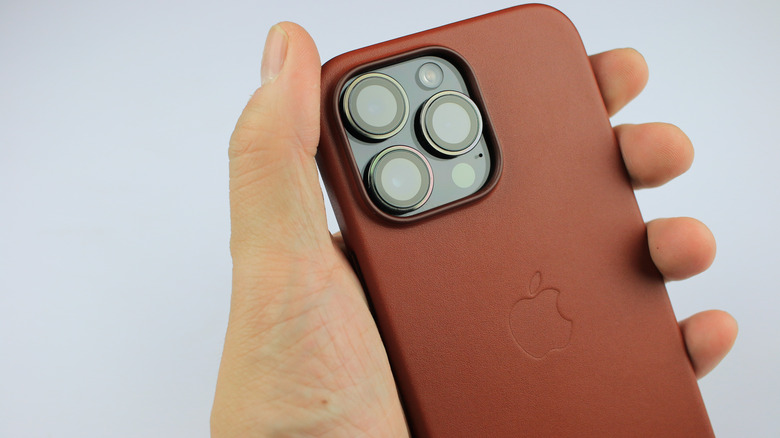
While the vast majority of iPhone cases are made by third-party vendors, Apple also offers its own selection. In 2013, the same year that it launched the iPhone 5S, the Cupertino-based tech giant started offering a leather iPhone case, positioning it as a premium accessory.
But as climate awareness grew in the 2010s, environmentally conscious shoppers increasingly demanded action from leading brands. Apple and many other high-profile firms responded by setting sustainability goals. In 2012, for example, the iPhone maker committed to using 100% renewable energy for its main North Carolina data center — a goal it achieved the following year for all its data centers globally. Apple later expanded that commitment to all corporate facilities worldwide, a milestone it achieved in 2018. And then, in 2023, as part of Apple's ongoing environmental commitment to its 2030 carbon neutrality goal, the company stopped selling its leather iPhone cases and other leather accessories, saying that the material "has a significant carbon footprint."
From leather to FineWoven ... to TechWoven
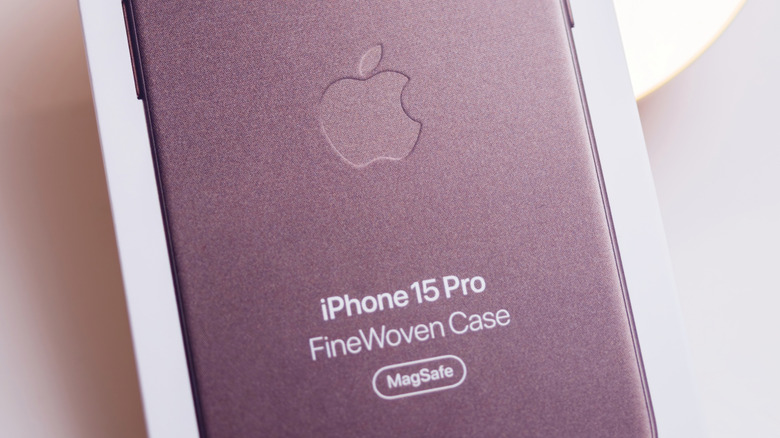
Apple's efforts to become a greener company placed its leather accessories in the crosshairs. According to the Food and Agriculture Organization of the United Nations (FAO), livestock supply chains are responsible for 14.5% of global greenhouse gas emissions, with cattle (beef and milk) alone accounting for roughly two-thirds of that total, or about 9.7%. Given the significant environmental impact and the high energy costs of leather production, Apple decided to scrap its leather iPhone cases, replacing them in 2023 with a FineWoven design costing $59 — the same price as its old leather cases. Made of a microtwill fabric woven in a diagonal pattern, Apple described the material as "luxurious" and "elegant" and having a "suedelike feel." It also has "significantly lower carbon emissions compared to leather."
However, the FineWoven iPhone cases were soon widely criticized for lacking durability and quality, with scuffs and scratches appearing on many people's cases after just a short period of use. Then, 2 years later, in 2025, Apple tried again with a new TechWoven design made from 100% recycled polyester. Reviews suggested it was an improvement over FineWoven, with superior durability and stain resistance. Apple's move away from leather cases means those who still prefer a leather case for their iPhone now have to look elsewhere.
No shortage of iPhone case options
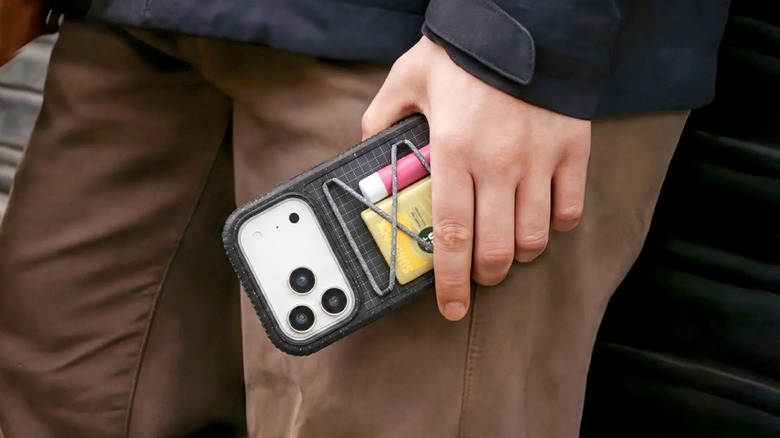
Besides its TechWoven iPhone cases, Apple also offers silicone and clear plastic designs, some of which have MagSafe functionality for wireless charging, along with various attachments and accessories. But there's also strong competition from a slew of third-party brands that can comfortably compete with Apple when it comes to iPhone cases, giving shoppers plenty of choice in design and materials.
For starters, anyone seeking a leather iPhone case has plenty of choices, with the likes of Nomad and Smartish among many brands that can sort you out. For those with butterfingers, some of the brands best known for durable phone cases include offerings from the likes of Otterbox and Dbrand, the latter having expanded from skins and wraps into protective accessories. Meanwhile, iPhone owners who value practicality over durability might opt for a wallet phone case that attaches to the phone and holds other items like your ID, bank cards, and cash.
Conveniently, many third-party iPhone cases also offer Apple's proprietary MagSafe system for charging and accessory attachment. Third-party cases often offer more attractive pricing than Apple's offerings, most of which cost between $39 and $59. While some claim that there's simply no need for phone cases anymore, the reality is that, if you do want to use one to protect your iPhone, the biggest challenge you'll face will be wading through the dizzying array of options.