

How Does Gorilla Glass Protect Your Device's Screen?
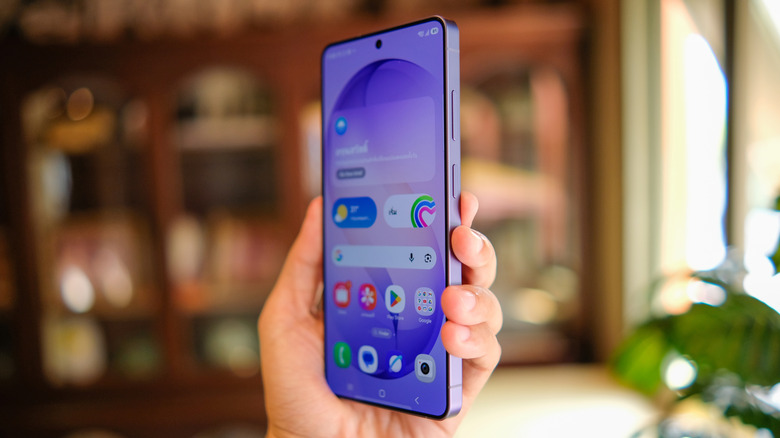
Personal devices, particularly smartphones, aren't just for bugging your friends and playing games; they're vital social and professional lifelines, and a sudden screen shatter could have disastrous consequences. This is why brands like Corning have obtained such a strong presence in the mobile field with protective screen coverings like Gorilla Glass. With a proprietary physical and chemical treatment process, Gorilla Glass gains resilience without sacrificing flexibility, protecting your device from both sudden drops and general wear.
Thanks to the particular way in which it's created and treated, Gorilla Glass can resist the wear and tear of daily life, as well as the occasional slip out of your hand, all without making the device it's attached to heavy or unwieldy. Of course, with Gorilla Glass's success has come numerous other screen protection products like Ceramic Shield, each of which put its own spin on the protective treatment process. It's a surprisingly competitive scene, but it's all good news for users, as it means we get a steady stream of tougher devices.
Gorilla Glass's special treatment makes it sturdy, yet flexible
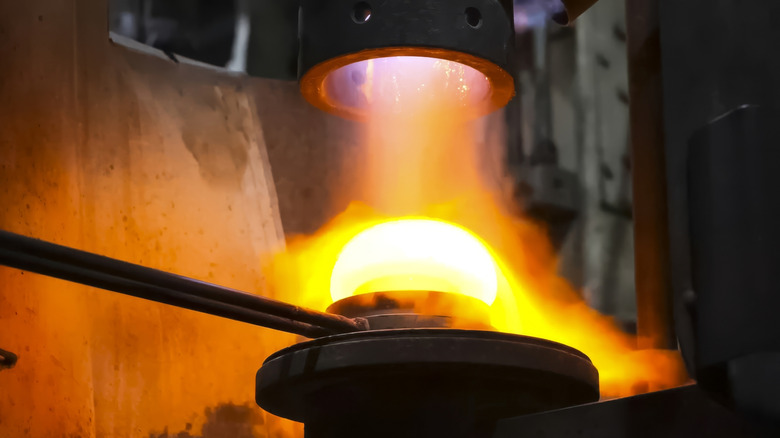
Gorilla Glass starts out as nothing but an ordinary pile of silicon dioxide, better known as plain old sand. Sand and similar fine minerals harden into glass when exposed to intense heat. Corning combines this sand with a proprietary blend of chemicals, then melts all of it down into a new substance called aluminosilicate. The molten aluminosilicate is then poured into a special trough until just after the point it starts to overflow, after which automated arms draw the glass sheets out from the edges. Afterward, the glass is subjected to a special chemical treatment process, sitting in a bath of molten salt that swaps the small sodium ions in the glass with the larger potassium ions from the salt. When the glass finally cools down, those sandwiched ions create a compressive layer on its surface.
What all of this adds up to is a sheet of sturdy glass that's very thin, around 0.3-0.5 millimeters thick, but with a sort of invisible cushion along both sides. Where normal glass is very rigid, shattering with too much sudden force or bending, Gorilla Glass has an extra degree of flexibility thanks to that cushioning layer. A little bit of extra flexibility can make a massive difference, as it allows the glass surface to safely absorb sudden impacts like drops, as well as stand firm against the constant poking and bending that comes with daily phone usage. Gorilla Glass's only major weakness is that it's vulnerable to scratches from harder metals or minerals.
Different devices use different types and brands of screen protection
Since the first iPhone's launch in 2007, Corning has become one of the definitive names in smartphone and tablet protection thanks to Gorilla Glass. However, just as smartphones themselves have become an extremely competitive market, Gorilla Glass isn't the only screen protection on the scene anymore. Brands all over the world have experimented with their own proprietary glass compositions, with a smartphone purchased in a particular country possibly equipped with a completely different brand's glass.
Interestingly, one of the biggest competitors to Gorilla Glass is actually another Corning product, Ceramic Shield, which has been standard on iPhones since the iPhone 12. Ceramic Shield is created in a similar manner to Gorilla Glass, but with the addition of ceramic nanocrystals to the glass melt to make the base glass tougher.
Given Corning's dominance, some smartphone manufacturers have started moving away from Gorilla Glass and toward in-house solutions. No matter who it comes from, though, odds are generally good that if you're buying a smartphone or tablet from one of the major first-party brands like Apple or Samsung, it's going to have a protective layer like Gorilla Glass or a comparable product protecting its screen.