

What's The Difference Between A Nuclear Reactor And A Power Plant?
Nuclear energy comes with both great risks and great benefits, as nuclear meltdowns are rare but potentially catastrophic. However, even if nuclear power isn't 100% clean, plants and reactors themselves don't produce air pollution the way burning fossil fuels does. You'll hear both terms get thrown around a lot, so it's worth understanding the difference between nuclear reactors and nuclear power plants.
Nuclear reactors are the machines that control and contain the fission process, which involves using nuclear chain reactions to produce great amounts of heat used to turn water into hot, pressurized steam. They're centered around a core composed of hundreds of fuel rods containing enriched uranium. Nuclear power plants are the facilities that house these reactors and other equipment. That includes the steam-powered turbines that connect to generators and produce electricity.
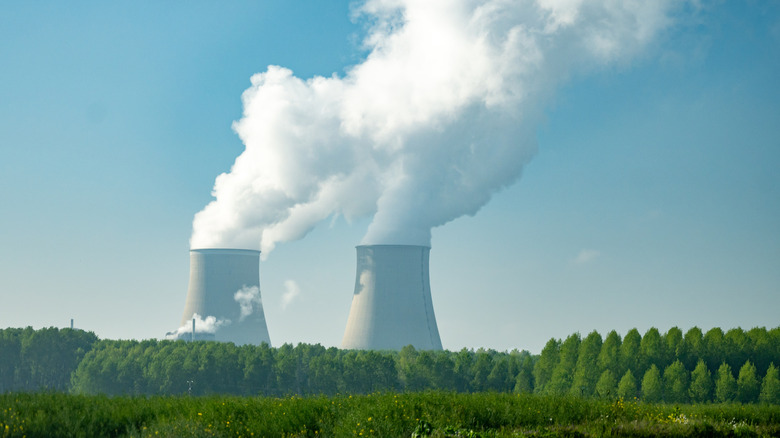
Power plants also handle cooling and dangerous nuclear waste. Since the equipment gets hot, plants use nearby water sources to dissipate heat, which also needs to be cooled before it can be released. In fact, those massive towers you see at nuclear plants aren't reactors and aren't emitting smoke; they're part of the cooling system, and what you're seeing is water vapor.
A new kind of nuclear reactor is coming to the U.S. soon
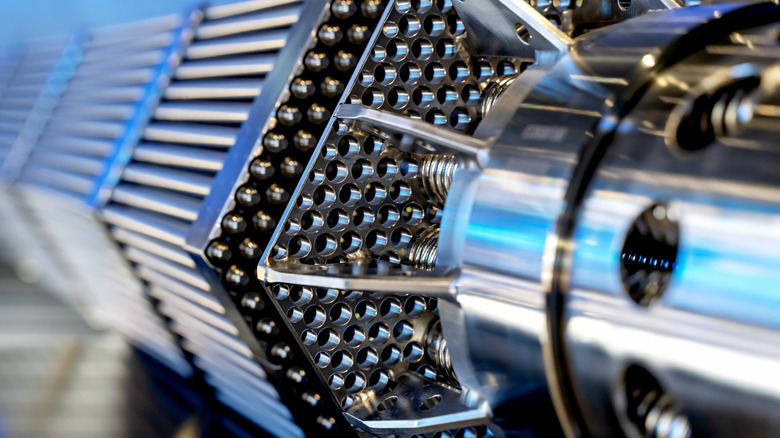
While nuclear reactors use the same general process of controlling uranium fission to generate heat and electricity, there are different types of reactors. All currently operating plants in the United States use normal water as a moderator (the material that helps control the reaction) and coolant, though next-gen nuclear generators are coming to the U.S. For now, the States have two types of nuclear reactors — boiling-water and pressurized-water — but other countries use materials like heavy water and liquid metal.
Boiling-water reactors are straightforward, heating water until it becomes steam. Pressurized-water reactors use pressure on the water that goes through the core to prevent steam production. It then uses that to turn clean water into steam, which is used to power a generator. These kinds of reactors are the most common worldwide, as they are safer and easier to run than boiling-water reactors.
The United States' first non-water generator is planned to open in 2027: Kairos Power's Hermes reactor in Oak Ridge, Tennessee. The new reactor will use molten fluoride salt as a coolant, which is more efficient at producing electricity and more cost-effective. The heat it produces can also be used for other purposes, such as making hydrogen without emitting greenhouse gases. That increased utility and potential to help decarbonize other industries makes molten-salt nuclear reactors and other innovations intriguing tools for addressing manmade climate change, even if they still come with the overall risks of nuclear power.