

The Scientific Reason Why Your DIY Home Audio System Is So Satisfying To Build
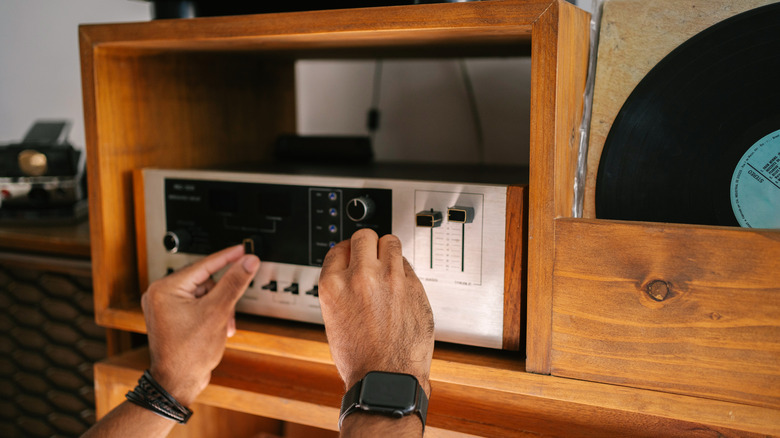
It's a phenomenon we've all experienced at some point or another. At first the idea of having to unbox and assemble that new bed frame, bookshelf, or treadmill seems daunting and like a huge inconvenience. Yet on the other end of it, having built it with your own hands, you're left with an afterglow of accomplishment where you feel better about yourself and about your purchase. It's the same phenomenon you encounter in a DIY home audio build. A system assembled piece by piece feels more valuable than a prepackaged bundle even if the technical performance is similar, because you associate the final sound with personal achievement. That can be especially true if the project involves a specific calibration, like implementing the 83% rule for speaker placement, minutely tweaking some of your gear's settings, or correcting for a room's dynamics.
You've just experienced what a study in the Journal of Consumer Psychology calls "The Ikea Effect." As the study explains, people tend to place more value on activities and results that required some labor from them to achieve. According to research cited in the study, it's why many of the same people that describe their jobs as one of the most onerous parts of their lives also describe them as the most rewarding. The correlation between unpleasant exertion and the resulting satisfaction is called "effort justification," and it's a big part of the reason building your own home audio system is more rewarding than buying a bunch of cool audio gadgets or a fully assembled system off the shelf.
The Ikea Effect explained

Across a series of experiments, the authors found that labor isn't just a cost people endure; under the right conditions, it becomes a source of attachment and perceived value. To demonstrate this, the researchers used several hands-on tasks, including assembling IKEA-style furniture, building with Legos, and folding origami. Participants who completed these tasks often assigned higher values to their own creations than neutral observers did, and in some cases they valued them almost as much as expert-made alternatives.
The effect was not limited to a single product category, and it's easy to see how it affects meticulously constructing your home audio setup. When you choose the speakers, wire the components, position the subwoofer, and tune the system yourself, you're not just purchasing sound quality, you're investing time and care into the result. That effort means investment and imprints a sense of ownership on the result, and it often increases your appreciation of small improvements, like cleaner channel separation or a better soundstage, because you understand what it took to get there.