

This Breakthrough 3D Sensor Gives Robots True Human-Like Vision
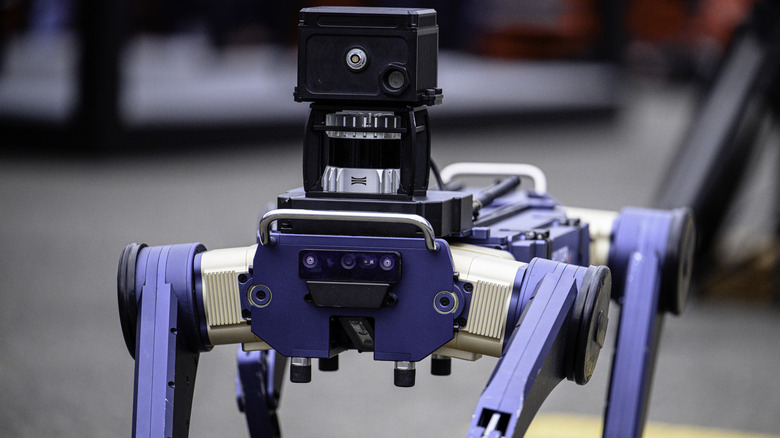
Robots, humanoid or otherwise, have been able to "see" for many years now. Similar to how you can use LiDAR on your iPhone, robots can make fairly accurate maps of their surroundings, seeing people and objects in relative clarity. However, until now, those maps were rendered in monochrome, a hurdle that kept robots from seeing the world the same way we do. That may have finally changed thanks to sensor developer Ouster, and its release of the new color-equipped Rev8 LiDAR sensor.
The Rev8 sensor is equipped with Ouster's latest technological developments in the Physical AI space, including the L4 Ouster Silicon chip, which doubles the range and resolution of its LiDAR. Moreover, the Rev8 features the world's first patented native color LiDAR sensor. With this sensor, robots can now see the world as humans do, parsing finer details like colored road signs or car brake lights. This can help make the robots safer to operate in a broader range of settings, which will be increasingly vital as robots continue to take over the human labor industry.
Ouster's Rev8 LiDAR can create elaborate color 3D maps
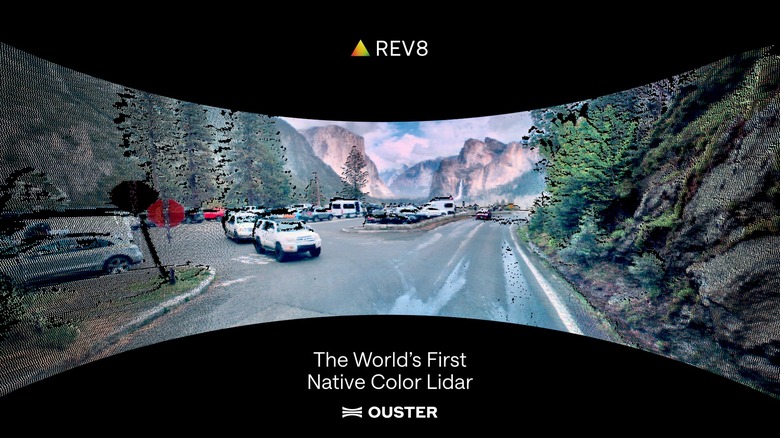
The majority of autonomous sensor frameworks are either built around cameras, or a combination of systems like cameras, LiDAR, and algorithms. However, Ouster's Rev8 technically doesn't fall into either of those categories. Rather than trying to stitch together ambient color data from a camera view with positional data from a LiDAR, the Rev8 instead relies exclusively on its LiDAR.
The Rev8's LiDAR captures color data automatically alongside its regular 3D scans, so the colors of passing objects are baked into the maps the sensor creates, with no additional cameras or processing software required. Combined with the resolution and range improvements of the company's L4 chip, the Rev8 sensor can create full-color maps of its immediate surroundings with impressive clarity. Of course, it doesn't see the world exactly the same as a human eye does.
But for a 3D map created exclusively by a LiDAR sensor, it's accuracy is notable, able to spot passing pedestrians and colored signs on a busy city street. Additionally, since the system is built around the single sensor, scans have a lower latency than hybrid systems and doesn't require an elaborate setup and calibration. With this improved capability, robots equipped with the Rev8 can better navigate the world around them. As well, the color data gathered while doing so could make major contributions to training the next generation of physical AI devices, including home robots that can solve everyday problems.