

Ford Replaced Engineers With AI But Had To Hire Them Back Pretty Quickly
The fear of AI taking the jobs of human workers has existed practically since the technology's inception, and practical examples of that phenomenon have been seen in recent years (while at the same time, there's evidence of short-term bumps in blue collar employment in some sectors due to AI). However, AI isn't the only factor driving layoffs, and the results of replacing human intelligence with an ersatz machine substitute aren't always what employers expect.
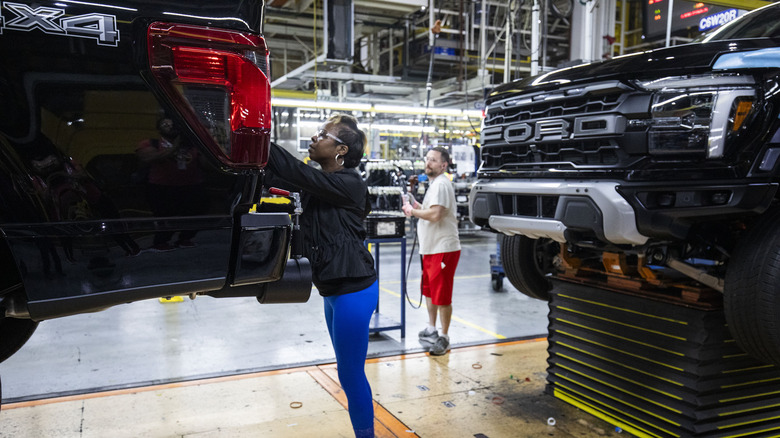
It's a bitter lesson that Ford learned recently when it attempted to replace a number of its human engineers with AI, according to a report at Bloomberg. The U.S. automotive company discovered that replacing human quality inspectors with an AI alternative led to an inferior product, which Bloomberg says cost the company billions. The downturn led to Ford reversing course and hiring 350 experienced quality inspectors, many of whom had previously been with the company, in an attempt to retain legacy, institutional knowledge that had been lost in the pivot to AI.
The rush to profit at the expense of quality
Ford announced a broad transition to AI in a Q3 earnings call from 2025, saying it had already begun "systemically deploying AI across the entire industrial system," including 900 AI-powered cameras to help detect quality issues early in the manufacturing process. The rush to adopt the buzzword technology without appropriate preparation, however, led to significant quality issues. "Mistakenly, we thought that by just introducing artificial intelligence and ingesting the design requirements that we had, that that would produce a high-quality product," said Charles Poon, Ford's vice president of vehicle hardware engineering, in a call with reporters.
Poon acknowledged, however, that without being trained by individuals with the proper experience, the AI tools were seriously flawed. While Ford has moved to address the issue by hiring up human staff (and the move seems to have been effective, with the company vaulting up to top mass market brands in JD Power's 2026 U.S. Initial Quality Study), the language around the move is somewhat worrying. Indications are that the human workforce is mainly being employed to train the AI systems.
"We recognised that for us to enhance some of our automation and machine learning and artificial intelligence tools we needed to ensure that they were trained by the most experienced individuals," Poon said. What's unclear is what will happen to the corps of rehired engineers when the AI systems have absorbed their expertise.