

What Does CE Stand For On Electronics?
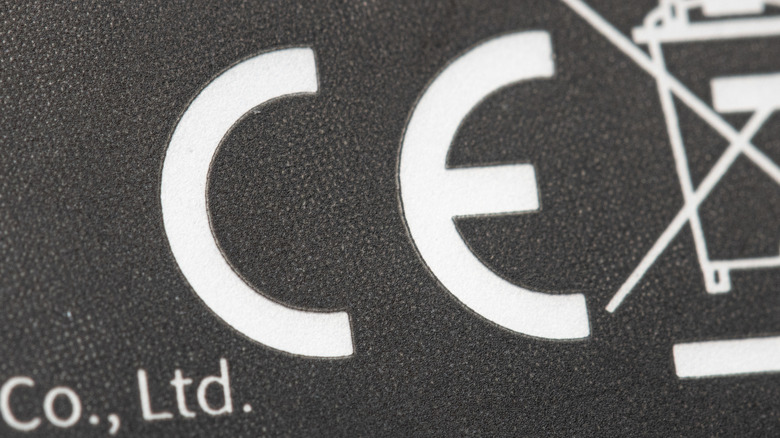
CE. Two letters that many of you will have seen but have probably given very little thought to. For those not in the know, CE is a conformity mark used on a range of products sold in the European Economic Area (EEA), which includes the European Union (EU) single market plus Norway, Iceland, and Liechtenstein.
The letters stand for Conformité Européenne, a French phrase that translates to European Conformity. When a product includes the CE mark, it means that it meets stipulated EU requirements relating to safety, health, and environmental protection. It's important to remember, however, that the mark does not mean it was manufactured in Europe. Nor does it certify quality, so you'll find it on, say, all major phone brands, from best to worst.
If you live in the EEA, you're much more likely to be familiar with the CE mark than if you're elsewhere, like the U.S. Still, if you're outside the EEA and you glance at the back or underside of one of your gadgets, you may well spot the CE mark. So what does it mean in practice? To answer that, we need to look at how the CE system works, from the products it covers to the rules that manufacturers need to follow before adding it to their device and placing it on the market in the EEA.
How the CE mark is applied
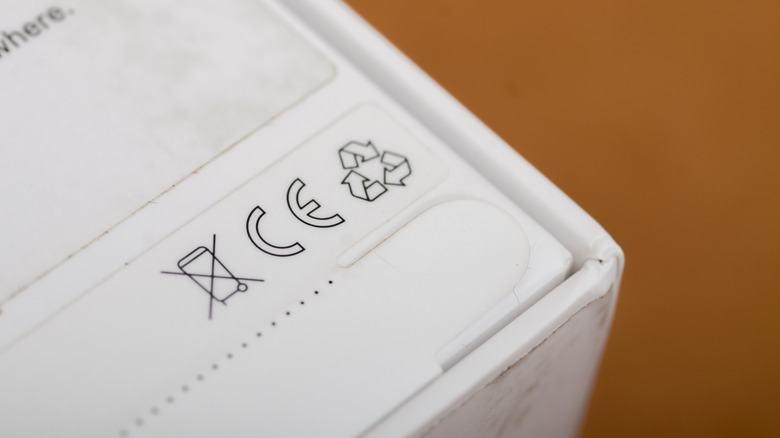
The CE mark applies to products across a range of categories, including not only electronics like smartphones but also toys, machinery, medical devices, and construction products such as doors and windows. Before a manufacturer can add the CE mark to one of its products, it first has to determine if the item can be self-assessed or if it requires assessment by an independent body, which is often the case for higher-risk products like medical devices and some machinery. With an independent assessment, a four-digit number will appear alongside the CE mark when it's printed on the product or its packaging, indicating that an approved third party was involved in the compliance process.
The manufacturer also has to present evidence demonstrating the product's compliance with the rules before finally drafting and signing an EU declaration of conformity. According to EU rules, the mark must be "visible, legible, and indelible," and comply with strict design rules. These include both letters having the same vertical dimension and a minimum height size of 5mm (0.2 inches).
Obtaining the CE mark can be crucial to a product's success, as it allows the manufacturer to sell it throughout the EEA — a colossal market of just over 450 million people — under a single set of EU rules, thereby eliminating the need to adapt a product for multiple markets. It's a good reason why businesses keen to sell into the EEA should treat CE compliance as a priority early on in the process of bringing a product to market.
Other versions of Europe's CE mark
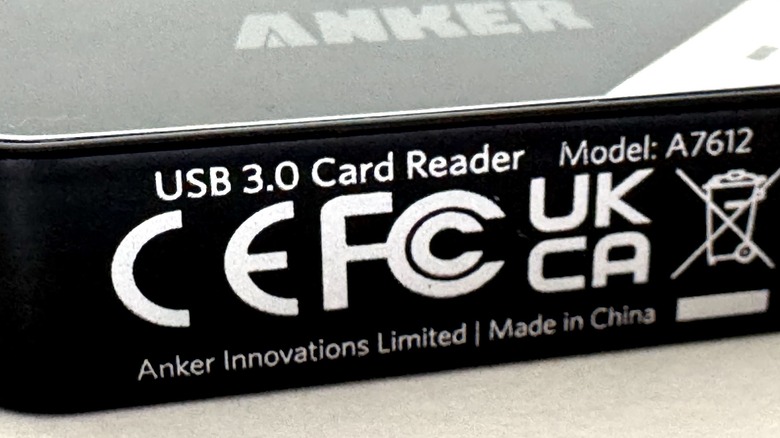
As you'd expect, the U.S. uses different regulatory marks for products entering its own market, with FCC and UL among common examples. FCC stands for Federal Communications Commission and focuses on radio frequency interference rules, while UL is short for Underwriters Laboratories and relates to product safety testing. Much like the EU's CE mark, they show that a product has met certain regulatory or safety standards. After voting to leave the EU in 2016, the U.K. introduced its own UKCA mark in 2021 for many products in its own market.
Of course, there's nothing stopping a shady company from adding a fake compliance mark to its product in the hope that shoppers will consider it more trustworthy. It's hard to know how often it happens, but lower-cost items sold through online marketplaces may be especially vulnerable to this kind of misuse because it's easier to sell on such sites without much scrutiny. The issue of fake compliance marks is an important one because they can appear on products that were never properly tested, creating a possible safety risk.
A fake mark might have badly spaced letters, or its design might seem slightly off. While an odd-looking mark isn't always proof of fraud by itself, it can be a reason to take a closer look at any supporting documentation or official records, especially for products where safety or electrical compliance really matters. With that in mind, you should always use your own judgement, too, as there are some things you should probably never buy from online marketplaces like Amazon.