

Offshore Wind Farms In Europe Are Having An Unusual Effect On Marine Life
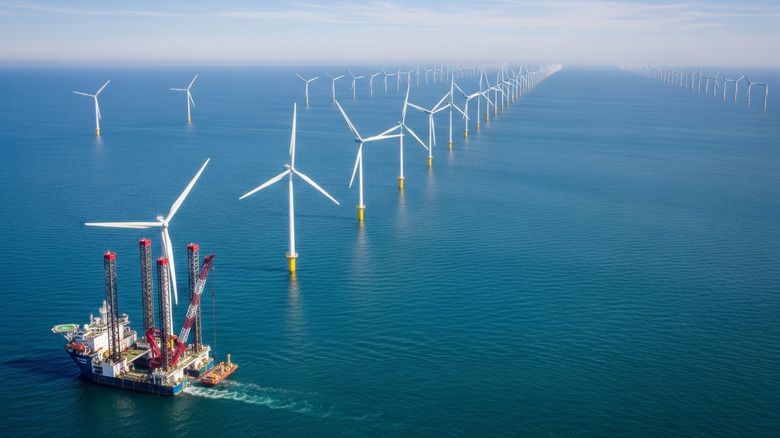
Offshore wind farms have a ton of potential. Not only can they tap into seafaring winds that otherwise go unused, but engineers are now utilizing them as magnetic charging stations that let electric ships recharge wirelessly. However, these oceanic installations are having an unexpected effect on local wildlife. Researchers have found that wind farms can alter migration patterns and scare off porpoises.
In 2004, the National Environmental Research Institute (NERI) of Denmark published a paper on the effect of the Nysted Offshore Wind Farm, in the Baltic Sea, on the effect it had on local porpoise populations. Researchers noticed a decline in sonar (porpoises use it to hunt for food), because the animals avoided the area during the first year of operation. In 2012, Environmental Research Letters published a follow-up to NERI's study. This paper demonstrated that while echolocation activity had increased in the years since, it was barely over a quarter of its pre-wind farm numbers.
The reasons why the porpoise population numbers have yet to fully recover is a subject of debate. One explanation is that active construction of the wind farm initially drove off the local porpoises, but researchers have theories as to why the animals returned after construction. Namely, the porpoises becoming habituated to the presence of the wind farm and being attracted to a growing abundance of food. This can be partly attributed to artificial reef effects, but also a lower level of fishing around wind farms.
Science is based on repetition, and not all repeat studies agree
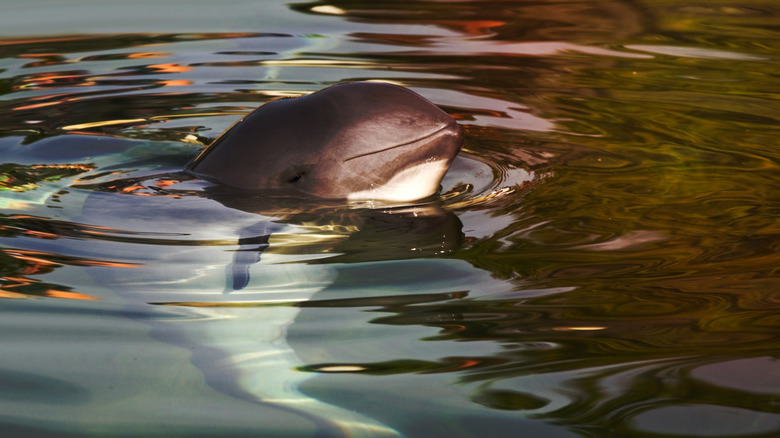
One might assume that NERI's findings (and those of the follow-up study) demonstrate that the wind farm scared away the porpoises. However, that is only one population and one theory. No scientist worth their salt would just call it a day after that; they must pursue other explanations.
In 2026, the Predators + Prey Around Renewable Energy Developments (PrePARED) project published their own paper on how offshore wind farms could potentially affect surrounding porpoise populations. This study took into account the presence of, and noise produced by, large ships. Interestingly, researchers found that wind farm construction didn't drive away porpoises in sufficient numbers.
While this data is clearly at odds with prior findings, we must provide a disclaimer: PrePARED did not use actual porpoises, ships, or wind farms in its study. Instead, all elements were simulated using the DEPONS process-based module. This raises the obvious question of which study is correct. After all, porpoises aren't the only animals that these installations impact. As things stand, while many aquatic populations crop up underneath offshore wind farms, and others return to take advantage of them after temporary displacement, porpoises do not seem to be among them. These wind farms may be gamechangers for clean energy, but more research is needed.