

Users And Manufacturers Disagree On How Long Wireless Keyboards Should Last - Here's Why

It's always a good idea to identify how long products last, and that's especially important for electronics such as keyboards. You're hammering away at those keys daily, sometimes for hours at a time, and even with premium components, they're going to wear down. On average, under normal wear-and-tear conditions, you can expect a new wireless keyboard to last anywhere from two to 15 years.
Of course, the answer is going to be different depending on who you ask, with a discrepancy between what manufacturers say and real-world users say. The lifespan also depends on the type of keyboard, as wireless options come in both standard and mechanical formats, just like wired models. Yes, there is a huge difference between mechanical versus membrane keyboards. Membrane-style keyboards, without switches, tend to last two to four years with low repairability options. Mechanical keyboards, on the other hand, last upwards of five to 15 years, and the keys and switches can usually be swapped out, meaning with good care and proper parts replacements, they might even last much longer.
Overall, it's difficult to nail down a definitive average lifespan for everyone's keyboard because of how they're measured — in keystrokes. What you need to know before buying a mechanical keyboard, wireless or otherwise, is that the switch type matters more than the brand, along with the overall build quality of the board and the individual keys.
Keyboard lifespans are measured in total keystrokes, and there's no standard
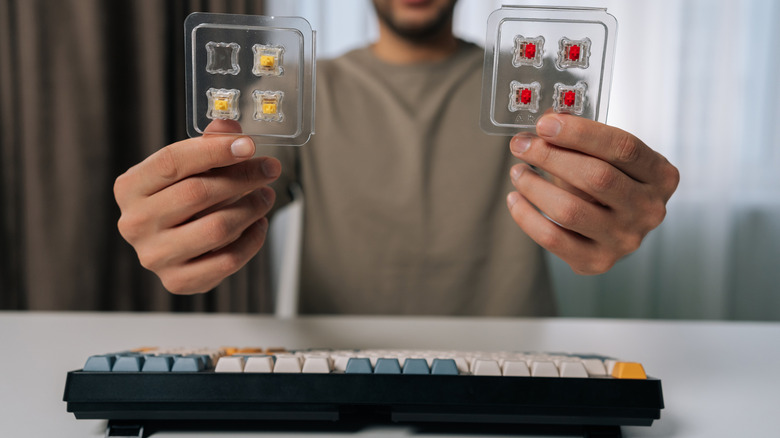
As for the stark estimates between manufacturers and users, part of that is because the life expectancy of a keyboard is usually described in keystrokes. When shopping for a new model, you might see wireless or wired options rated for "x" amount of clicks throughout their lifetime. Brands like Logitech, HP, Dell, or even Apple don't always list the lifespan for each product, though sometimes you can find the information in a product listing or manual. For example, Keychron mechanical keyboards are rated for 100 million clicks per lifespan, though as we mentioned, these models are engineered to be more durable than your conventional types. That's why enthusiasts choose mechanical keyboards above all.
The problem with using a keystroke count to gauge lifespan is that usage varies per person. Someone that only uses their computer for a couple of hours per week is probably going to see a longer lifespan for peripherals than someone using theirs daily. A casual user might total 25,000 keystrokes per week, which equals 10 to 15 years of use for a 200-million-keystroke board. A heavy data professional, typing all day, might average 100,000 keystrokes per week and will see the same keyboard last five to eight years max.
Browse a Reddit thread or forum, and you'll find users on each end of the spectrum, some with keyboards nine years or older and others with boards that last barely more than a year. Ultimately, lifespan is also determined by the design quality of the keyboard and components as much as the type of technology it uses.