

How Do Those 'Privacy' Phone Screen Protectors Work?
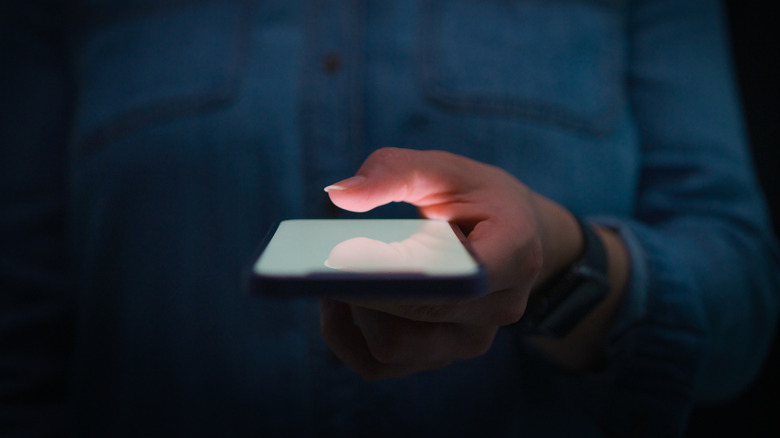
So much of our lives take place on smartphones these days. While it's easy to activate privacy features on your phone, it can be another thing entirely to keep the actual phone screen away from prying eyes out in public. That's worth keeping in mind when you're checking sensitive information like account balances or documents. So, while all the latest essential travel apps may be exciting, a privacy screen protector is arguably more important.
Along with offering physical protection against damage to the relatively fragile screen on your smartphone, these privacy-oriented accessories block people in the vicinity from being able to see what's on your screen. They work using microscopic slat technology, which is often employed in high-end architectural window treatments. With it, your phone screen can only be viewed straight on, and not from the sides. Let's go a little deeper into the science of how this phone screen technology works.
The technology behind phone privacy screens
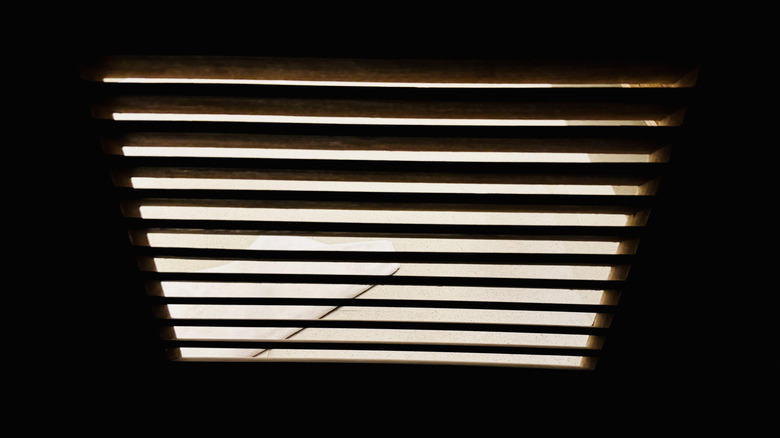
Though the technology behind privacy screen protectors may seem magical — only clearly showing your display head-on, and hiding it as you move to the side — it's actually a fairly simple system. The most common comparison is another privacy accessory: Window blinds, specifically Venetian blinds like you might see in office spaces. If they are open, you can only see into the window through the gaps between slats when looking straight on. But move to the left or right side, off-axis from the blinds, and visibility dramatically diminishes.
Privacy screen protectors work in a similar fashion. The technology is called micro louvre, and it shrinks the blinds concept down to roughly the thickness of a human hair. This format is often used in large-scale, commercial applications to afford privacy or minimize glare. When applied to a phone screen protector, though, it delivers the same level of adaptive privacy. So if you're sitting on a train or at a coffee shop, those who are off-center from your phone can't see through the micro louvre "blinds", but you can when looking straight at it.
Drawbacks of these phone screen accessories
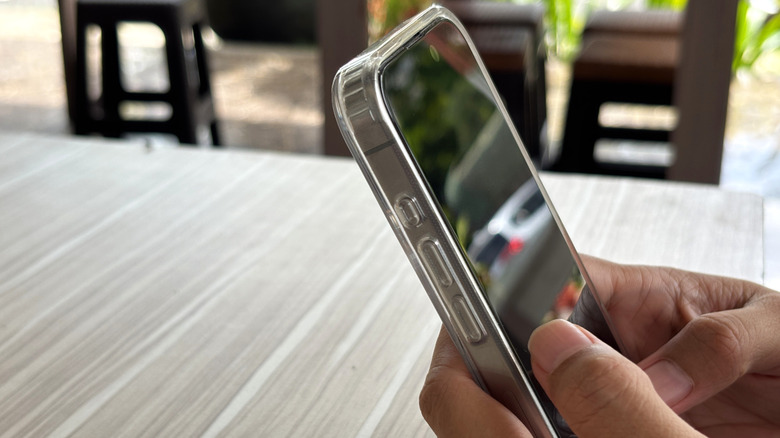
While the functionality of a privacy screen protector is impressive, these accessories do have a few drawbacks. The first is related to the effect screen protectors have on how bright your display appears. Think about it using our Venetian blinds example; even if you're looking straight through a window, the blinds still impact how the light comes in. In the case of a phone, certain content may not look as brilliant and eye-catching.
Privacy screen protectors are also not very practical when looking at your phone propped up on a table at an angle. If you're looking at the display from an off-axis position — whether because of how you're sitting or how the phone is oriented — it can look dim and may end up blocking your view. Though there is an argument that screen protectors are no longer needed, if situational privacy is your goal, then these trade-offs may not be an issue when it comes to peace of mind for viewing sensitive information on your phone screen.