

5 Of The Best Audio Upgrades For Your Setup, According To Home Theater Enthusiasts
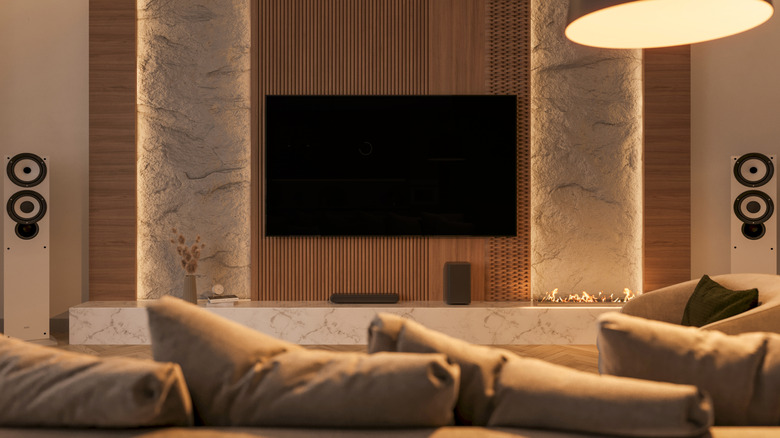
Building a home theater system shouldn't be a stressful process that bankrupts you. If you're fed up with how bad your TV speakers sound, you can always invest in a soundbar for an immediate improvement, and there are plenty that cost less than $200. But if your endgame is to have a 9.1.2 Atmos system that engulfs every square inch of your living room in sound, you can rest assured that you don't have to buy all your home theater equipment at once.
An AV receiver is one of the most integral parts of an immersive surround sound system, but other audio investments can make a huge difference, too. Yes, everyone knows that adding a subwoofer to your setup is one of the best ways to boost bass, but we tasked ourselves to think outside the box for home theater audio enhancements. To that end, we came up with five audio upgrades we feel are worth your hard-earned cash.
No two home theaters are the same, so some of the recommendations we're sharing may not apply to you and yours. Fortunately, you can really take your time when building out the theater of your dreams, so don't worry about affording the biggest, baddest speakers you can find; we have plenty of other upgrade suggestions that a.) may be cheaper, and b.) will have just as much of a meaningful impact.
Invest in the best center speaker you can afford, and build the rest of your system around it
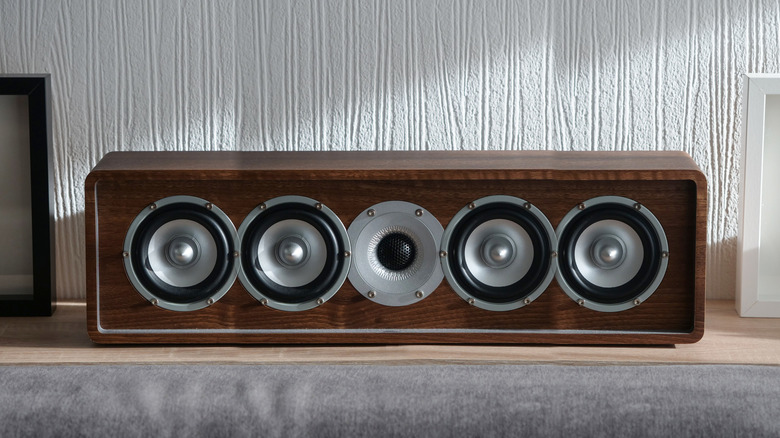
A center channel speaker is the unsung hero of many surround sound systems. It's the part of your home theater setup that's primarily tasked with delivering dialogue and vocals, and typically lives right above or below your TV screen. Movies and TV shows that feature a 5.1 surround sound mix or greater — be it Dolby Digital or DTS — use the front three channels to drive sound toward you. If you don't have a center speaker connected, your AV receiver will automatically mix in center-channel audio to your front left and right speakers.
However, this isn't preferable, as most center speakers are specially designed to handle the higher frequencies of human voices. Relegating this part of the soundstage to other speakers may result in muddied dialogue and vocals, but thanks to the modular upgradeability of many home theaters, you don't have to buy a center speaker right away. In fact, your best bet is to try and evenly match the size and brand of your surround sound's three front channels; that way, the overall sound profile stays consistent from left to right.
This process is referred to as "voice matching," and it's one of the best ways to build out the front of your speaker setup. You'll also want to be aware of what driver materials your center speaker uses; soft-dome tweeters are great for a smoother sound, while the hard-dome style is often preferred for dialogue clarity.
A 4K Blu-ray player for hi-res playback and line-level outputs
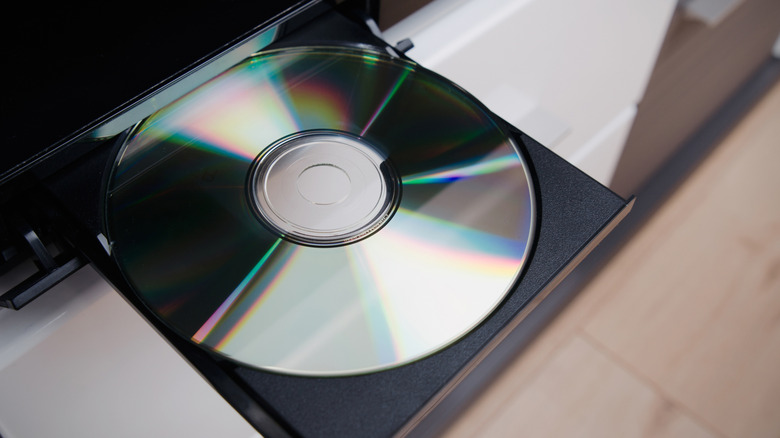
We're starting to see less Blu-ray players on the market, as most households continue to choose streaming platforms like Netflix and Disney+. Fortunately, there are still a handful of players that'll let you play 4K Blu-rays, as well as standard Blu-ray discs, DVDs, and even CDs. But there are also a small number of UHD players that can be used for hi-res audio playback. One great example is the $550 Panasonic DP-UB820:
Not only can this 4K player decode Dolby Digital, DTS, and spatial audio via Atmos and DTS:X, it also supports up to 32-bit/192kHz playback when using an external USB device (it supports PCM up to 32-bit/384kHz, and DSD up to 11.2 MHz). This means that if you have an archive of FLAC, WAV, and other hi-res files you're looking to indulge in, you can use your UB820 to decode these premium formats.
Another perk of the UB820 is that it features line-level analog outputs for up to a 7.1 surround sound configuration. This is particularly convenient if you prefer the internal DAC of the 4K player over your AV receiver's audio processing. The line-level outputs will also allow you to interface your UHD player with most preamps and dedicated amplifiers, which tend to prioritize analog connections over HDMI.
Spatial audio speakers for verticality in your home theater sound
One of the last major audio advancements for home theater fans was the introduction of Dolby Atmos and DTS:X to the consumer market. Unlike a traditional 5.1, 7.1, or even 9.2 surround sound layout, Atmos and DTS:X take things a step further by introducing verticality to your home theater audio. Many midrange and premium AV receivers support Atmos and DTS:X, but if you don't want to rely on "virtualized" spatial audio (a fancy way of saying your receiver will fake Atmos and/or DTS:X), you should invest in a few spatial audio speakers.
For setups where money isn't a concern, you can use in-ceiling speakers to drive your Atmos/DTS:X sound. This is the ideal setup, as you'll be able to aim the drivers directly toward your seating area, creating your best shot at full 360-degree immersion. The reality is that not every homeowner can afford to start ripping away at drywall, though, which is why it's nice that several speaker manufacturers came up with a way to split the difference.
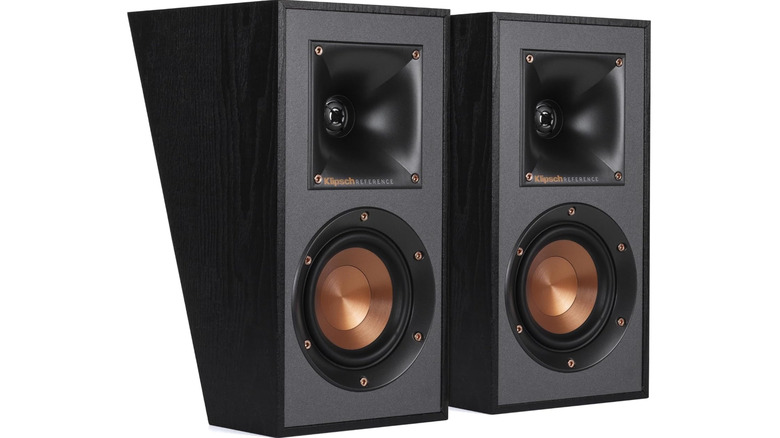
One great example is something the $150 Klipsch Reference R-41SA, a pair of surround speakers that are designed to sit on top of Klipsch floor-standing speakers. The drivers' fire sound upward toward the ceiling, relying on audio reflection to bring the decibels back down to your seat. You can also mount these speakers to a flat wall for a similar effect.
Add bass shakers to your theater seating to make it feel like you're in the middle of the action
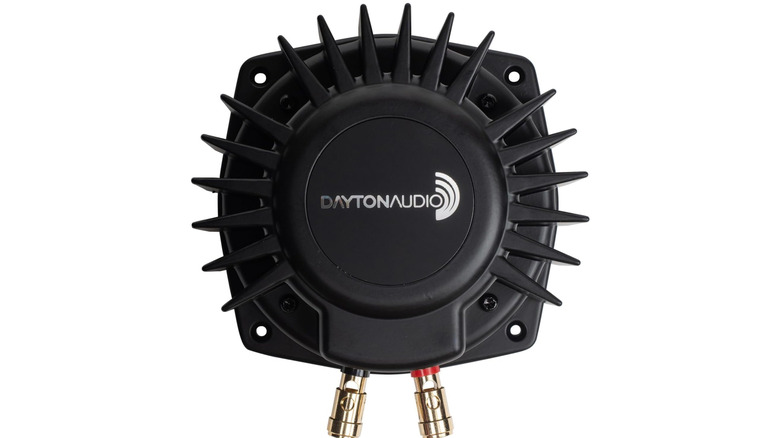
An active subwoofer is one of the best ways to add punchy and rumbly tones to your speaker system. It also takes a load off the rest of your speakers, allowing them to focus on delivering cleaner mids and highs. Not every household has the space for a big, boxy woofer, though, which is why we're glad that bass shakers exist. Sure, they're a bit unconventional, but we're all about championing novel ideas.
Bass shakers are made by several companies, and the $55 Dayton Audio BST-1 is a solid example of what you get with this kind of product. Essentially, it's just a small woofer encased in a metal chassis, which gets attached to the frame of a chair, couch, etc. When bass booms in your movies and shows, the frequencies are directed to the BST-1, which reacts by "shaking" your furniture. It's a pretty cool experience, but it requires extra equipment to operate; primarily, a subwoofer amplifier.
Unlike the LFE port you'll find on most AV receivers and subwoofers, most bass shakers are wired using regular speaker terminals. Unless you own an older receiver that interfaces with a sub via speaker wire, you'll need to purchase a separate subwoofer amp. Fortunately, there are tons of compatible amps on the market, but you'll need to make sure it has enough power per channel for the shakers you plan on installing.
Spending time on room acoustics may be your ace in the hole
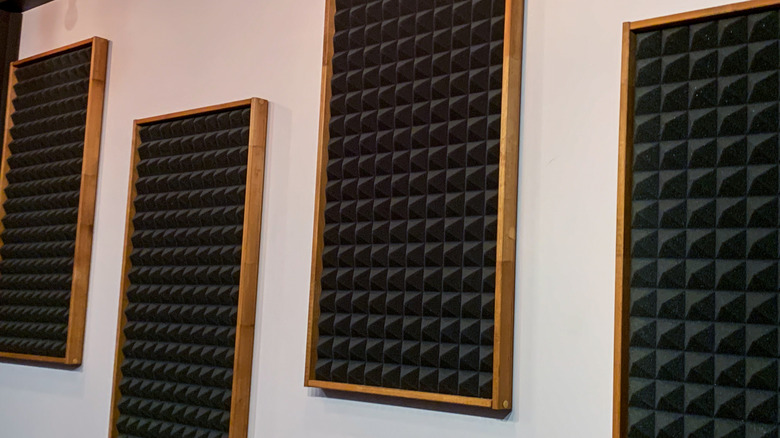
Walls, floors, ceilings, and windows are the building blocks of every home. Each surface type reacts to sound waves differently, and a space that isn't acoustically optimized tends to muddy mixes. If you've been dealing with lackluster audio when watching movies or listening to music, it might be time to consider a pack of acoustic panels. These are relatively inexpensive and simple enough to mount and secure.
If bass frequencies have been feeling overemphasized, placing bass traps in the corners of your room may help to wrangle and focus your low end. Any hard type of flooring is going to reflect sound waves, which is why many home theaters use wall-to-wall carpeting. Aim for thicker, cut-pile carpeting, as the dense fibers will also help to balance the higher frequencies of your system. Even everyday furniture and decor can aid you in honing your home theater audio.
For home theaters with many windows, you'd be surprised at how effective a few sets of blackout curtains are at a.) reducing ambient light (which bodes well for projector owners) and b.) lassoing the higher frequencies that would normally just be reflected in a random direction. And like many of the recommendations we've discussed, you don't have to buy every single acoustic treatment product at once. Start with a few pairs of curtains and a handful of acoustic panels; we bet you'll be shocked at the improvement.