

This Common Hotel Keycard Rule For Smartphone Users Is Actually A Myth
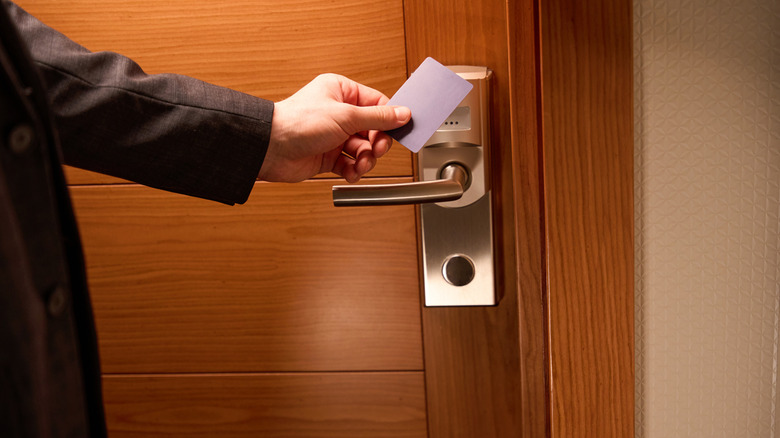
Over the years, you may have heard that you shouldn't keep your smartphone and hotel keycard in the same pocket as the former could demagnetize the latter. And that would make sense with modern iPhones that support MagSafe charging. The thing is, though, this advice isn't relevant in most cases, as the majority of hotel keycards you'll come in contact with today use RFID technology — not magnetic strips – to store data. So, while there are some instances where a phone can affect a keycard, it's unlikely enough that this often-discussed keycard rule should be added to the list of iPhone myths you should stop believing.
RFID cars — along with similar NFC cards that you can add to your digital wallet — hold the authentication data on a chip, not a stripe. They communicate with a door lock wirelessly, when the guest taps the card on a reader, or holds the card near the reader. Since there's no magnetic component in these cards, they won't be affected by smartphone magnetic fields. Magnets might not affect your RFID keycard, but aluminum foil certainly does.
How to tell the difference between RFID and magnetic keycards
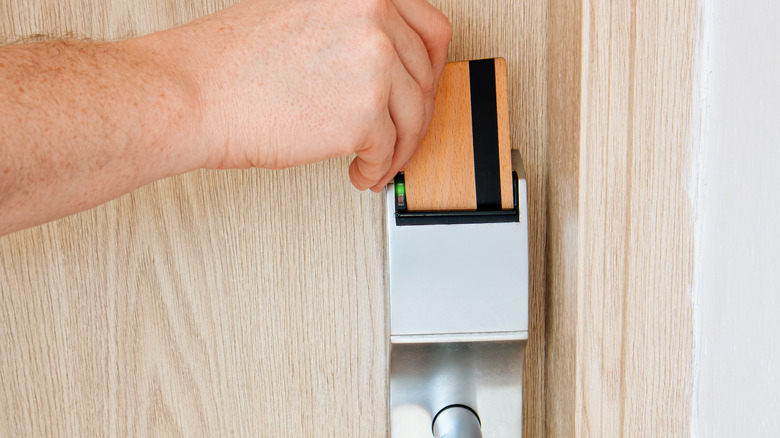
You can easily tell the difference between a magnetic keycard and an RFID card. A magnetic keycard has a black or brown magnetic stripe on the back, and you have to swipe it through a slot for the reader to receive the data encoded on it. RFID cards generally don't have a stripe on the back, or if they do, the stripe is not used for access. In terms of operation, you tap an RFID card against its reader, while magnetic cards are swiped or inserted into the door lock (as shown above).
A 2025 report from Print Plast says magstripe failure is at 15-20% per guest stay compared to under 2% for RFID keycards, but it adds that RFID cards are "completely immune" from demagnetization. While the risk of a smartphone impacting a keycard is minimal, smartphone vendors may address demagnetization risks. "Don't place credit cards, security badges, passports, or key fobs between your iPhone and MagSafe Charger, because this might damage magnetic strips or RFID chips in those items," Apple writes in a support document for iPhones that support MagSafe charging.
Best practices for hotel keycards
Print Plast said that the main cause of failure for hotel cards is an encoding error made at the front desk, or time-based access rules that some hotels enforce regardless of the stay duration. For example, late checkouts can also render the card unusable after the standard checkout hour. The same report also noted other issues that can affect keycard functionality, including physical damage, environmental reasons (water and temperature), and door-lock mechanism malfunctions, including low batteries.
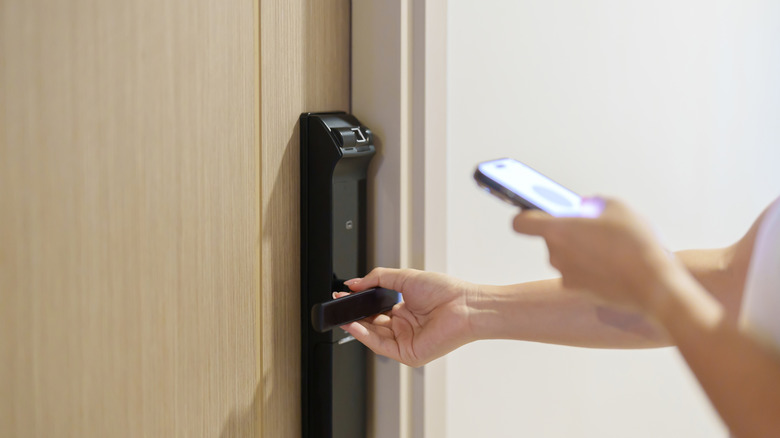
While it should be safe to hold your hotel keycard next to a smartphone, you should determine the card type before doing so. Many hotels have switched to RFID cards, and those will be safe from magnetic interference. For keycards confirmed to have magnetic stripes, you should avoid placing the card next to the MagSafe rings on iPhones that support it. Keeping the card in a different pocket or a wallet may be advisable. Another alternative is requesting a mobile NFC keycard (shown above), where available, which will be saved onto your smart device, making door unlocks even more convenient.