

Why Did Old-School Phones Have Cranks On The Side?
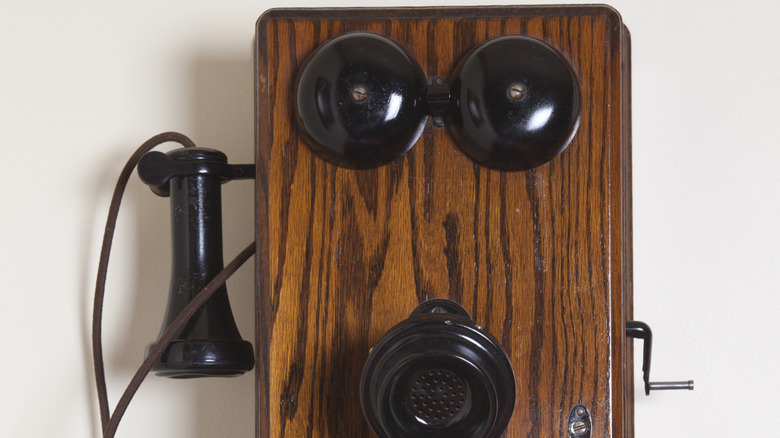
If you've ever watched a movie set in the early 1900s, then you've almost certainly watched someone make a call on a telephone with an earpiece on one side and a distinctive hand crank on the other side. While the earpiece makes perfect sense, the purpose of this crank may be baffling, even if you grew up in the era of landlines with coiled wires. You might think that the hand crank was used to power the phone, but that's only half the truth. Back then, the crank was actually the most important part of the entire device as it generated electrical pulses that alerted your local telephone operator to patch your call through.
You have to remember that when telephone technology was in its infancy, there was nowhere near the kind of infrastructure we have today. Phones didn't have dials or buttons, and you couldn't place a call all on your own; an operator was necessary to connect two phones together. That hand crank served as an alert for your local operator, letting them know that someone was trying to place a call and they needed to hop on the line in a hurry. It may seem like outdated, unnecessary tech today, but it was quite revolutionary in its time.
The cranks alerted operators that someone was trying to call in
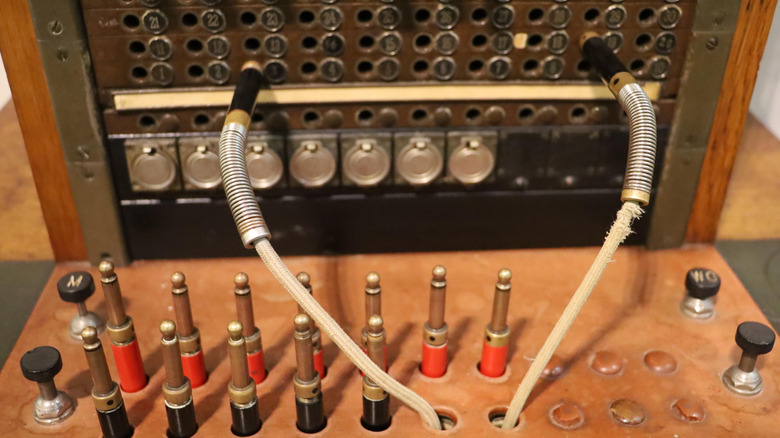
The classic hand-crank telephone had several key differences from modern landline phones, chief among them being their distinct lack of dials or buttons. The first telephones were less like the phones we have today, which can freely call any number, and more like a pair of tin cans tied with string. To initiate a call, the caller would spin the crank to alert the local phone operator, who was located in a telephone exchange office, and the operator would ask who you'd like to connect to.
When the crank on the telephone was turned, it would spin up a small magneto generator hidden within the device and generate an electrical current. This current would trigger a set of alarm bells at the telephone exchange, a rather distinctive forgotten tech sound, to let the operator know that someone wanted to make a call. Once they've got the line, you'd tell them who you wanted to call, and they'd connect you. And when you were finished with your call, you'd turn the crank again to let the operator know you're done, and they could close the line.