

Here's Why DVD Audio Is Better Than CDs
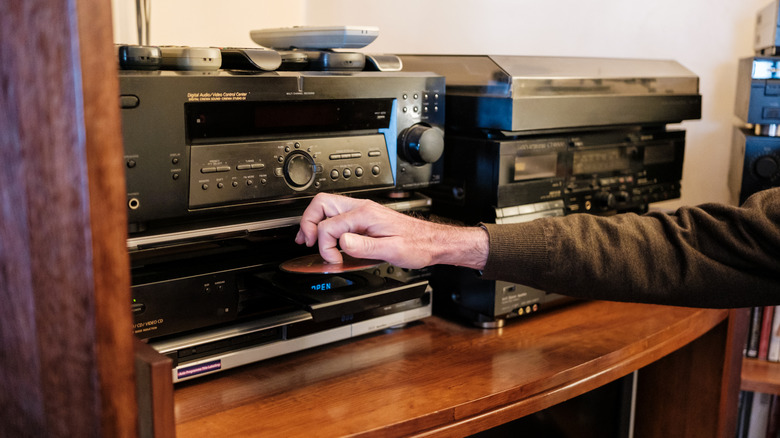
Before digital media came onto the scene, physical media reigned supreme. CDs, DVDs, and even Blu-Rays (which are still used) held all types of content, believe it or not. CD-ROMs routinely carried computer software and games, video, and music. It was also possible to "burn" CDs and store custom content on them. Readers of a certain age will certainly remember staying up late, burning their own audio CDs like mixtapes to listen to in their car on road trips. Data CDs could hold up to 700 megabytes , including digital files of video and audio, while audio CDs could store up to 80 minutes of songs. Since that was a lot of storage space at the time compared to anything else, CDs used to feel cutting edge and naturally became the go-to format for audio media.
Eventually, CDs gave way to DVDs and other formats, like HD DVD and Blu-Ray, all of which held significantly more media. Resultantly, higher resolution capabilities due to higher storage capacities and improved high-quality and lossless format support made DVD-Audio discs (DVD-A) better than CDs. Of course, that's not necessarily always true, but it's a good generalization.
Thanks to that massive storage increase over traditional CDs, the DVD-A format supports lossless audio with 5.1 channel sound. On a dual layer DVD-9 disc, DVD-A could hold up to 8.5 gigabytes of data, and depending on the quality and resolution — with higher resolutions requiring more data — they could hold anywhere from 1.5 hours up to 7.5 hours of audio. You can immediately see why that's a huge boon over CDs which were capped much lower. The higher quality audio capabilities alone make DVD-A discs a solid choice for audiophiles and purists who still want to inject a bit of the retro experience into their lives.
DVD-A (audio) discs are different than standard DVD formats
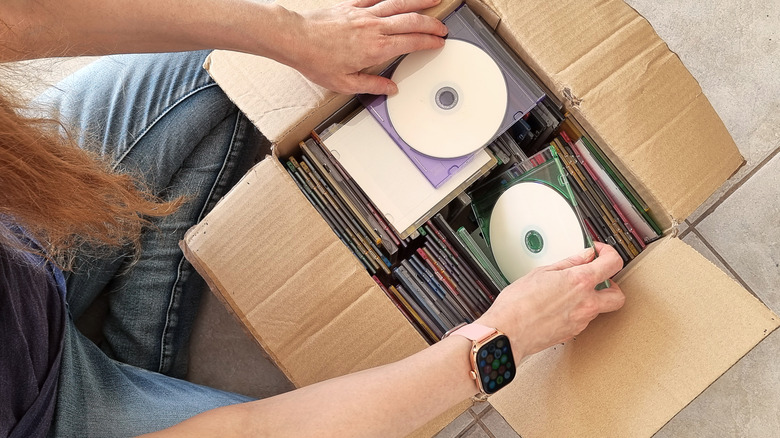
Released in 1999 at the height of physical media popularity, DVD-As were designed exclusively for audio and differ from traditional DVDs, as the latter was designed to hold both video and audio data, with video being the primary focus. DVD-As, on the other hand, reserve all of their storage space for audio formats and files. That's where the lossless and high-resolution capabilities really come into play. More space, and more room for media and data, means better quality all around.
But, surprisingly — or perhaps unsurprisingly, given when the format launched — there weren't many official DVD-A music releases. A search on the music discovery and collection platform Discogs reveals about 2,300 titles that have been released on the format. For comparison, there are over 6 million CD releases listed on the site, with Super Audio CDs (SACDs) featuring in over 1,700 releases. DVD-As have become increasingly rare, making them enticing collectibles for media enthusiasts.
Today, standalone DVD-Audio players are niche products that are difficult to find. Most standard DVD players won't play DVD-A discs in their high-resolution formats. However, you can use a universal Blu-Ray player with a DVD-A disc. This is an example of features or capabilities we lose by upgrading to modern technologies. There are actually many other DVD-related features we lose in the streaming era too, such as bonus featurettes, on-disc commentary, and extras. For OG disc enthusiasts, it's also wild to see Blu-Ray hailed as a nostalgic way to watch movies and media. Anyone who remembers DVDs and CDs, some of the original disc formats, understands that CDs walked so Blu-Rays could run — or something like that.