

How Do NASA Astronauts Drink Liquids In Space?
We may receive a commission on purchases made from links.
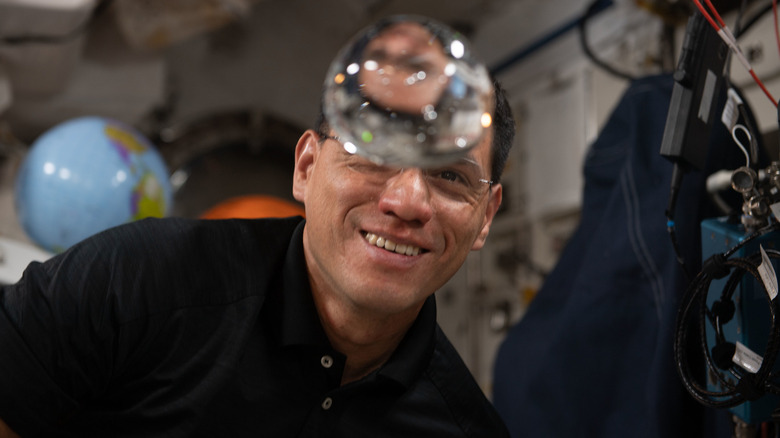
NASA astronauts living onboard the International Space Station (ISS) have been working on new ways of eating and drinking in space for as long as the orbiting laboratory has been manned. Simple tasks like drinking liquids are made complicated because of how fluid behaves in the microgravity environment of the ISS. Pouring fluid into a cup and tilting it toward your mouth isn't an option, because fluid doesn't settle at the bottom like it does on Earth. This has made drinking from a cup almost impossible on the ISS, and NASA astronauts have become accustomed to drinking fluids from strawed pouches.
So what do astronauts drink while in space? About as much variety as you can expect on Earth, with the strict exception of alcohol. Drinks like coffee, tea, apple cider, orange juice, and lemonade are made in powdered form and mixed with water. Having coffee and juice on the ISS is an important part of day-to-day life, as astronauts spend months living and working in space. Having access to basic refreshments and a good variety of food helps astronauts to work in as near-to-normal an environment as possible.
While it has historically never been possible to drink out of a cup in space, that all changed in 2008 when NASA astronaut Don Pettit invented a cup that could be used to drink beverages in microgravity called a Capillary Cup. The cup uses surface tension, wetting, and container shape to mimic the effects of gravity on a normal cup back on Earth, allowing the drinker to enjoy fluids without having to worry about spillage. The Capillary Cup was the first patented product ever invented in space.
How water is used on the ISS
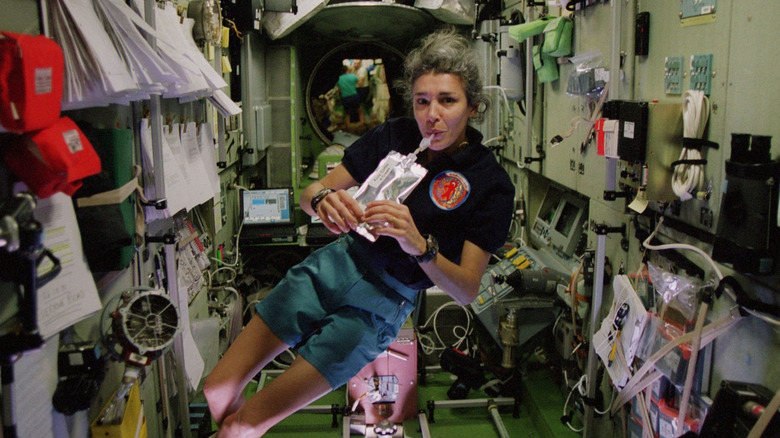
Water on the ISS is treated like a commodity because cargo vehicles don't visit the ISS with fresh supplies every day. The ISS can host up to 13 astronauts at times, meaning a lot of drinking water is required. NASA keeps 818 liters of water in reserve on the ISS at all times in case supply vehicles fail to arrive at the station on schedule. Because of this, the ISS has an Environmental Control and Life Support System (ECLSS) that treats all wastewater, including the urine, of each astronaut. The ECLSS is able to recover about 90% of the water on the station, all reclaimed from wastewater, humidity condensate, and water from the crew's EVA suit hydration systems.
In addition to being used for drinking, water on the ISS is used for other normal daily tasks such as bathing and brushing teeth. Astronauts use water and sponges to get cleaned up at the end of every day, and use edible toothpaste to avoid having to clean up and discard it after use. Astronauts wash their hair by applying water to the scalp, which will remain in place due to surface tension. Astronauts use special bars of shampoo to wash their hair, keeping the need for rinsing to a minimum.
When it comes to food, water is also used to rehydrate certain foods that feature on the astronauts' menu. Astronauts can traditionally select items from a menu long before their mission begins. Meals are made up of an eight-day menu that repeats over the course of a mission, with an option to extend the duration of the menu to increase variety.
The ISS has an espresso machine
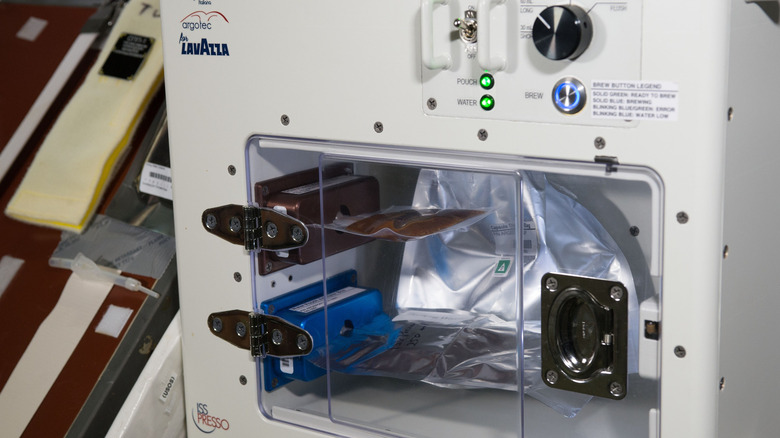
While powdered coffee used to be as good as it gets for astronauts on the ISS, a 2015 cargo delivery to the space station brought with it an espresso machine called ISSpresso. The machine was first intended to be launched on a Cygnus cargo vehicle in 2014 that exploded on the launch pad before it could ever leave Earth, but a new one was later sent onboard a SpaceX Dragon vehicle. The ISSpresso machine, which was appropriately tested for the first time by Italian astronaut Samantha Cristoforetti, was a huge step up in the quality of coffee available to astronauts.
The machine was jointly developed by Lavazza and Argotec, and offers a coffee making experience no different from traditional Nespresso machines. The machine works by accepting about 8.4 ounces of room temperature water, with a coffee capsule loaded. Once an astronaut presses a button, the water is heated and passed through the coffee capsule, producing a high quality espresso. The machine also has a secondary function of being able to rehydrate tea or meals requiring hot water.