

Glenn Close And Willem Dafoe Starred In A Forgotten Blade Runner-Inspired Sci-Fi Movie
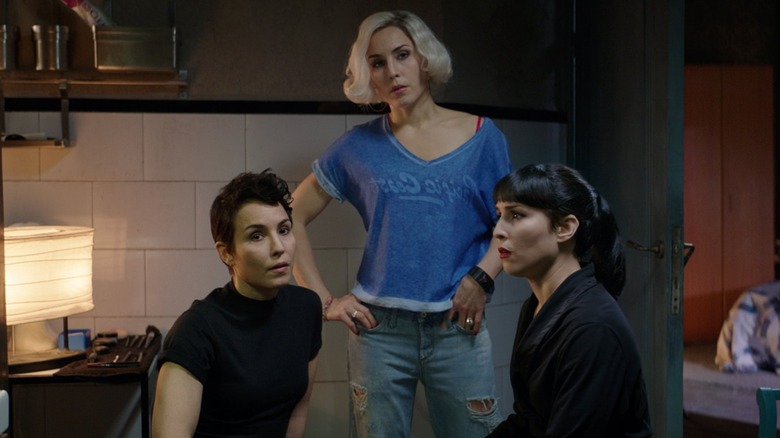
As much as Netflix has been a trailblazer in its early years, delivering prestigious TV shows like "House of Cards" and "Orange is the New Black," it never quite figured out the recipe for doing the same with features. Sure, there were (and still are) outliers like "Okja," "Marriage Story," or the most recent and poignantly beautiful "Train Dreams," but generally speaking, most of their original movies are a bust. Norwegian director Tommy Wirkola's pseudo-ambitious (and terribly titled) 2017 sci-fi "What Happened to Monday" is an apt example of that. "What Happened to Monday" has a pretty intriguing high-concept premise, a very capable cast (headlined by Noomi Rapace, Willem Dafoe, and Glenn Close), and plenty of potential to deliver something profound and memorable.
However, if you go into seeing this movie with those expectations, you probably come away from it with a sour taste in your mouth. But, if you just want to relax and switch off your mind by watching a dumb-but-serviceable B-action flick with a vague sci-fi angle, "What Happened to Monday" might do the trick. What I feel like is my obligation to say before getting any deeper into it, though, is that if you have any aversion to Noomi Rapace as an actress, this will be a two-hour nightmare trip for you. Consider yourself warned.
The tale of seven identical twin sisters in an overpopulated future
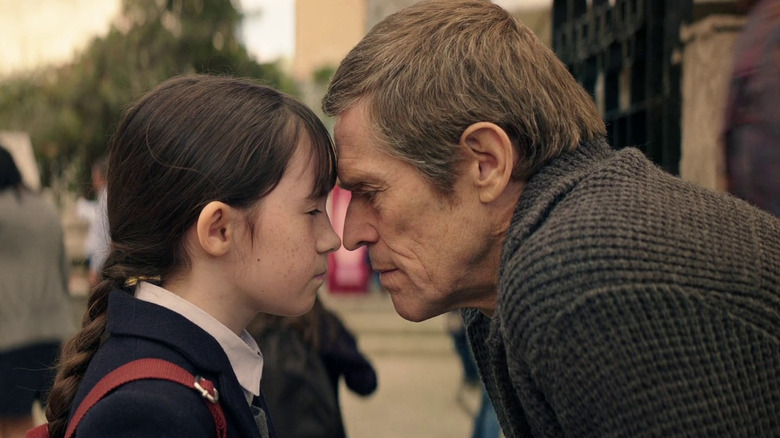
The plot kicks off in 2073. Overpopulation has become such a global issue that the European Federation's Child Allocation Bureau implemented a strict one-child policy per family. So when Terrence Settman (Dafoe) watches his seven identical twin grandchildren his daughter just gave birth to before passing, he knows he's got quite the conundrum. Still, he tells the doctor he'll manage and names the babies after each day of the week, raising them by forcing the sisters to have one single identity called Karen Settman. They all get to be Karen and integrate into society one day of every week depending on their names.
After jumping 30 years in time, you'll see that Terrence's plan has worked quite well. They're grown women now (played by Rapace times seven) with distinct personalities, living in the same flat their dad carefully designed them to survive. But when Monday doesn't make it back home one night, the rest of the siblings break their rules to try to find her, and the structure they built crumbles suddenly, upending their lives. They then realize the bureau found out about their secret, and they're hunted down one by one until only one Karen remains.
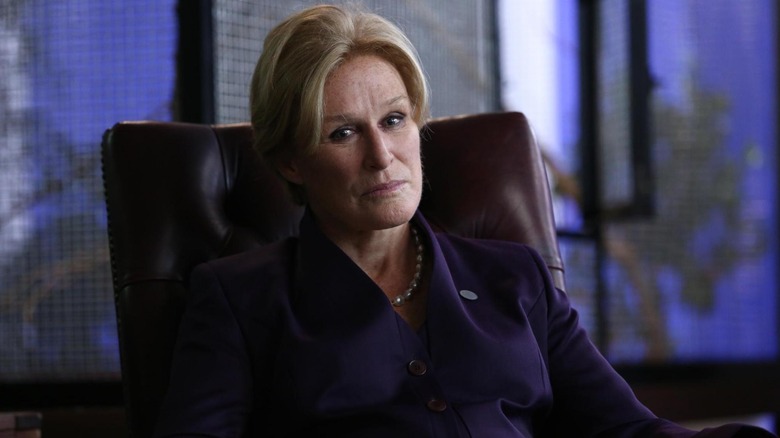
It's ironic that Wirkola cited the original "Blade Runner" and the ultra-bleak "Children of Men" in a THR interview as major inspirations regarding the world-building and realism because his film doesn't do either of those too well. You never know where the story takes place, let alone the deeper intricacies of how most things work in this dystopian future under the "regime" of CAB's leader, Nicolette Cayman (Close). He instead focuses on putting the siblings in intense encounters with the law to see how they can get out of those often violent situations.
What Happened to Monday requires a lot of patience
"What Happened to Monday's" premise had a lot of directions to choose from, ultimately landing on a rather standard Netflix action movie instead of something more ambitious. You see the flickering of the story's potential the most when you get snippets of how the siblings feel about their predestined lives, having to carry each other even when it makes them miserable. Rapace (and the limited script) can't do justice to all of them no matter how hard she tries, but she does capture glimpses of regrets, love, and emotional hardship in some siblings that underline the depth this movie could've had — like finding genuine romance, exploring sexual intimacy, or rebelling against everything their father believed in.
But those moments are usually crammed between fast-paced action sequences intended to propel the narrative forward quickly, with an execution that ranges from decent to laughably terrible (see the super-soldier falling over a fridge door and dying). There are various suspenseful moments that simply feel half-baked and generic (as they often do in literally every other similar Netflix flick), relying more on well-known gimmicks and clichés than the actual characters and the wringer they're put through both physically and emotionally.
Still, you can't entirely dismiss the entertainment value in "What Happened to Monday" because there aren't a ton of action sci-fis on streaming that elicit more than a shrug before you completely wipe them off your mind. Although it's minimal, there's some food for thought here about a dark future due to climate change, overpopulation, and everything humanity's doing to make the world more uninhabitable. But the bottom line is that "What Happened to Monday" is (much) less of a brainy dystopia than a mindless B-actioner that's maybe worth your time on a sleepy Saturday night.