

Amazon Echo Dot Vs. Google Nest: Which Device Has Better Voice Controls?
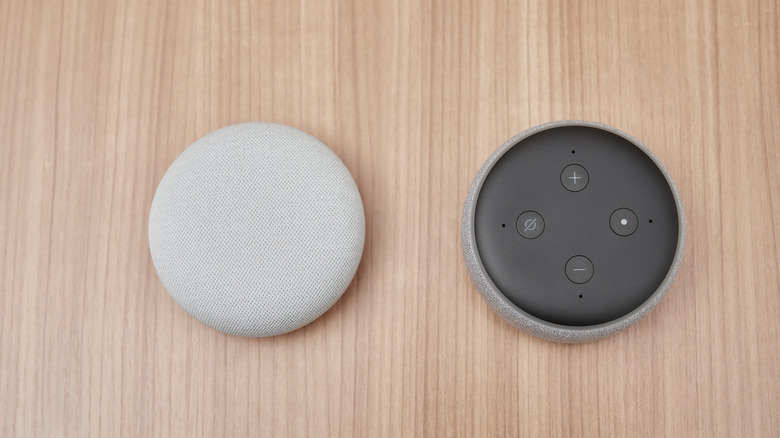
Though there are 8.4 billion voice-enabled devices out there, including mobile devices, smart speakers are still around and kicking. Sure, some believe there's no need for Alexa anymore, but Amazon alone has shipped over 600 million Echos worldwide. Its rival Google is a bit more secretive about the recent smart speaker figures, true, but physical devices themselves (they're just a mic, a speaker, and a Wi-Fi antenna, after all) matter less than the underlying technology – voice controls and how well they're able to understand requests.
So, which ecosystem takes the cake in this department? Does Amazon Echo Dot have better voice controls than Google Nest? It does. Underwhelming as it may be, the answer calls for some nuance. If you're talking pure controls as expected from a voice assistant (playing music or controlling various aspects of smart homes), Amazon Echo Dot and Alexa reign supreme. If you're looking for a more conversational approach (as you probably expect from LLMs), Google's Gemini for Home is now available on Nest devices, and you'll enjoy those conversations a lot more. What muddies the water a bit is Alexa+, the supercharged AI version of the voice assistant we all grew to love. It made Alexa more conversational, and while the ecosystem still scoops up the points for voice controls, automation, and quick voice searches, Gemini is a better LLM.
There may be a catch, unfortunately. There are plenty of valid reasons to upgrade to Alexa+, yet some users believe that the core service is getting worse. Put differently, Alexa is a better conversationalist, but it lost some of its efficiency where it matters most: the voice control department, at least according to owners.
Why Amazon has a slightly better ecosystem
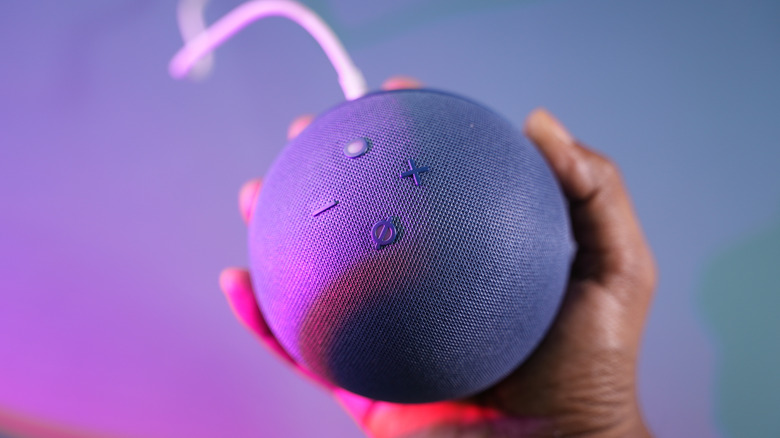
Criticizing Amazon is valid. For instance, some users are questioning whether Google Nest Hub has fewer ads than the Amazon Echo Show and are willing to switch teams to escape the insistent advertising. Despite Amazon being annoying in that regard, it's undeniable that its stuff is affordable and compatible with over 100,000 smart home devices. When you add the fact that Alexa supports 100,000 skills you can use to manage your smart home, build automations, and shop through nothing but voice commands, many turn a blind eye to the company's aggressive advertising.
Take automation as an example. You can create detailed routines with nothing but your voice. If you say something along the lines of, "Hey Alexa, keep the porch lights off from 8 pm to 11 pm, unless the Ring camera detects motion," you can consider it done. Alexa will find a way to fulfill your request. Plus, it's well-connected to the rest of the Amazon ecosystem, so you can accomplish quite complex tasks with voice controls.
However, not everyone is happy with Alexa+ at the moment. The common thread online is that the famous voice assistant can finally carry on a conversation that doesn't seem as overtly robotic as it did in the past, but it's also somehow getting worse. There is no shortage of Redditors complaining about routines disappearing randomly and Alexa seemingly forgetting established commands like "lights." Some also find the new version annoying and believe it's failing at what it previously did best. Granted, there are also complaints of the regular Alexa getting less effective after the AI version rolled out, but you can technically opt out of the "plus" service if you're only interested in voice controls and regular voice assistant stuff.
What Google does better
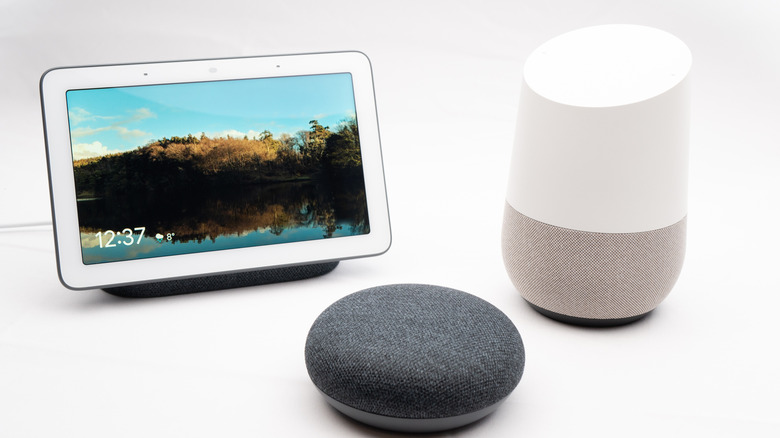
So if it's clear that, despite the Alexa+ criticism, the Amazon Echo Dot has better voice controls than the Google Nest, why would anyone even choose Google? Two reasons: better search and more natural AI conversations. If you're not really interested in smart home commands but need an active participant in your life, Google's ecosystem is the way to go, especially if you already have Android stuff and existing Nest gear.
For instance, if you want to write an email with your voice assistant, need to brainstorm ideas, or just fancy having a conversation, you'll have more fun with Gemini. This isn't to say that you can't do voice commands with Google, because it's apparently getting better. You can create routines you can trigger with simple commands, but it isn't as effective for deep automation as Alexa, according to Google Home aficionados who are jumping ship and choosing Amazon.
In the end, it's all about what you're trying to get out of the voice assistant. An Amazon Echo Dot and its Alexa support plenty of other devices, and the setup is easy. It just works. But if you need a more capable LLM and are already rocking the Nest, then there's nothing wrong with Google either: Gemini is Gemini, after all.