

5 Things You Need To Know Before Buying An Oura Ring 5
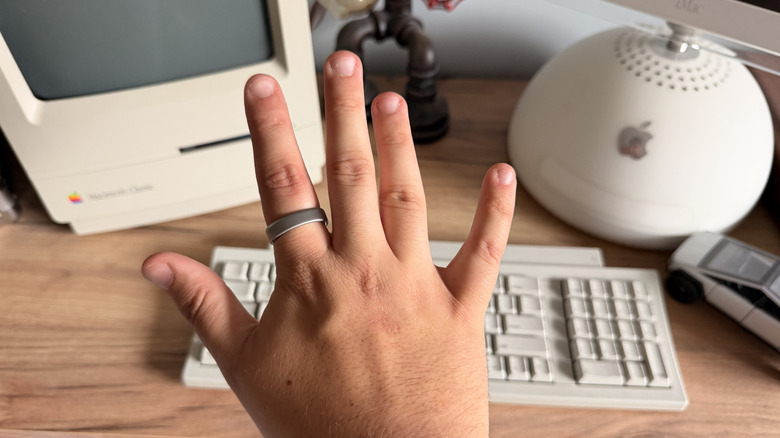
The Oura Ring 5 is the most polished smart ring you can buy right now, closing the gap between smartwatches and smart rings. It's 40% smaller than the Ring 4, light enough to forget on your hand, and has all the learnings from a smart tracker brand that's been around for a decade. If you want health tracking without another screen on your wrist, it's the obvious place to start — and after weeks with mine, I still think it's the best in its class. It's also a product with a few important things worth understanding before you spend $399, especially since a couple of them only surface after the ring has been on your finger for a while.
I've worn an Oura for years — the first I wore was the Oura Ring Gen 3 — and the Oura 5 barely leaves my hand. It's on when I sleep, when I work, and when I cook — and most of the time, I forget it's there at all, which is exactly the point of a ring over a watch. I like it a lot. But liking a product and recommending it blind are two different things, and there are five things I'd want to know before buying one, from the true cost of ownership to the one job the ring still won't do.
1. The ring is only half the cost
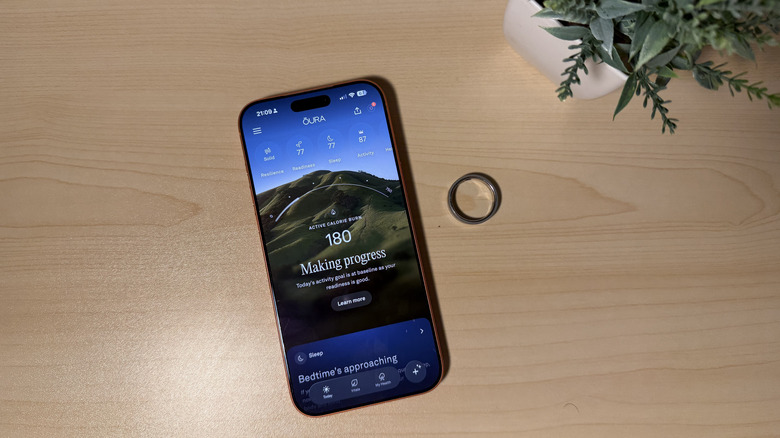
The $399 retail cost is where the Oura Ring 5's pricing starts, but not where it ends. The Oura 5 opens at that price for the Silver and Black finishes, and Oura charges $100 more for Gold, Stealth, Brushed Silver, and Deep Rose. I have the Brushed Silver option, which I think looks great. But as Engadget flagged, "you are paying $100 for paint." On top of the hardware, most of what makes the ring useful sits behind the Oura Membership, at $5.99 a month or $69.99 a year after a free first month. Without it, the app shows three daily scores and little else, so the deeper sleep, heart rate, temperature, and stress data all stay locked.
Framed against its rivals, though, that subscription looks fairer than it first appears. Whoop has no hardware cost, but the band is functionless without a plan that starts at $199 a year and reaches $359 at its high end. Google's Fitbit Air undercuts the Whoop and every other alternative at $99 with no subscription required to use the product — though there is one to access additional features. Oura sits between the two. Its $70-a-year membership is far cheaper than Whoop's and buys a more capable app than Fitbit's. But it's a recurring cost you can't avoid, and you should budget for it up front.
2. Your old Oura size won't carry over
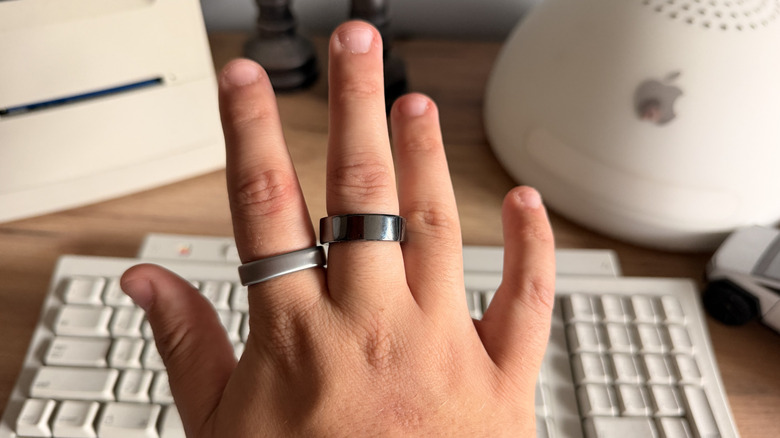
A ring is a fitted device, so sizing matters far more than it does with a watch you can loosen. Two details make this worth extra attention on the Oura 5. First, the sizing has changed from the Ring 4, so the size you already wear is not a safe bet. I had to size up from my previous Oura ring, which is now a size above my regular ring size for my index finger. This has always been something to know before buying an Oura ring, but seems more important with the Oura 5 than other generations.
Second, Oura narrowed the range to sizes 6 through 13, down from the Ring 4's 4 to 15. Anyone with particularly small or large fingers has fewer options than before, unfortunately. To make sure you get the right size, order the free sizing kit before you purchase your ring and live with the plastic sizer for a full day, including a workout and a night's sleep, because fingers swell and shrink with heat, activity, and temperature. I'd wear the sizer to the gym — if you plan to wear the Oura ring there — before committing, since a snug daytime fit can turn tight mid-session.
Get it right and you'll have the best Oura Ring 5 experience you can. A correctly sized Oura 5 disappears on your finger and reads your heart rate in the background. Oura recommends you wear the smart ring on your index, middle, or ring finger. Get it wrong and you'll either lose data to a loose fit or spend all day aware of a ring that pinches. It's an extra step that slightly delays getting your ring, but it decides how much you'll actually wear the thing.
3. It's a sleep tracker, not really a workout tracker
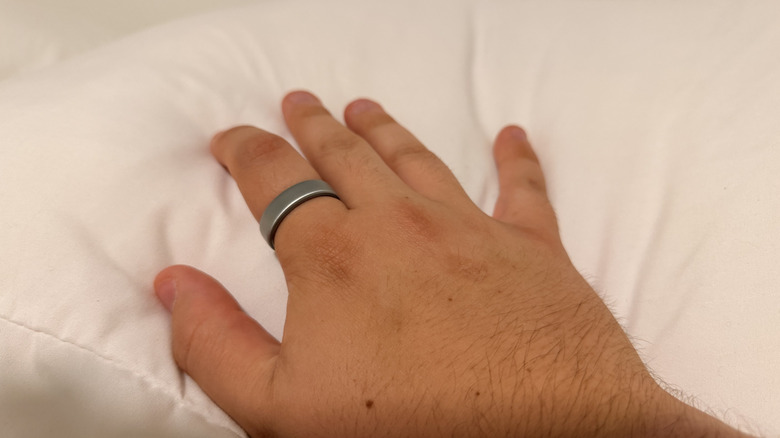
Oura made its name on sleep, and the Oura 5 is still one of the best sleep and recovery trackers you can wear. What it isn't is an ideal workout device. DC Rainmaker, who tested it across running, cycling, swimming, and strength work, called it "woefully behind even the most basic wearables when it comes to sports tracking," and my own experience matches that exactly. I wear my Oura constantly, with one exception: workouts. When working out, I switch to an Apple Watch Ultra 2 for live heart rate, GPS, and the kind of real-time data the ring simply can't surface in the moment. When lifting weights, I find the ring becomes uncomfortable, so I prefer wearing a watch. Some users report that activity detection during lifting workouts is poor, as your hand doesn't move much.
The Oura 5 can't show live heart rate on its lock screen widget mid-workout, has limited Strava syncing, and relies on your phone's GPS for the new Live Activity Tracking feature. None of that bothers me, because I don't ask it to be my training tool. For sleep staging, resting heart rate, HRV, temperature, and recovery, it's excellent, and it does all of that in something I forget I'm wearing rather than a watch I have to charge every night.
4. If you own a Ring 3 or Ring 4, you may not need this
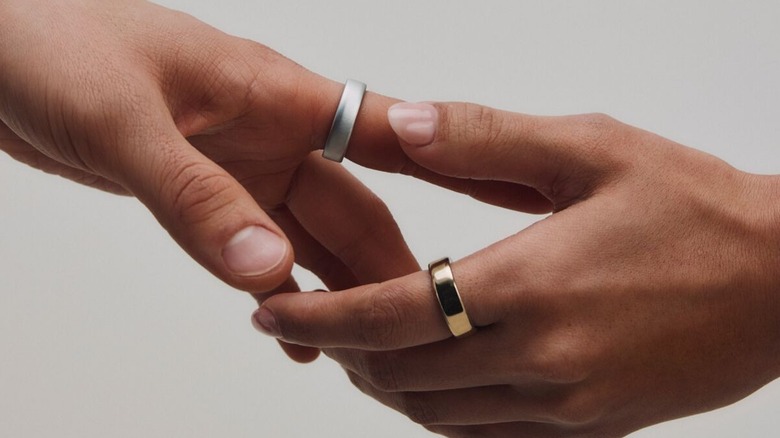
If you already own an Oura Ring 3 or 4, you might want to wait a moment before you buy the new device. The flagship software features that launched alongside the Oura 5 — including Health Radar, improved activity detection, GLP-1 insights, and Live Activity Tracking — will roll out to Gen 3 and newer rings too. The most interesting new features aren't exclusive to the new hardware, so on their own they're not a reason to upgrade.
What the Oura 5 actually improves is the physical design. The ring is lighter, at 2 to 2.69 grams against 3.3 to 5.2 grams, and 40% smaller than the Oura 4, which makes it noticeably more comfortable and easier to wear overnight. The accuracy gains Oura advertises, roughly 12% for HRV and 19% for workout heart rate, are hard to feel day to day, and T3 found the Ring 5 no more accurate for sleep in practice than the already-accurate Ring 4. Coming from a Gen 3, or from no ring at all, the Oura 5 is an easy recommendation and the most comfortable Oura yet. Coming from a Oura 4 that fits and works, the smaller size is a genuine want, but it's a want, not a need.
5. Scratch-resistant isn't scratch-proof
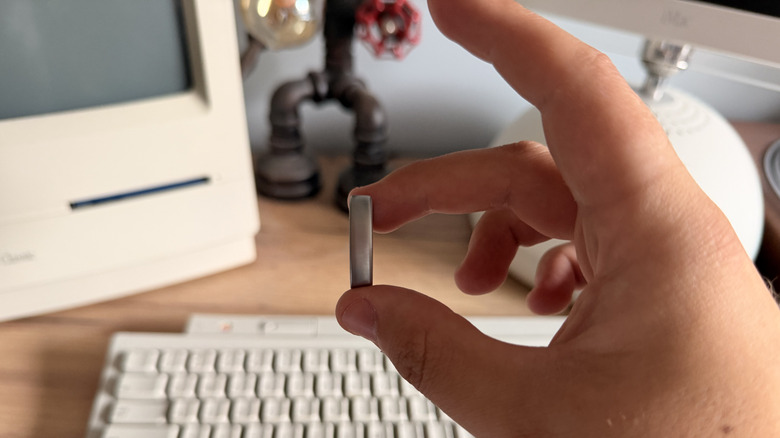
The Oura Ring 5 is more durable, according to the brand, and it is, to a point. A new physical vapor deposition coating over the titanium makes it tougher than the Oura 4, which marked easily. Just don't read "scratch-resistant" as "scratch-proof." It's still jewelry you wear through everything, and one reviewer picked up visible marks after 18 days of near-daily strength training. I have not experienced this with my Oura 5, though I imagine the Brushed Silver finish naturally hides some small scratches. If you lift or work with your hands, expect some cosmetic wear over time, and know the pricier finishes scuff no differently than the standard ones.
Don't let this put you off wearing the Oura 5 around the clock, because doing so is where the ring earns its recommendations. It disappears on your hand in a way a Whoop or Fitbit Air on your wrist never quite manage. It's the most comfortable of the bunch for overnight wear, it runs six to nine days between charges, and its app turns raw numbers into advice you'll act on.