

Why Do Some Rockets Not Have Fins?
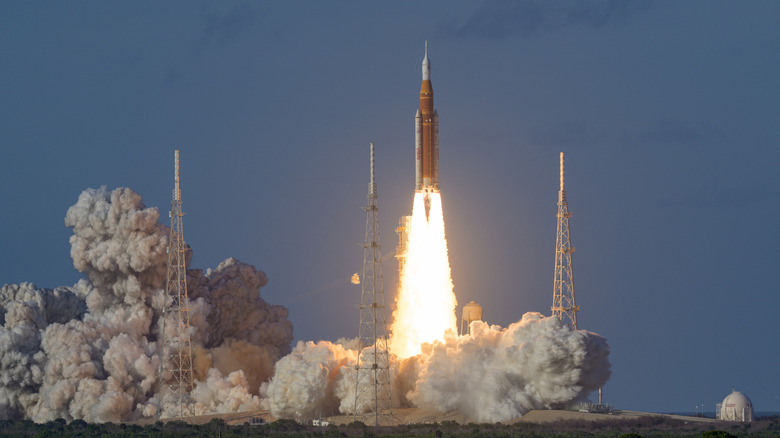
Especially in its early days, fins were an iconic piece of the designs of space rockets (not to be confused with space shuttles). To many, imagining a rocket silhouette without fins feels incomplete, even naked somehow, and yet many modern rockets are finless.
This is possible because many contemporary designs make fins redundant. As any aerospace engineer will tell you, unnecessary redundancies are anathema to efficient launch vehicles. Fins were originally introduced to stabilize a rocket during launch and help it maintain a specific trajectory in flight, but with current technologies in place that do the job more effectively, fins become a source of unneeded additional weight and drag.
In short, if a vehicle can be guided by engine gimbaling, onboard computers, and carefully managed thrust, fixed fins become nothing more than unnecessary baggage and extra structural loads. This is especially true in the case of rockets designed to deliver payloads to orbit, where efficiency is absolutely essential from the moment of takeoff to the edge of the Earth's atmosphere.
How rocket fins fell out of favor
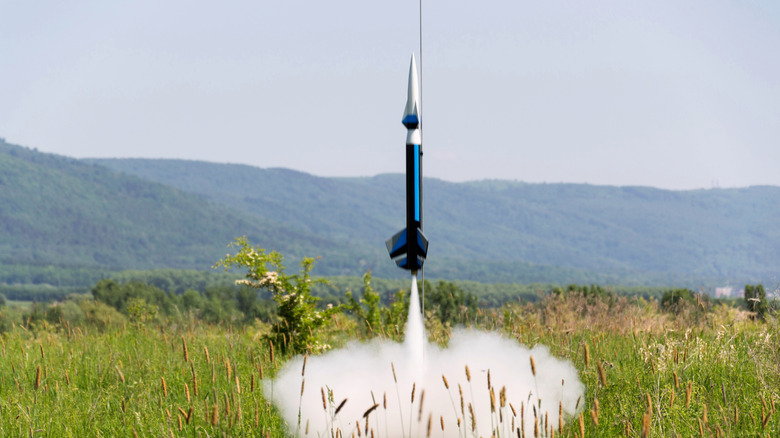
Fins are mainly useful in the lower atmosphere, where air is dense enough for them to create meaningful stabilizing forces. This is why you still see fins on model rockets, as well as some military ordnance and older launch vehicles that depended more on passive stability. As altitude increases and the air things, however, fins lose effectiveness just when the vehicle is speeding up and drag becomes more costly. Modern rockets of both the liquid and solid-fuel variety usually rely instead on active guidance systems like engine gimbaling, the process of rotating the main engines to steer and stabilize the vehicle (which is also why rockets roll after launch), in conjunction with flight computers that make small, constant corrections in real time.
Modern rockets' control systems provide the stability and steering that fins once supplied with less drag and better overall efficiency. Some rockets continue to use aerodynamic surfaces, but often only in descent or landing phases rather than ascent. Grid fins on reusable boosters are a good example. these lattice-like control surfaces can be folded away during ascent. Unlike the fixed fins you see on model rockets, they help guide a returning booster through the atmosphere instead of passively stabilizing a launch vehicle on the way up, when they can be tucked out of the way to avoid additional drag.
The difference comes down to design tradeoffs. If a rocket needs simple, passive stability in air, fins can be useful. In high-performance launchers with active control systems, fins are often unnecessary and can negatively impact efficiency.