

Do Those 'Sunrise' Morning Alarms Actually Work?
We may receive a commission on purchases made from links.
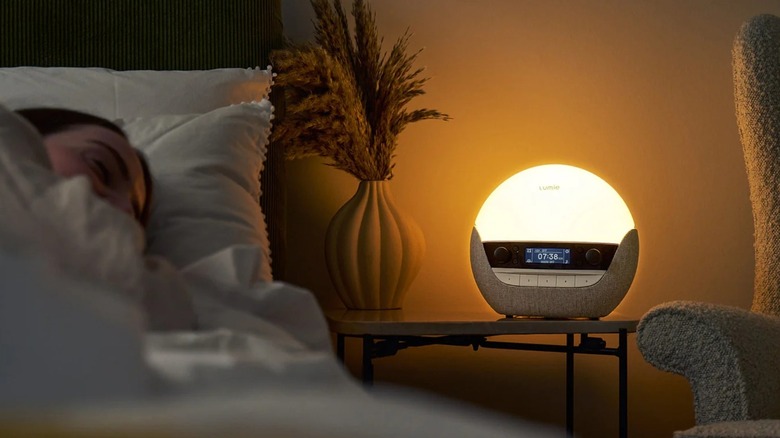
For those of us looking to get a better night's sleep, sunrise alarm clocks may sound like an intriguing way to start your day off on the right foot. Products on Amazon and other retailers claim to improve your circadian rhythm by simulating a sunrise to encourage a gradual wakeup so you feel refreshed and can ditch your alarm clock app. That all sounds great, but do they actually work?
The short answer is yes, sunrise alarms can help you wake up easier and less groggy. They may sound like pseudoscience, but light actually has a major impact on your physical and mental wellbeing, affecting everything from your energy level to your immune system. Lack of sunlight can also lead to seasonal affective disorder (SAD), a type of depression that often manifests during the winter.
A study published in BMC Public Health found that sunlight exposure in the early morning is especially important for sleep regulation and quality. Since these lamps simulate a sunrise, starting dim and reaching full brightness when it's time for you to get up, they help facilitate a natural awakening.
Color also plays a role. Sunrise alarms emit long wavelength light, appearing red to orange. That has an easier time making it through your eyelids than shorter wavelength blue light, which some experts say could be ruining your sleep. A study published in 2015 by the Journal of Affective Disorders found that dawn simulators can improve SAD symptoms just as well as bright light therapy, which has been used as a treatment since the '80s. But while a simulated sunrise can help you wake up more alert, many of the claims manufacturers make about sunrise alarms are not actually backed up by data.
Don't fall for exaggerated claims about sunrise alarms
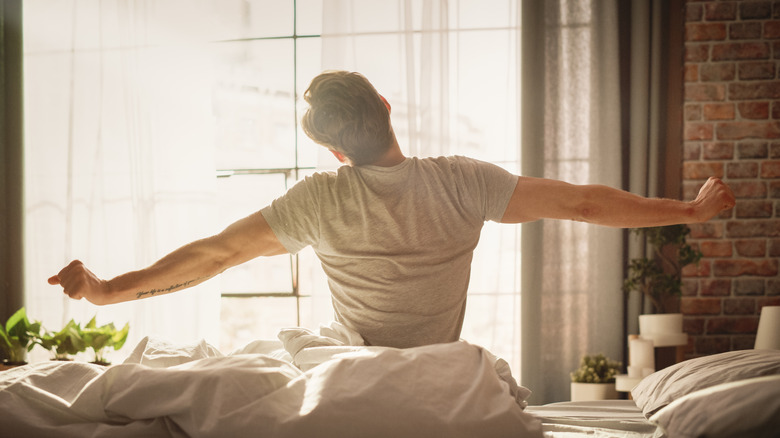
Sunrise morning alarms can help improve your wakeup routine and depression symptoms brought on by limited light exposure, which may be enough of a reason for you to buy one. That said, don't expect any dramatic overnight changes just from using it. Additional health benefits like boosting healthy cortisol levels and promises of helping you wake up earlier have not been thoroughly studied, and the limited results we do have are mixed.
It also matters how you use your sunrise alarm clock and the quality of the device itself. Brightness is measured in lux; for context, sunrise and sunset on a clear day are around 400 lux, and direct sunlight is between 32,000–100,000 lux. You need around 250–300 lux from your lamp to make an impact on your morning routine, which cheaper lamps may not reach and smartphone apps definitely won't. Getting that much brightness also means placing your lamp 16"–24" from your head so the light hits your eye rather than just illuminating the room.
Even if they can't do everything, sunrise alarms are great at their intended purpose: reducing grogginess and making it easier to get up in the morning. Though traditional alarm clocks wake you up more quickly and reliably, light-based alarms that gradually wake you up are better than their sound-based counterparts where your health is concerned. Getting one can also encourage you to form better sleep and wakeup habits, such as limiting your phone use around bedtime and making your bedroom a suitable environment for sleep. That in itself can be a good reason to invest in a sunrise alarm clock (maybe one that doubles as a white noise machine), so long as you temper your expectations on what it can accomplish.