

This Smartphone Is Thinner Than An iPhone Air But Still Has A Headphone Jack
We may receive a commission on purchases made from links.
Form factor is always important when it comes to pieces of tech that are meant to be used daily. The size of your TV greatly affects your home theater experience, and certain PC components fit together better than others. While the thinness of a smartphone ultimately isn't as important to the average consumer, it's still a bit of a status symbol in the premium market, with the biggest smartphone manufacturers all competing to make the slimmest slab phone.
At only 5.8 millimeters thick, Samsung's Galaxy S25 Edge was a technological marvel — but phones released later, like the Apple iPhone Air, are even thinner. Despite these globally dominant companies putting their all into making the slimmest phones physically possible, they might've already lost the battle a decade before it even started, as a Vivo phone from 2014 still has them completely beat.
The Vivo X5 Max seems like an impossibility. The phone has a thickness of just 4.8 millimeters, almost a full millimeter thinner than an iPhone Air. Yet, despite this, the X5 Max keeps not only a headphone jack, but also a SIM tray and a microSD slot, both of which are practically unheard of in present-day thin phones. The phone certainly won't be competing with even the cheapest smartphones released today in anything related to performance or practical usefulness, but it still gives us a nice blueprint for how an ultra-thin smartphone can work — and how, unlike what Apple may want you to believe, a 3.5-millimeter headphone jack isn't an impossibility when thinness is a priority.
Will we ever see another phone as thin as the Vivo X5 Max?
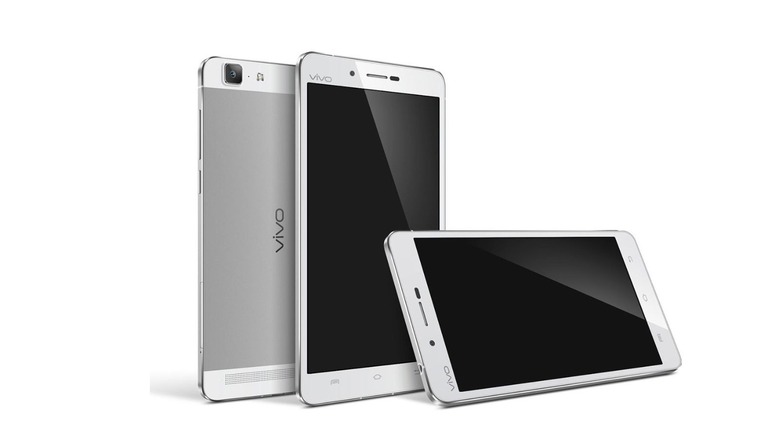
The Vivo X5 Max came out in 2014, which means it's more than a decade old. Technology has evolved rapidly over that time and become much more optimized for space than it used to be. Yet, even with all these optimizations and the eagerness of companies like Apple and Samsung to appeal to a premium audience that values thinness, neither manufacturer's attempt at an ultra-thin phone even comes close to the X5 Max.
The reason for this is quite simple: The X5 Max just isn't a very good phone. With present-day technology, most of the experience it offered could be replicated with relative ease — it just isn't something that most companies would want to manufacture. There would be barely any space for a battery, even if a manufacturer opted for a silicon-carbon battery — a battery technology that Apple and Samsung aren't making use of yet. The phone would also be much slower than modern flagships; certainly usable, but not exactly what people into premium ultra-thin phones are looking for.
Perhaps the biggest and most obvious reason modern phones can't be as thin anymore is the camera. This decade-old Vivo phone's camera is quite abysmal by modern standards, and it was lackluster even for its time. The quality of a phone's camera depends largely on the physical size of the sensor and the distance between it and the lens. Unlike with components like the processor, you can't decrease either of these physical elements while still keeping the full optical quality. This is why modern smartphones have bigger camera bumps, and why there likely won't be a premium ultra-thin phone that's truly thinner than the ancient Vivo X5 Max.