

Nvidia Lost $1 Trillion In Market Value In Less Than Two Months (And It's Clear Why)
Nvidia is synonymous with the video game industry, specifically the graphics cards that power a ton of gaming computers. The company commands so much of the market that it has branched out to other avenues, one of which is liquid-cooled data centers. And while Nvidia's stock broke records on May 14, it quickly lost around $1 trillion in value because investors are focusing on a different commodity. Market volatility strikes again!
According to outlets such as Yahoo! Finance and Bloomberg, while investors were previously interested in GPUs, they have switched gears to focus on memory chips. This change in market interest is fueling Nvidia's downward market share spiral. As of this writing, Nvidia's stock has fallen about 16% since May. That doesn't sound like much, but to put it into perspective, the company's stock is currently valued at the same levels they were back in 2019, when people were snapping up Nvidia GPUs to fuel bitcoin mining operations.
In order to counter this downward trend, analysts expect Nvidia to engage in a potentially aggressive buyback campaign. According to Yahoo! Finance, Nvidia announced it would repurchase shares at increased dividends ($0.25 a share, up from $0.01 per share), in addition to an $80 billion stock buyback program. While some people in the stock market are confident Nvidia can turn things around, others are concerned that issues such as higher memory costs, increased competition, and an overflow in investor ownership could cause problems in the near future.
Don't expect this development to impact GPU prices
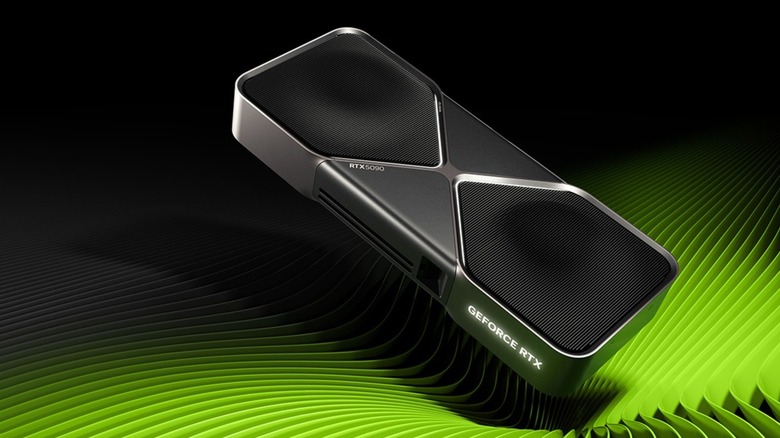
To the average layperson, the stock market is a nigh impregnable location that exists outside reality with its own rules and laws of physics. Sort of like your first day in college. What determines when stock prices change and by how much? How do these changes affect the cost of products? Typically, a company will decrease the cost of its items and services to regain market value, but that might not be possible here.
As previously stated, Nvidia lost around $1 trillion in market value due to investors taking an interest in memory. In turn, this new focus for investors can be traced back to the ongoing RAM shortage that is making numerous gadgets jump in price, including GPUs. Sites such as Tom's Hardware have been keeping an eye on graphics card prices throughout the year, and all of them have increased. For the most expensive GPUs, prices have more than doubled — yet another reason why smart money buys the Nvidia RTX 5070 instead of the 5090.
In any other situation, Nvidia probably would try to decrease the cost of its GPUs, but the problem that caused Nvidia to lose market share also made the company's product prices go haywire in the first place. Now, that's not to say that Nvidia won't sell GPUs or other services at a discount to recoup its losses; just don't expect future Nvidia RTX card prices to match pre-AI bubble prices anytime soon.