

5 Predictions From Sci-Fi Author Philip K. Dick That Came True
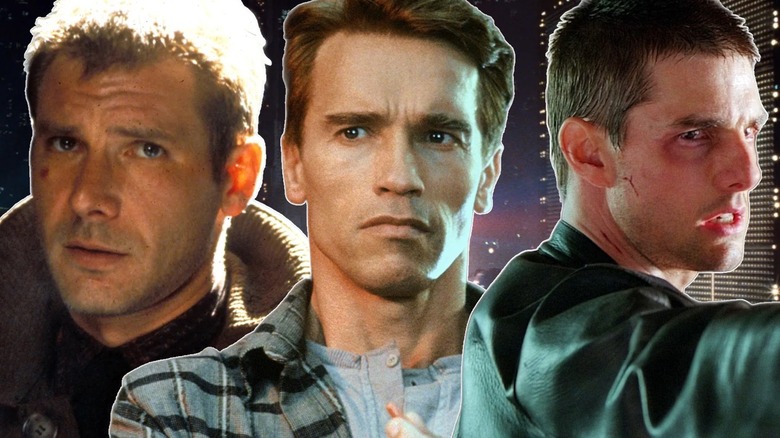
Scan some of the greatest science fiction films and shows in history, and there's a high chance that you'll see Philip K. Dick's name in the credits. "Total Recall," "Minority Report," and the pinnacle of cyberpunk splendor, "Blade Runner," are all a reality because they spilled out of the author's head way back when. But by building these worlds, Dick also filled them with technology that, at the time, was a thing of fantasy. Coming up with advanced forms of transport and even going so far as to create new marketing methods for the average Joe of tomorrow, Dick really did have it all laid out. These weren't just wild ideas from the author, though. They were predictions of what lay ahead for humanity in the years to come.
Some of Dick's best ideas have been brought to life, while others have only entered their infancy in the last few years. In between the dystopian futures and mind-breaking computer enhancements, there were nuggets of what tomorrow could look like if we tried hard enough. But which were the best predictions that Dick got right with startling accuracy, and which beloved stories did they make an appearance in? Here are five different ways that prove Dick was ahead of the curve and just how close they are to bridging the gap between fact and futuristic fiction.
Self-Driving Cars
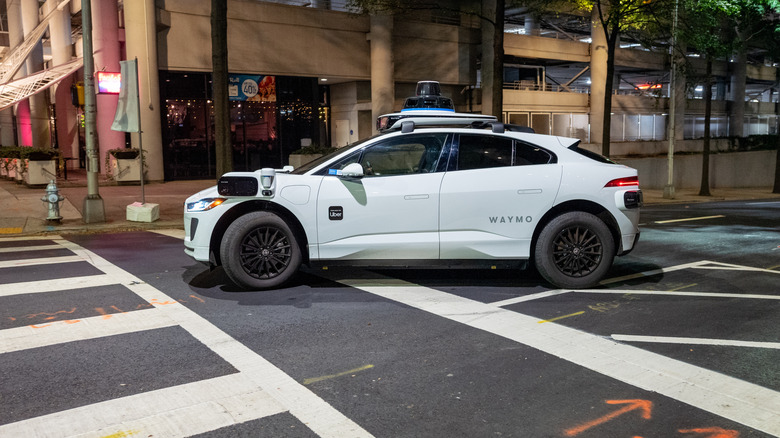
One creation from Philip K. Dick that's certainly picking up speed over the last few years is self-driving cars. Contrary to what television might tell you, the idea of a car that didn't need someone at the wheel stretched further back than David Hasselhoff in a ride that sounded like Mr. Feeney from "Boy Meets World." Instead, driverless cars were a wild concept originally brought to life in his 1966 novelette, "We Can Remember If For You Wholesale," which would eventually be adapted by Paul Verhoeven in "Total Recall."
In the original book, Douglas Quail gets driven around by a then-nameless robot cabbie, who would go on to become Johnny Cab in the 1990 movie. Voiced by Robert Picardo, he was an animated, android-like driver who got caught up in Quaid's (Arnold Schwarzenegger) and Quail's (the book's Quail) mind-blowing conspiracy. While Johnny might look a bit dated now, he was certainly in the right lane for what we've ended up with. Not only is Waymo becoming a more prominent mode of transportation (with London being one of the most recent to trial it), but even basic cars can now self-park, proving that Dick certainly had the right idea about where we're headed in the end.
Virtual Reality
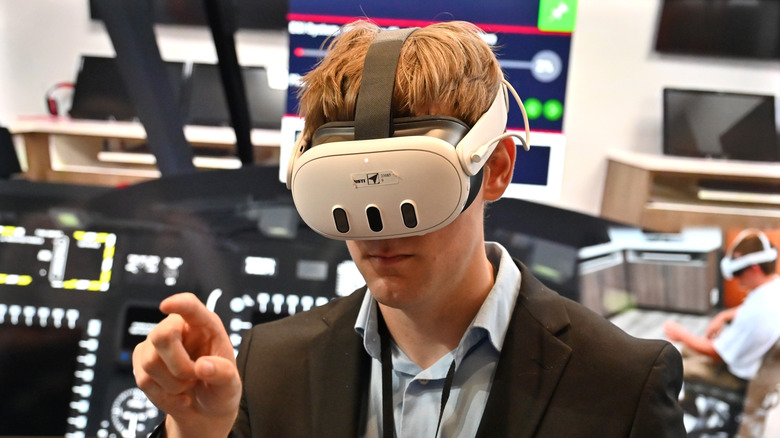
There's an argument to be made that, as much as it is a fortified experience thanks to the variety of headsets that have become available, virtual reality, like self-driving cars, isn't as popular as it appears in Dick's stories, even collecting dust for some users. The first time the author put it into action was in "Do Androids Dream of Electric Sheep?" Dick introduces the reader to "The Empathy Box," a contraption that, should the user stay in there long enough, would be unable to determine the difference between the technological illusion they'd been pulled into and the real world they'd spent so long away from.
Now, while it isn't advised to keep a VR headset on for too long, Dick plays with the idea of escapism, and, through this highly advanced form in the source material for "Blade Runner," it becomes as believable as the androids designed to blend into society. Flash forward to now, and the fact that it's even a thing now once again proves that the sci-fi aficionado's foresight was accurate here. The only concern is that in the years to come, people don't become as obsessed and addicted to this particular area of technology as in Dick's story. Addicted to technology? In this day and age? Couldn't happen, surely.
The Internet
Vinton Cerf and Robert Kahn are considered the fathers of the internet (with Tim Berners Lee helping out further down the line with the world's first web page). However, if Dick's forethought proves anything, it's that he should have a name somewhere on the internet's family tree, after coming up with a version of his own in 1969 with his novel, "Ubik." The story follows Joe Chip, who, while working as a technician for a psychic agency (as you do), begins to see changes in reality and resorts to using the titular substance to reverse them.
While that part leans heavily on the "fi" in "sci-fi," one wild idea Dick had in mind was "the internet of things," which, as everyone knows, turned out to be a real thing. Admittedly, Dick wasn't the first to come up with an idea for an online superhighway; George Orwell, Mark Twain, and Isaac Asimov all had blueprints for what would eventually become the internet. Even so, it's another scary and integral part of human history that Dick somehow saw in the future, even going so far as to include online subscriptions that lock out consumers. So complain about the abundance of subscriptions all you like, but just know that Dick warned everyone about Netflix decades before. Kinda.
Artificial Intelligence
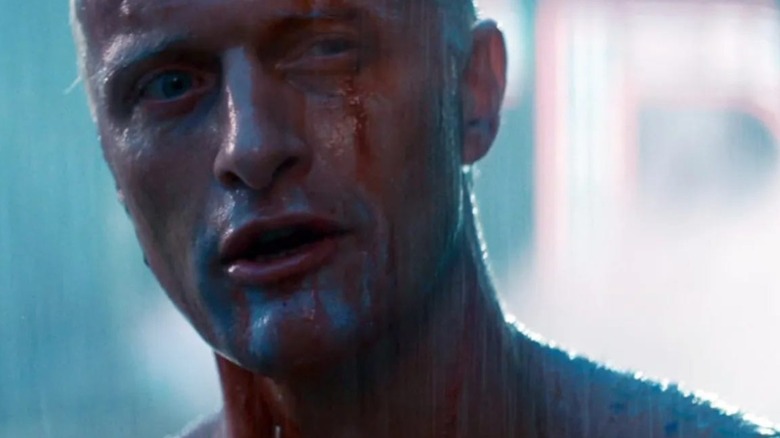
Ah, yes. The big one. In the case of artificial intelligence, Dick included it in a variety of stories, with the most notable being the source for "Blade Runner," "Do Androids Dream of Electric Sheep?" The story saw Rick Deckard trying to track down a band of escaped replicants (androids) who have avoided their main function and hope to hide in plain sight with the rest of humanity. While civilization is a good way off from the level of advancement of Nexus-6 models that are on the run from the man set to "retire" them, the terrifying concepts Dick posits don't seem impossible.
Much like Scott's film, Dick's 1968 novel highlights the dangers of making something to imitate us and the repercussions that follow. Sure, humanity's still in the stage where robots are kicking their CEOs, but this foreboding tale talks of tests to determine who is and who isn't an android because they both act and look so human, along with the idea of even extinct animals being replicated. Do you need synthetic toads, let alone humans? Probably not. But the way things are going, the future will most certainly look like Dick's stories from the past, and there's very little we can do about it.
Personalised Ads
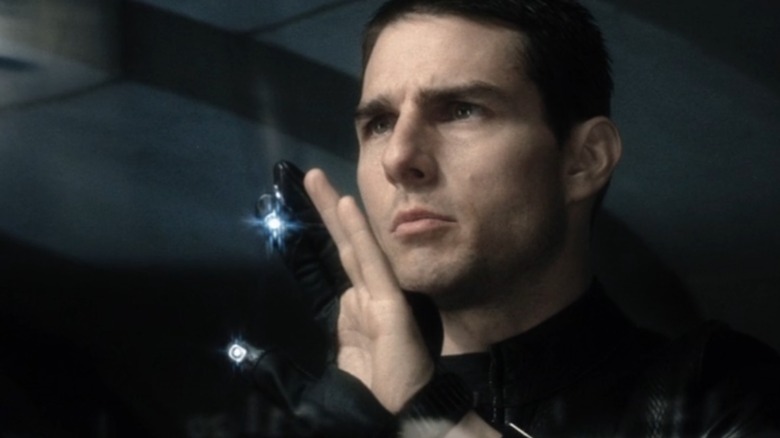
The next time you see an item from your Amazon save list appear in an ad banner, you can blame the purchase on Philip K. Dick. One of the author's simplest but alarmingly precise predictions appeared in his 1954 short story, "Sales Pitch." The tale is set in a world bombarded by advertising, and products do everything they can to sell themselves to potential customers. The book's lead character faces the unfortunate problem of being constantly badgered by a robot that does everything it can to become his next purchase.
Thankfully, society isn't at the stage just yet where robot vacuum cleaners are going to be banging down your doors so as to find a place in your shopping basket, but given that cookies and browsing information can be shipped to various websites to tease you with the best purchases, it's clear Kirk was onto something. Coincidentally, the closest people will get to futuristic marketing literally being pushed into your peepers is in Steven Spielberg's adaptation of "Minority Report," which saw Tom Cruise's character plagued by holographic advertisements tailored to him. Give it a few decades or so, and you can bet that far-fetched idea won't be far from coming true.