

Why Did The Nintendo GameCube Use Small Discs?
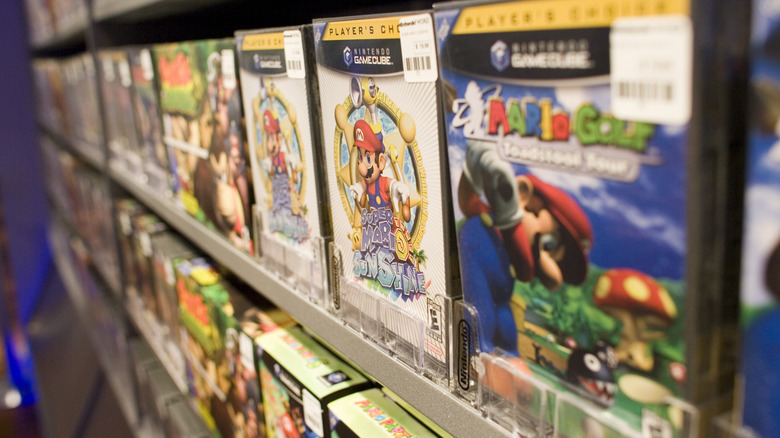
When most people think about the GameCube's most iconic feature, two ideas spring to mind: The unique controller and the mini discs. The GameCube controller is the gold standard for most "Super Smash Bros." players, after all — you can even use GameCube controllers on your PC. Meanwhile, the discs are unique in the game industry because they are among the few instances of mass adoption of miniDVDs. But that raises the question of why. The answer mostly came down to money.
While the GameCube isn't the only instance of miniDVDs in the entertainment industry (the mini discs that came with the original LEGO Bionicle toys also come to mind), it was the most famous. We can partially attribute this notoriety to Xbox and PlayStation 2 using full-sized DVDs at the time. So why did Nintendo want to stand out from the crowd? Focusing on miniDVDs let Nintendo cut out superfluous technology (in their eyes, at least) that would increase manufacturing costs, which would, in turn, raise the final product's price tag. As the GameCube cost $100 less than the Xbox and PS2 at launch, that plan won out.
Of course, don't assume all of Nintendo's decisions were purely selfless. The company also went with miniDVDs because it didn't want to pay the DVD Forum a $20 fee per console for manufacturing a "DVD-branded device capable of playing DVD movies." No DVD playback functionality meant no fee, even though the games were stored on a DVD variant. Compound this semi-loophole with the savings Nintendo acquired through manufacturing decisions — discs cost less to print than cartridges — and the company ended up pocketing plenty of money. Kind of makes you wonder why the GameCube is considered a failure.
Nintendo was also worried about data security
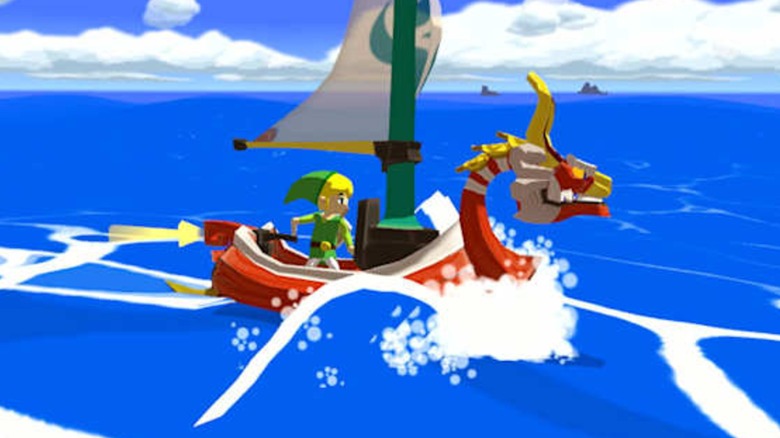
Many gamers fondly remember the Nintendo GameCube's library. The console was home to beloved classics that spawned their own franchises, including "Luigi's Mansion," "Pikmin," and "Metroid Prime." And let's not forget cult classics such as "Pokémon XD: Gale of Darkness" and "Eternal Darkness: Sanity's Requiem." Nintendo wanted to keep its games out of the hands of pirates by any means necessary.
While the Nintendo GameCube technically stored games on miniDVDs, the discs were actually a proprietary form of the medium, which made them harder to pirate. This technology was transferred over to the Wii and Wii U, which are the size of regular DVDs but are a different breed of medium altogether — one that only works with Nintendo consoles. This anti-piracy measure also came with the "benefit" of being incompatible with DVDs, which meant Nintendo didn't have to spend money on DVD reading technology. Or the aforementioned fees that were applied to devices that could play DVDs.
Of course, it was only a matter of time before people cracked the code on the GameCube (and Wii and Wii U) discs. The Dolphin emulator is one of the most popular, if legally gray, ways to experience classic Wii and GameCube titles without booting up the consoles. You can even play Wii and GameCube games on the Nintendo Switch thanks to Dolphin. Well, you can also use the more legal Nintendo Classics app, but its offerings are comparatively limited.