

Your Google Maps App On Android Auto Is About To Look Different — Here's Why
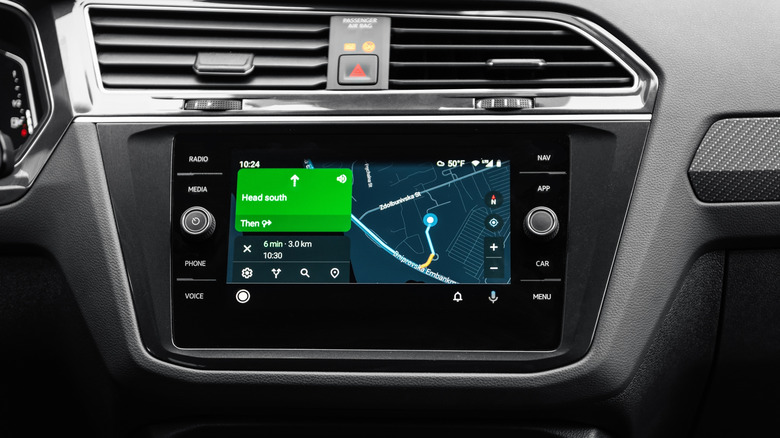
Google has been working to add new features to Google Maps over the past few years, including some much-needed functionality that works in a similar way to features found in the company's other navigation app, Waze. Being able to warn other drivers of potential road hazards has helped Maps become even more useful to travelers, and it looks like Google's big visual upgrade for the popular navigation app is starting to roll out, too. Immersive Navigation — which is designed to make Google Maps appear as a more 3D-like experience — began rolling out to Android Auto users in July 2026 (via Android Authority).
The rollout appears to be tied to the release of Android Auto version 17.3, though reports suggest the rollout itself might be server-side, as beta users running newer versions of Android Auto don't have it yet. This means you'll need to wait for Google to trigger it on your devices. Once it arrives, you'll be able to see a more 3D-like UI, including 3D buildings and even popup trees that appear on the map as you drive. A big part of the change here is tied to how Maps provides directions, which Google says should be more natural now — even with the spoken directions. Immersive Navigation will use images captured from Google's expansive Street View imagery to provide more specific directions, which should hopefully help with confusing directions and tight turns.
Immersive Navigation has been rolling out since early 2026
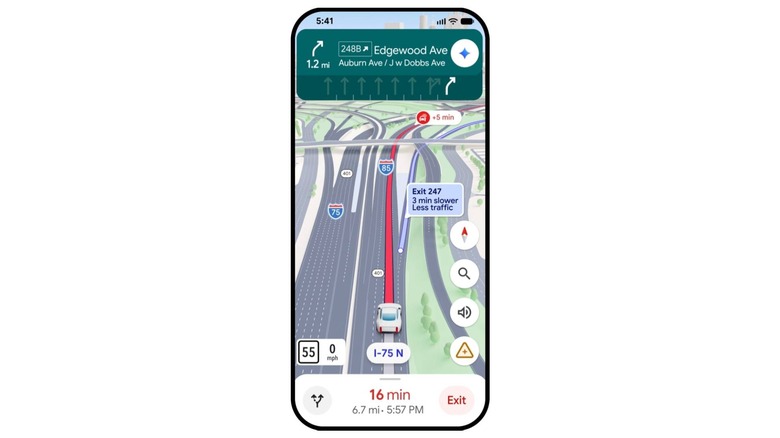
Overall, the feature has been slowly rolling out to Google Maps users since March 2026, with users reportedly starting to receive the update alongside Google's updated Ask Maps functionality, which uses Gemini to provide AI-powered directions in the navigation app. Much like the rollout for Android Auto users, though, the rollout for Immersive Navigation appears to be happening slowly, with some users receiving it far earlier than others. There isn't a way to speed up the rollout at the moment, so users excited for the changes will simply need to wait for it to hit their devices.
Overall, the features being displayed as part of Immersive Navigation do seem to be genuinely helpful. While the UI changes are front and center, the other features that Immersive Navigation will offer are also worth being excited about, as the app will utilize real-time traffic information to provide more context for your routes, allowing you to spot better alternate routes on the fly. All of this is made possible thanks to Gemini models working in the background.
Immersive Navigation is another reason to leave Waze behind
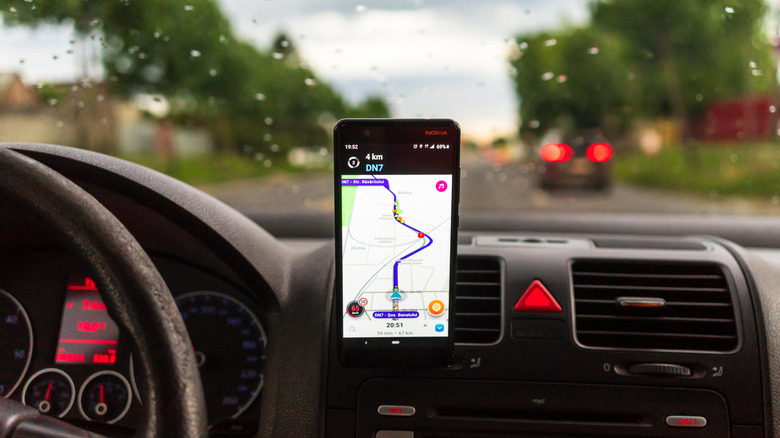
Immersive Navigation does give Google Maps an advantage over Waze, Google's other navigation app, and there are certainly ways that Maps continues to be better than Waze. However, depending on how you use the application, Waze may still end up being the better option, especially as Immersive Navigation relies so heavily on AI to help power some of its new functionality. If Google can prove that this is actually helpful, and we don't end up with a repeat of the Apple Maps situation — where the service was sending users to the wrong location as well as glitching out constantly — then this update could pull many users away from Waze due to the usefulness of its new functionality.
However, Waze still receives far more live user feedback in the form of road hazard information, though its always-online requirement does fall behind Google Maps offline mode. We have yet to see any information on whether Immersive Navigation will work with offline maps, though. If it does, that could be enough of a reason to ditch Waze for most of your drives.