

This Solar Powered Airship Wants To Replace Cell Towers – And End Cellular Dead Zones
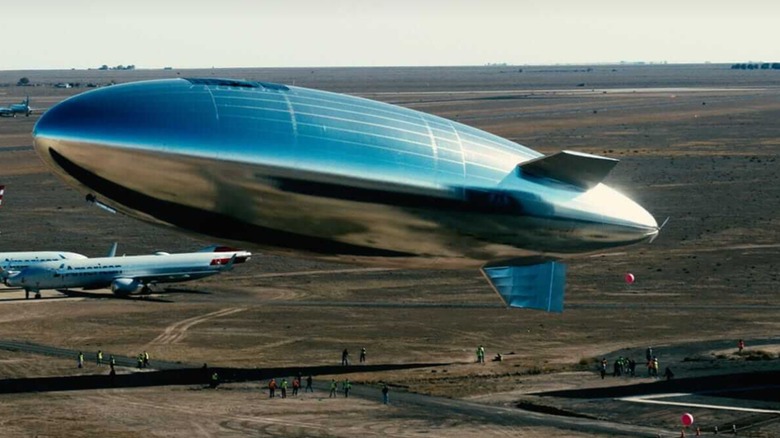
As widespread as mobile service has become, it's still not quite all-encompassing. Your ability to access 5G services is still largely reliant on your proximity to a cell tower, and while there are some very reliable phone carriers out there, there are still many dead zones across the United States and other countries where the towers can't reach. Even satellite-equipped smartphones can't work everywhere, and even if you can connect, you're generally limited to short text messages rather than phone calls. It's in aid of this particular problem that U.S. aeronautics company Sceye is testing out its next big development: the High-Altitude Platform Systems (HAPS), a platform consisting of high-flying stratospheric vessels that, if successful, will provide continuous 5G service to all devices it flies over.
Some of the latest trends in modern technology involve beaming power and connections down from on high to save space on the ground, such as space-based solar power. In that same vein, HAPS's crafts are designed to float up in the planet's stratosphere at an elevation of 60,000 to 65,000 feet, nearly twice the cruising altitude of a typical passenger jet, and provide both consistent connectivity to wireless users and real-time observation data of natural disasters like storms and wildfires. If Sceye can definitively prove the efficacy of HAPS, these shiny vessels could become a common presence in the daytime sky.
HAPS beams 5G data down from on high
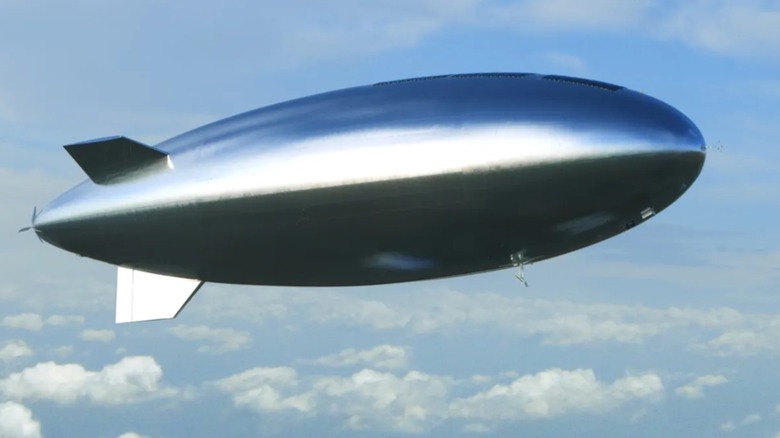
The primary HAPS craft, the SE2, is 200 feet long, filled with helium, and covered in lightweight, reflective fabric. The top of the craft is covered in an array of solar panels, which soak up sunlight during the day and charge the craft's batteries for nighttime operations, as well as a custom antenna mounted to the bottom. The SE2 is designed to float up into the stratosphere, specifically at 60,000 to 65,000 feet so it won't get in the way of either planes or satellites, and beam 5G down to everything below it, specifically data from network provider SoftBank.
While it looks like a blimp or other similar travel vessel, the SE2 is actually designed to stay in one spot in the stratosphere for as long as possible. Besides its long-lasting batteries and solar panels, it's equipped with advanced avionics for monitoring and responding to shifting wind conditions, allowing it to maintain position even in the face of random weather patterns. It's this particular ability to stay stationary indefinitely that will not only allow HAPS to provide consistent wireless coverage but also keep an eye on the sky on local natural disasters without concern for drifting out of range. In endurance tests, the SE2 successfully remained in the air in a single spot for 88 consecutive hours, with pre-commercial test flights and connections to SoftBank's networks planned for the near future.