

You Can Get Unlimited Lifetime Cloud Storage For Less Than $100 - But There's A Catch

We may receive a commission on purchases made from links.
The Seagate ST506 from the '80s cost around $1,700 for its 5-megabyte (MB) capacity, and it wasn't even the most expensive hard drive of its time. Fortunately, we have much cheaper (and better) methods of storing data today, including uploading data to the cloud. Companies like Microsoft, Apple, and Google provide great deals for this, but you've likely not heard of one of the weirdest yet best cloud storage options out there: purchasing a second-hand original Google Pixel phone from 2016.
You can get a terabyte of internal storage from Samsung for around $150, and you can get the same 1TB storage on a portable external drive for $200. If you don't mind slower transfer speeds, you can get a hard disk drive like the Seagate BarraCuda 1TB HDD for just $100, and you can get an even cheaper offer if you buy a used hard drive. Cloud storage options are priced somewhat similarly. You can get a 2TB Google One subscription for $9.99 monthly, and Apple iCloud costs the same for a similar plan, with both of them setting you back about $120 yearly.
Cloud storage is cheaper up front, whereas local storage can save you money over the long run. However, both options ultimately pale in comparison to the value a used first-generation Google Pixel phone can get you. You can easily find one on eBay for as low as $70. This one-time purchase costs less than a single year of a 2TB subscription or even a 2TB HDD but provides unlimited lifetime storage without any compression or quality loss. There are certain nuances to this, but all things considered, getting a Google Pixel phone from 2016 might be the best cloud storage option today.
You can only upload files from the Google Pixel phone itself
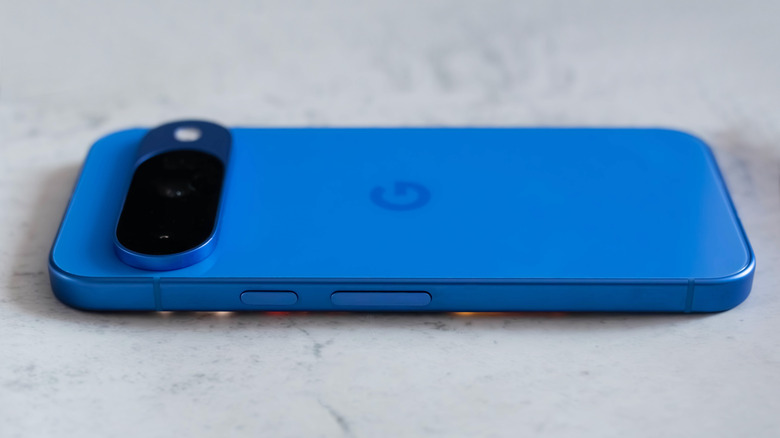
The unlimited cloud storage that you get on the Google Pixel 1 is hardware-locked. This means that only pictures taken using your newly bought first-generation Pixel won't take up any storage on your Google account, whereas those you upload from your other devices will. You can't simply use the same Google account on another phone; instead, you have to actively upload files from the Pixel itself.
This presents several challenges. First, the Pixel has a terrible camera by today's standard; most wouldn't want to store pictures taken using it. If you want to back up high-quality footage, you'll have to transfer files from another device and put them in the first-generation Pixel's DCIM or Camera folder. Furthermore, since the original Pixel is so old, transferring files using a cable is slower than on modern phones that use UFS 3.1 or higher. The phone also only supports a maximum storage of 128GB and doesn't have an SD card slot, which means you can't transfer data all at once.
With the phone being so old, any unit found on a secondary market will have a degrading battery. This can be solved by keeping the phone constantly plugged in, but then the phone can overheat. You can somewhat counteract this by using a phone cooler or even a PC fan. If you truly want to make the most of your Pixel's unlimited free cloud storage, you can even use a syncing app like Syncthing or Resilio to make the process much easier, where you can sync the Pixel with your main phone or a desktop, upload files, and then delete them.
Can Google suddenly stop providing free cloud storage?
Google promised free storage for life when the Pixel 1 came out. You'd imagine that this means an obligation for the company, but the specific legality on whether it can change the terms is more nuanced than a simple yes or no. With the first Pixel phone coming out in 2016, Google has continued honoring this for the past decade, and it's unlikely that the company suddenly changes its mind.
However, there are other instances where Google tweaked the specifics of this promise. All phones from the Google Pixel 2 to the Pixel 6 had certain deadlines and restrictions for the free unlimited storage, and the feature was removed altogether from the Pixel 7 onward. Similarly, while the company first allowed original quality backups, it changed this to the more compressed HD quality later on — though this doesn't apply to the Pixel 1.
One piece of information that supports that Google likely won't be retiring the feature comes from an old slip-up from 2019, where the company stated that there would be no more support for unlimited cloud storage on the Pixel after 2020. Later, Google confirmed that this was a mistake and that the promise of a lifetime of free storage will continue. Seeing as the feature has disappeared from other Pixel phones but stays on the original Pixel, there's likely nothing to worry about.