

How Long Do Owners Say Smart Bulbs Actually Last?

According to industry experts and manufacturers, the latest smart bulbs can last 25,000 hours or longer. Assuming you have the lights switched on for an average of five hours per day, that equates to up to 13 years (or more) of use. Of course, your results may vary depending on the brand and model and on how you actually use your lights. So let's talk about how long smart bulbs actually do last, according to real everyday people.
One thread on Reddit attracted many comments after the user claimed that their Philips Hue lights died after less than one year. Several highly upvoted comments reported the opposite experience, stating that their smart lights were still working after seven or even 10 years. One user claims that only one bulb out of 50 in their home had gone out in 10 years, while another user said that two bulbs out of 30 went out over that same span of time.
What this suggests is that most smart bulbs will last for close to 10 years or longer, but it's also not extremely rare to encounter a random circumstance where a smart bulb will die sooner than that. This raises the question of whether smart bulbs can stop working for reasons other than just their age. Wiring issues and switch incompatibility can sometimes affect the longevity of a light bulb or make it seem like it's dying when it's really not. Some potential problems can be alleviated by shopping for the best Bluetooth smart light bulbs you can buy on Amazon, which hold high user review scores for their reliability and functionality.
How to make your light bulbs last longer
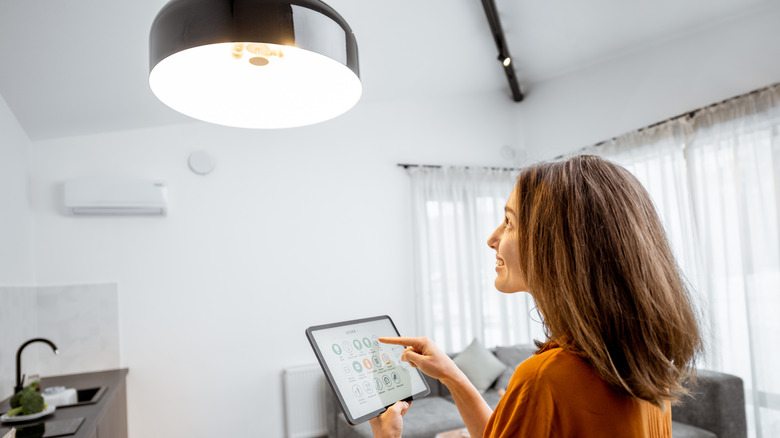
One of the main benefits of a smart light bulb, other than being able to change its color or brightness, is that you can configure it to automatically shut off. Despite certain age-old myths, it's actually not cheaper to leave your lights on when you leave a room most of the time. You can use smart sensors or companion apps with scheduling features to make extra sure that your smart lights turn off when you're not at home. This is energy-efficient and cost-effective, and it will help your bulbs reach that 10-plus-year life expectancy.
If longevity and savings are your priorities, though, you might decide that smart light bulbs are not as worthwhile as smart switches. With a smart switch, you can use traditional light bulbs and still have the option to configure automatic shut-off. Considering that some smart bulbs can cost more than $10 a pop, a single smart switch may be a more practical solution for some.
However, it's worth noting that traditional light bulbs often have much shorter lifespans than modern smart bulbs. The most common types of traditional light bulbs include incandescents, which last for up to 1,200 hours, and compact fluorescent lamps, which generally last for 6,000 to 15,000 hours. So even in the cases where owners report that their smart bulbs didn't last as long as advertised, they often still provide better longevity than the non-smart alternatives.