

The World's Smallest QR Code Could Be A Gamechanger For Data Storage - Here's Why
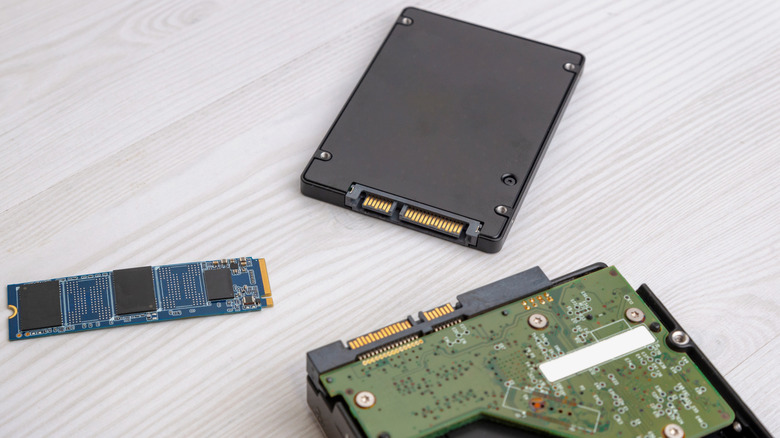
There's a gold rush underway in the artificial intelligence industry, and it's brought about a massive and sustained price shock on computer memory as manufacturers divert inventory away from the mass market and towards data centers. PC builders hunting for RAM are even lucky to get older DDR4 sticks nowadays, so much so that suppliers have rebooted production on that DDR4 RAM type to keep up. And the premiums on SSDs and even hard disks seem to grow heftier by the day.
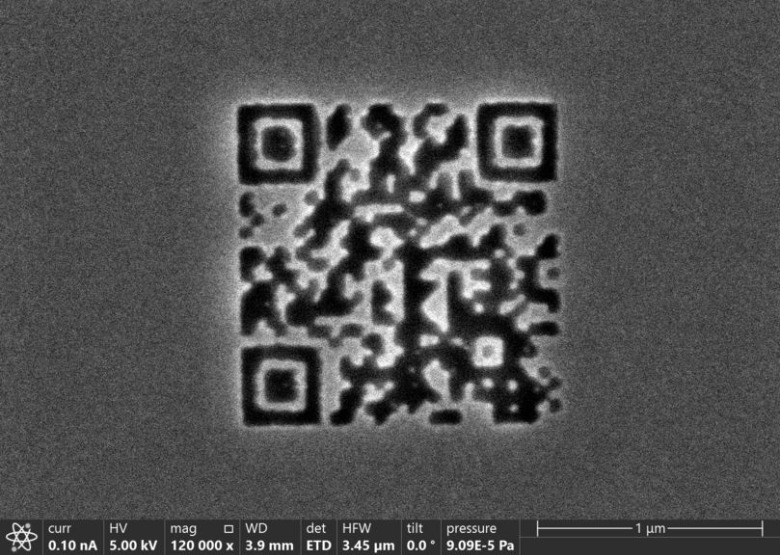
It might be silly to suggest a molecular-sized QR code could be one of the breakthroughs that could help resolve this crisis, but the truth is, every little bit counts. On December 3, 2025, researchers at the Vienna University of Technology (in conjunction with German firm Cerabyte) produced what Guinness World Records has certified as the world's smallest QR code.
The code measures in at ~0.000000003 square inches (1.977 square microns) — meaning each side is approximately 1/70th the thickness of a typical sheet of paper — and can only be made readable with an electron microscope. All of that might leave you with a couple of questions about how practical a QR code of that size truly is.
How small can a QR code be and still be usable?
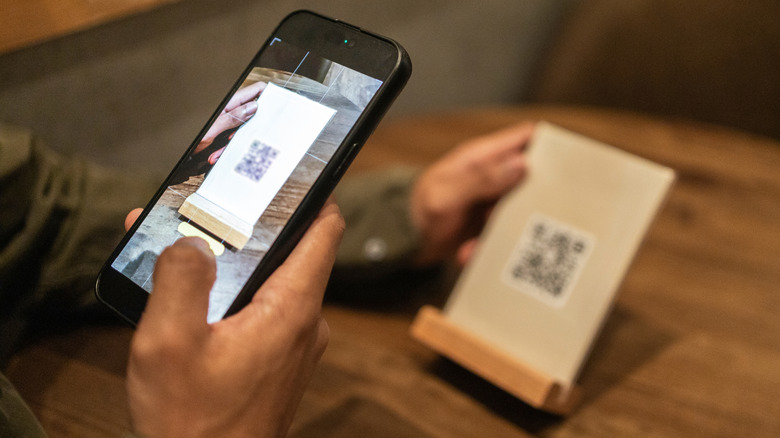
Denso Wave, the Japanese company that created the Quick Response code back in 1994, has specified 40 different sizes for the design; with the smallest Version One clocking in at 21×21 modules — the smallest square element you see in a QR code. If you used a standard laser printer set at 600dpi, with the recommended module matrix of 4×4 dots, this would result in a code measuring ~0.02 square inches (12.74 square millimeters), slightly less than the width of the world's smallest working TV. There's also an even smaller Micro QR Code design that uses only one position detection pattern as opposed to the three you see at the corners of the standard design.
At 11 modules per side, that brings the acreage down to a piddly ~0.0054 square inches (3.46 square millimeters). Of course, all of this is rendered moot if you create a code where the whole length is about one one-thousandth of a millimeter, and use an electron microscope to blow it up and scan it.
Industry-grade code scanners tend to do a good job of picking up minuscule barcodes, QR codes, and various other 2D codes at relatively far distances. For example, that same ~0.02-square-inch QR code can be picked up by a scanner from up to six inches away. But if you're posting a QR code on, say, a flyer to get the word out for a party, keep everyone's smartphones in mind. You'll want to start from an inch on each side and add an additional inch for every foot away you expect someone looking at your code to stand.
Is the world's smallest QR code going to solve the memory crisis?
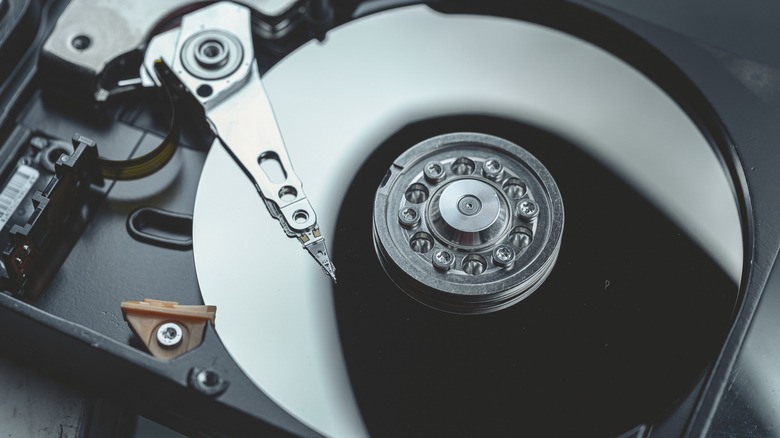
Silver bullets don't come by easy, and this ain't one of them. Cerabyte is the main force behind the digital storage technology involved in this world record. It involves a laser etching millions of dots — certainly not in QR code form — into a thin ceramic layer that's placed on top of glass. The process means it's a write-once system, so it's not going to lower RAM prices, and while read rates can ratchet up to 2 gigabytes per second, the material, equipment, and space needed would prove too bulky for home use.
Indeed, the company suggests this ceramic medium should be used for storing what's called cold data: information that is rarely accessed and needs to be stored for a long time. Think of companies storing your personal information to fulfill legal obligations.
Cerabyte says its sheets are impervious to electrical interference, easily survive heat stress, and should be able to compete on price and performance against the existing hard drives that the business world currently consumes en masse for long-term data storage. The company expects to launch a pilot system in late 2026, and grow to cloud enterprise scale in the next five to seven years. And given the market for hard drives today, any help can't come soon enough.