

5 Forgotten Sci-Fi Shows From The '80s That You Have To Watch
The 1980s brought us so many things that are still a part of our lives today. We saw a wide range of musical styles from synth-pop to hair metal come into mainstream prominence, as well as the rise of the summer blockbuster and the advent of CGI. The decade saw everything get bigger and more experimental, and also saw several science fiction movies fly under the radar. The same could be said of television, with science fiction shows hitting the airways and vanishing into obscurity.
The rise of computer special effects and the passage of the Cable Act in 1984 led to more experimentation, seeing some 70 networks and dozens of science fiction programs hit the air. We were treated to legendary programs such as "Star Trek: The Next Generation" or more experimental shows like "Alien Nation." But with dozens of science fiction shows appearing on almost as many networks, chances are you missed out on a number of shows. The following are just a few science fiction programs you should definitely try out.
Isaac Asimov's Probe

Hitting the airwaves in the latter part of the decade, "Probe" has some interesting history and a very modern connection. Created by writer Michael Wagner and the legendary science fiction author Issac Asimov, "Probe" revolves around an eccentric scientist who, instead of focusing on running his large scientific company, uses his intelligence and inventions to solve strange crimes.
"Probe" was like a tech-based "The X-Files." It was released as a mid-season replacement in 1988, which probably didn't help it attract an audience, and it ultimately had only a two-month run with a total of eight episodes. The show never received a home media release, but it did re-air during the mid-1990s on the Sci-Fi Channel. All eight episodes have also been uploaded to YouTube, with fans of the show commenting that it got them into science.
Viewers noted that "Probe" feels very much like a modern-day Sherlock Holmes, especially because of the Watson-like everyman assistant to the lead's genius. While "Probe" is mostly unknown today, Issac Asimov's work would have a lasting impact on television. Some thirty years later, the Apple TV+ show "Foundation," based on Asimov's works, premiered, becoming one of the network's most ambitious shows.
Captain Power and the Soldiers of the Future
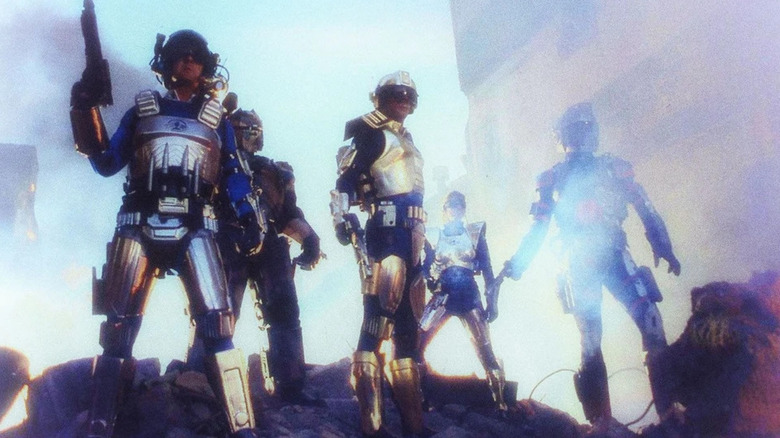
As a child in the early 1990s, I remember getting an incredibly futuristic 80's toy tied to the show "Captain Power and the Soldiers of the Future." It was a spaceship attached to a pistol grip and a small action figure that could fit into the cockpit. But it was the VHS tape of the show that came with it that still retains magic to this very day.
As you watched the show, you used the spaceship to interact with it directly. Certain segments of the show would feature scenes with glowing red sections on enemies, the ship acting as a light gun with the television. Hitting enemies would earn you points; failing would get you hit. Get hit enough, and your figure would pop out of the ship in defeat.
"Captain Power and the Soldiers of the Future" had a great gimmick, but it also had depth to its storytelling, making it worth watching. Written by J. Michael Straczynski, creator of "Babylon 5," the show featured very adult storylines for a children's show, even featuring the brutal death of a main character.
Whiz Kids
Today, the computer is a part of our daily lives. From the humble office desktop to the school laptop to the phone in your pocket, it's hard to imagine a world without computers. And while that might feel normal in our always-online digital world, there was a time not that long ago when the computer was seen as a fascinating device with unknown, limitless possibilities.
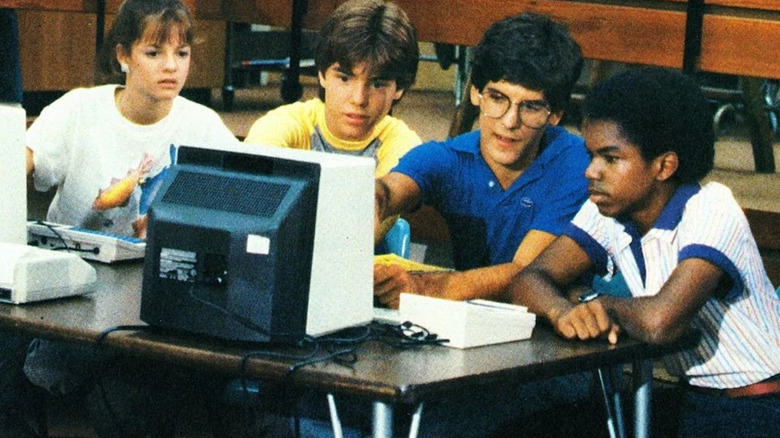
Television producer Philip DeGuere noticed how important the computer was becoming in the workplace, and developed the show Whiz Kids to take advantage of this burgeoning technology. "Whiz Kids" sees teenager Richie Adler build a supercomputer from spare parts and, along with his friends, use it to solve mysteries. "Whiz Kids" was a lot like a modern-day tech-based Hardy Boys.
It's a fun show that only got a single season, and is mostly remembered for its main controversy before release. Advertisers, station affiliates, critics, and others who previewed the show were against the portrayal of teenage computer hackers. They felt that showing teens breaking the law and illegally accessing computer networks reflected poor moral character. The show was tweaked, and additional adult characters were added before it eventually aired.
Photon
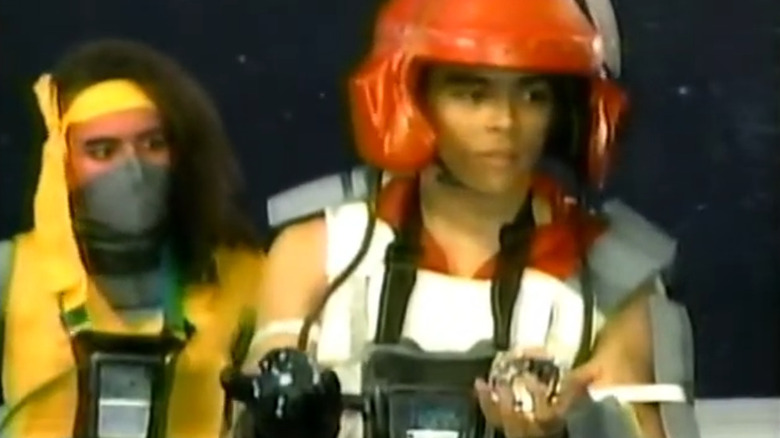
"Photon" might be the perfect example of what 1980s media ended up becoming. The show is a mix of science fiction, action, and toy advertisement. The show is tied directly to the Photon laser tag system that kids could buy at toy stores. I can clearly remember this system when I was a kid, playing it often with friends even in the early 1990s.
The show sees Christopher Jarvis discovering the game Photon, used by intergalactic forces to locate the strongest warriors across the galaxy. These warriors are then transported away and recruited to fight evil as part of a team known as the Photon Warriors. It's a fun concept and was filled with lots of action.
This was because the show was filmed in the United States and in Japan. Many of the Japanese performers and the costumes used came from the people behind various Super Sentai shows. While not successful, this shooting format was later adapted with great success in "Mighty Morphin Power Rangers" a few years later, with Haim Saban of Saban Entertainment working on both. "Photon" is a strange show that needs to be seen to be believed, and thankfully you can find episodes on YouTube.
Voyagers!
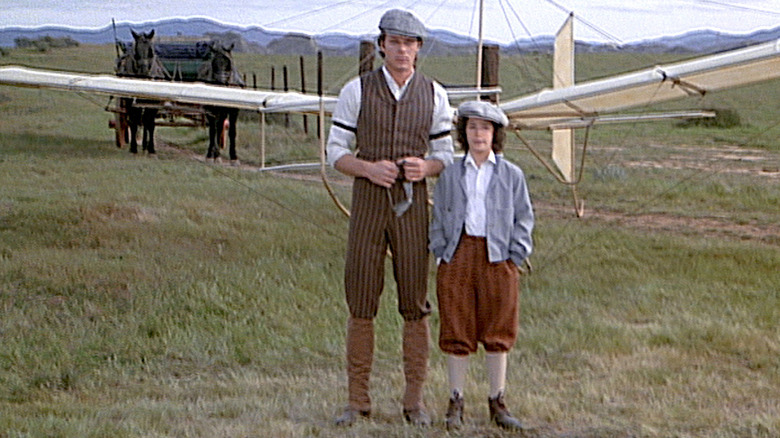
Science Fiction loves to tell stories that revolve around time travel. And "Voyagers!" is all about time travel, the story centering around Phineas Bogg, a futuristic member of a time-traveling group known as Voyagers. The problem is that Bogg is badly trained and a bit of a goofball, getting himself stuck in 1982 and losing his history guidebook in the process.
He teams up with a boy named Jeremy, who has extensive knowledge of history, the pair jumping backward in time to fix errors in the timeline that Bogg's Omni watch device picks up. When activated, the duo travel to the affected time period and work to set things back onto the correct path. Jeremy ends up fixing most of the errors, while Bogg spends nearly every episode looking for pretty girls in each time period.
It's a silly show, but one that was praised by critics and pulled decent ratings for NBC with a 17-share. Despite this, the show was canceled when NBC dropped it in favor of a news program they thought could challenge "60 Minutes." It couldn't, and eventually NBC's cancellation of "Voyagers!" in favor of a worse show was mocked on "Late Night with David Letterman."